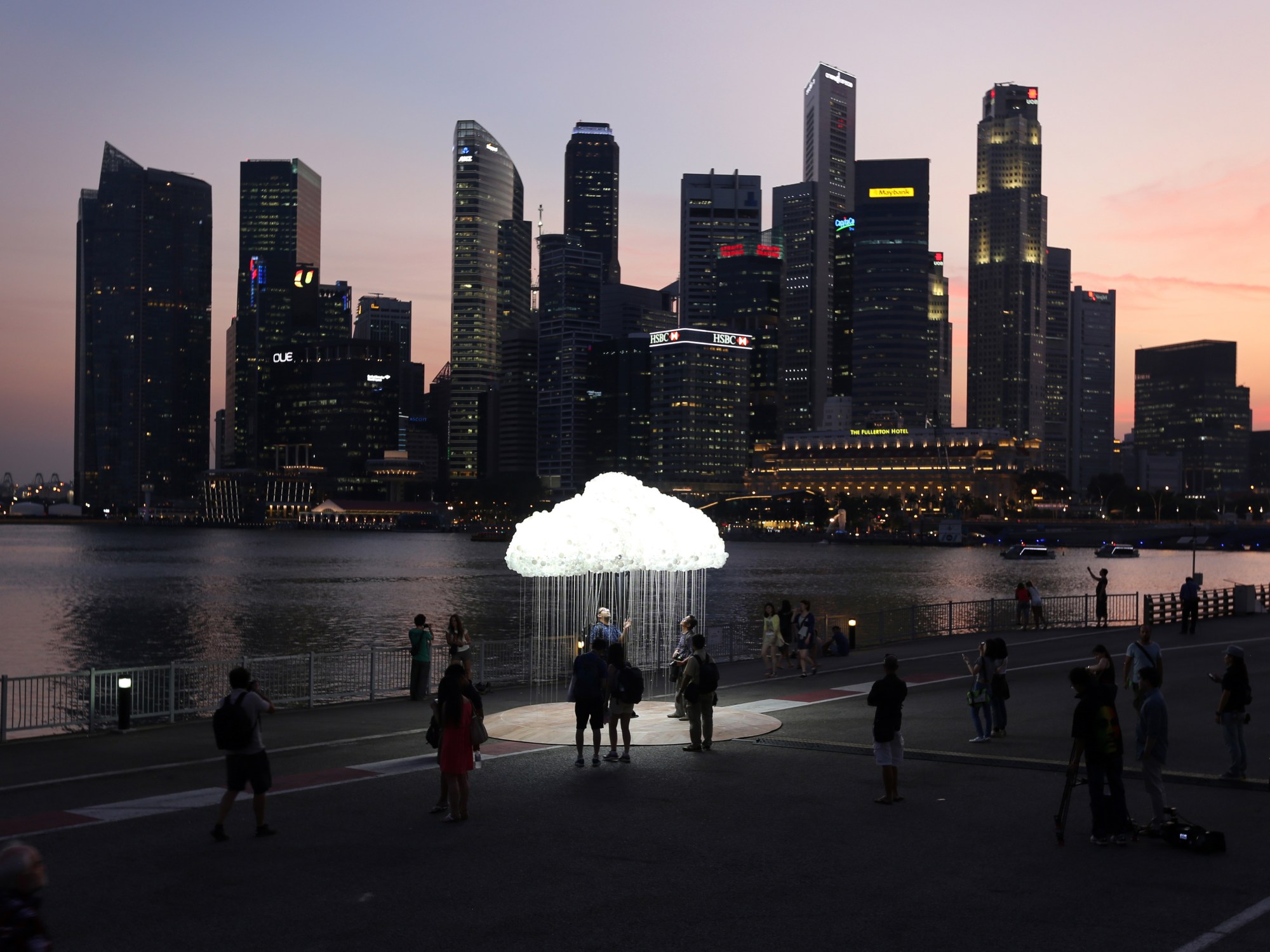
Written in May 2014 by Caitlind Brown
Amidst all our recent business, I wrote this blog in early April and never posted it. The title is borrowed from “Art + Sustainability,” a book by Professor Sacha Kagan, keynote speaker at the I Light Symposium in Singapore.
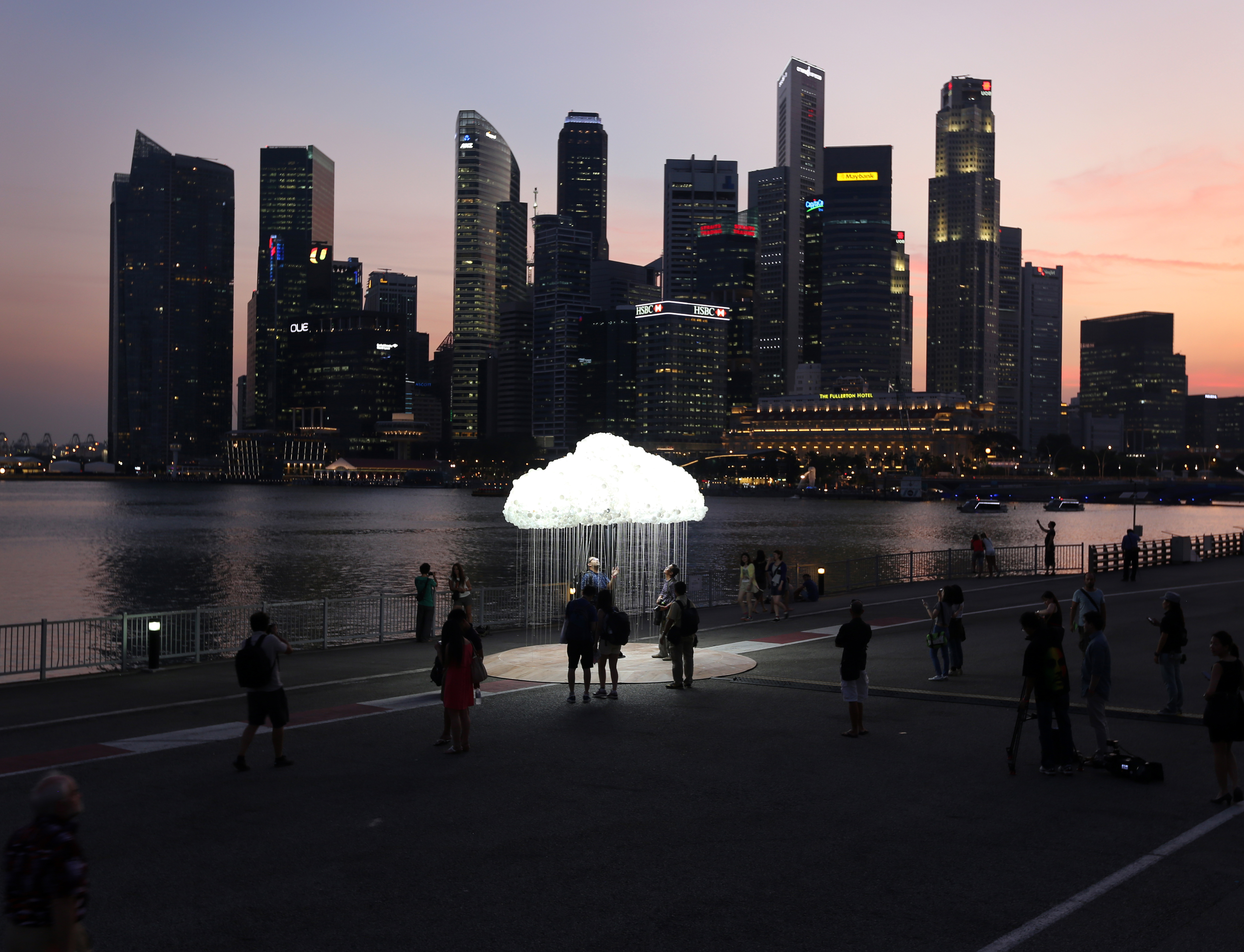
CLOUD at i Light Marina Bay in Singapore. Photo by Caitlind Brown
Moving now into our twenty-third hour of air travel, we reflect on the ideas and themes of the festival we are moving away from – I Light Marina Bay, Asia’s first light art festival championing a theme of sustainability. (The irony is noted, of course, that we must travel via the prolonged burning of jet-fuel to and from said festival, but that is a way of life for artists based in the less-occupied geographic regions of North America. For now, at least).
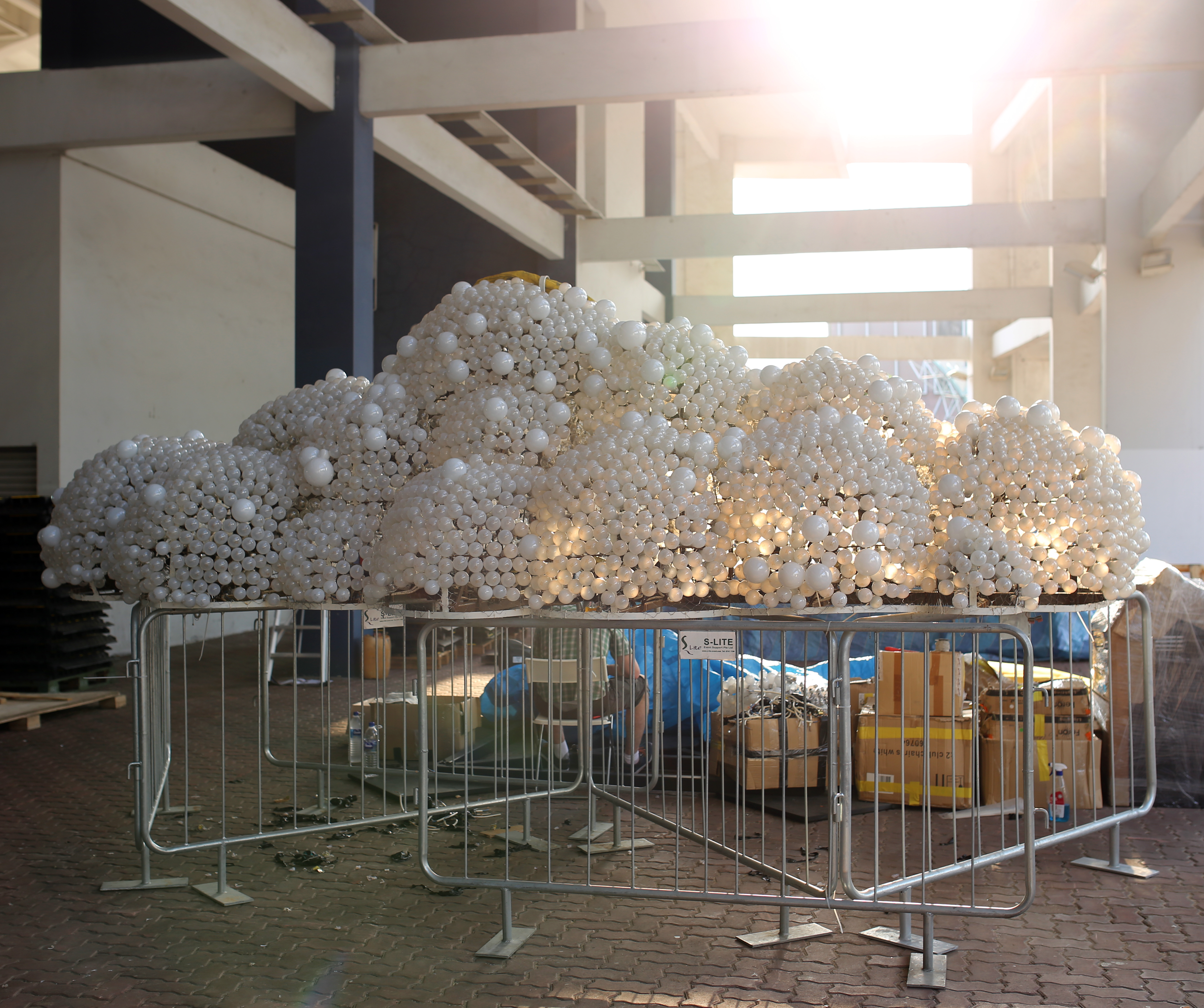
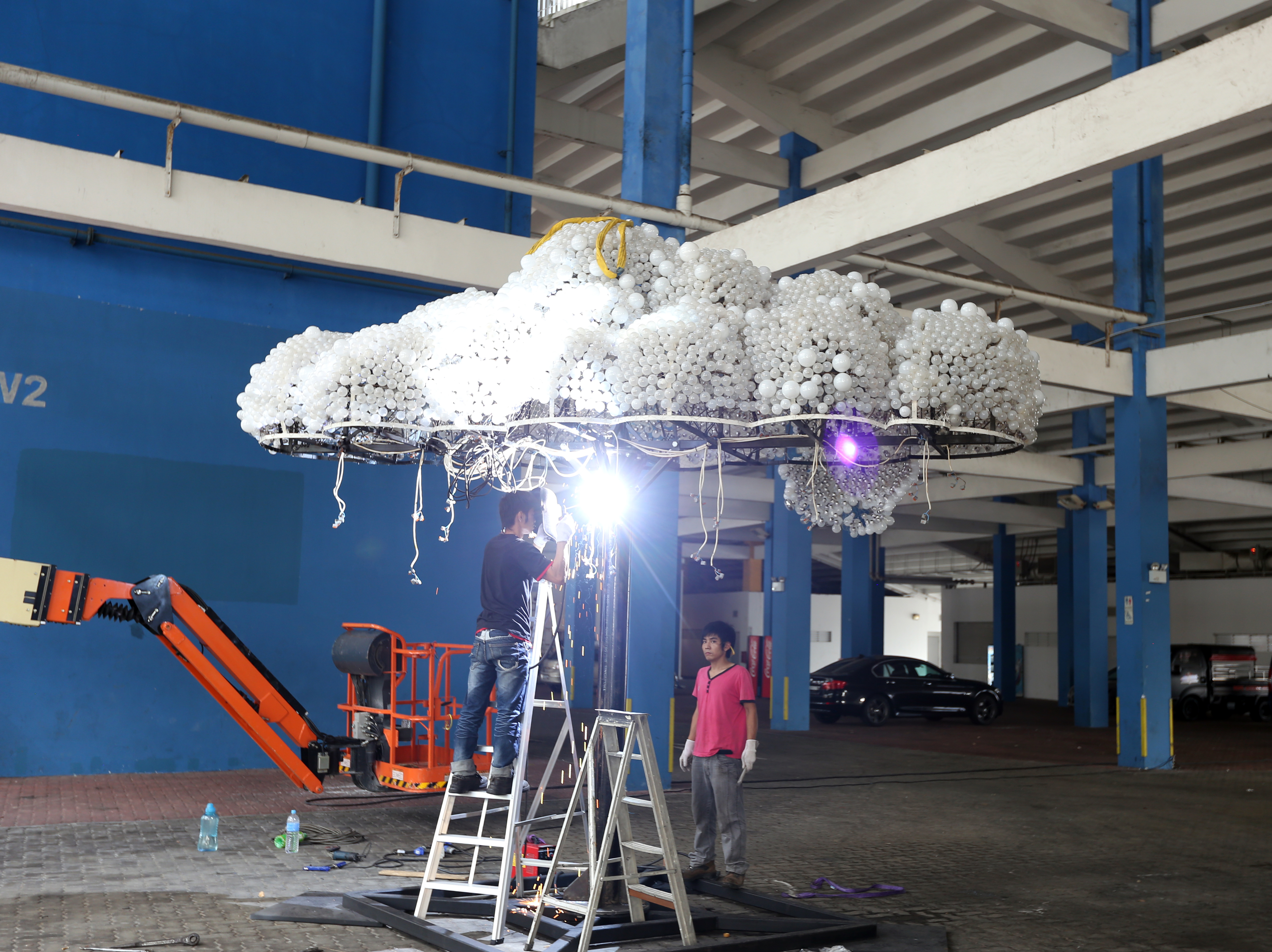
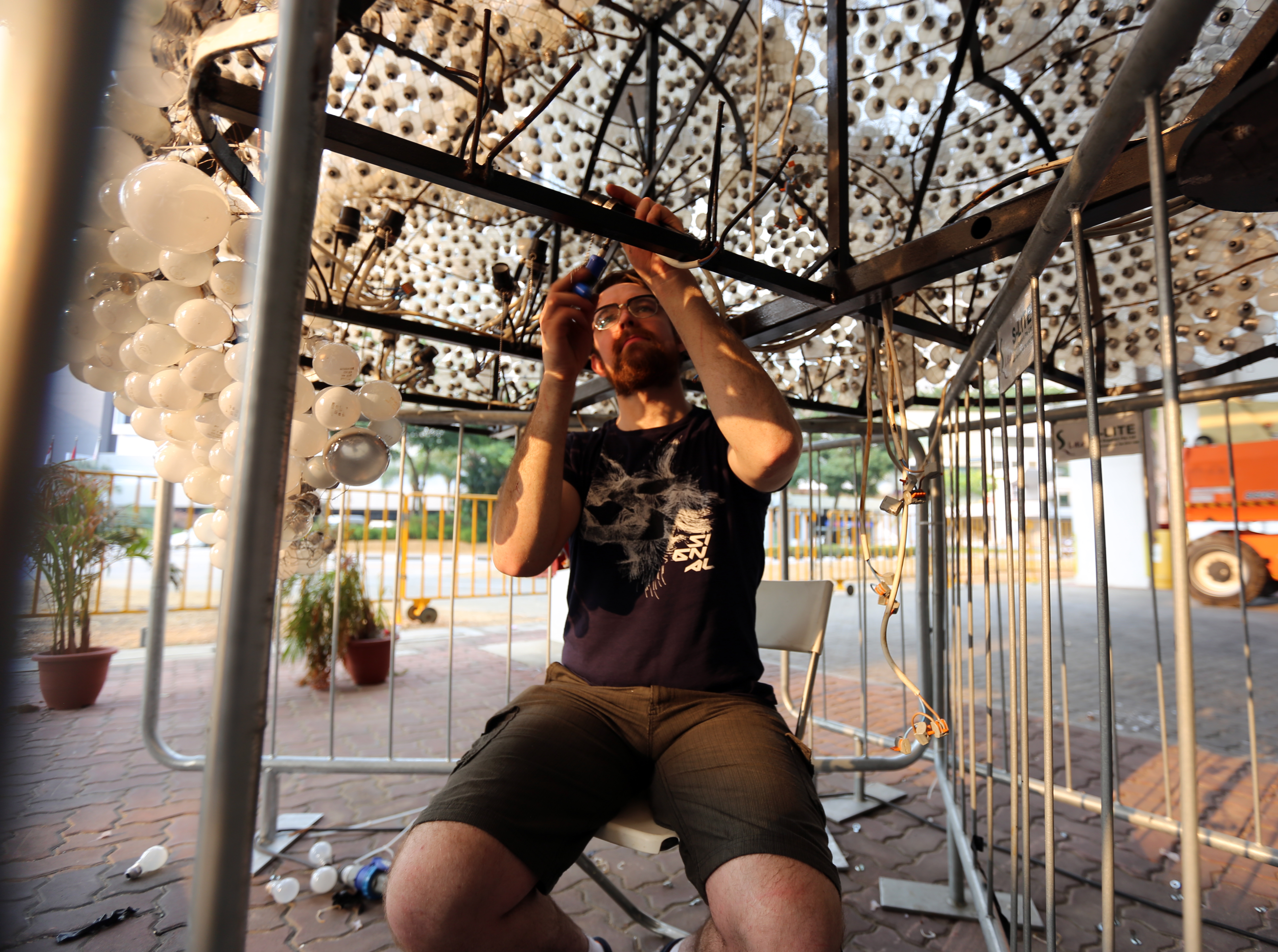
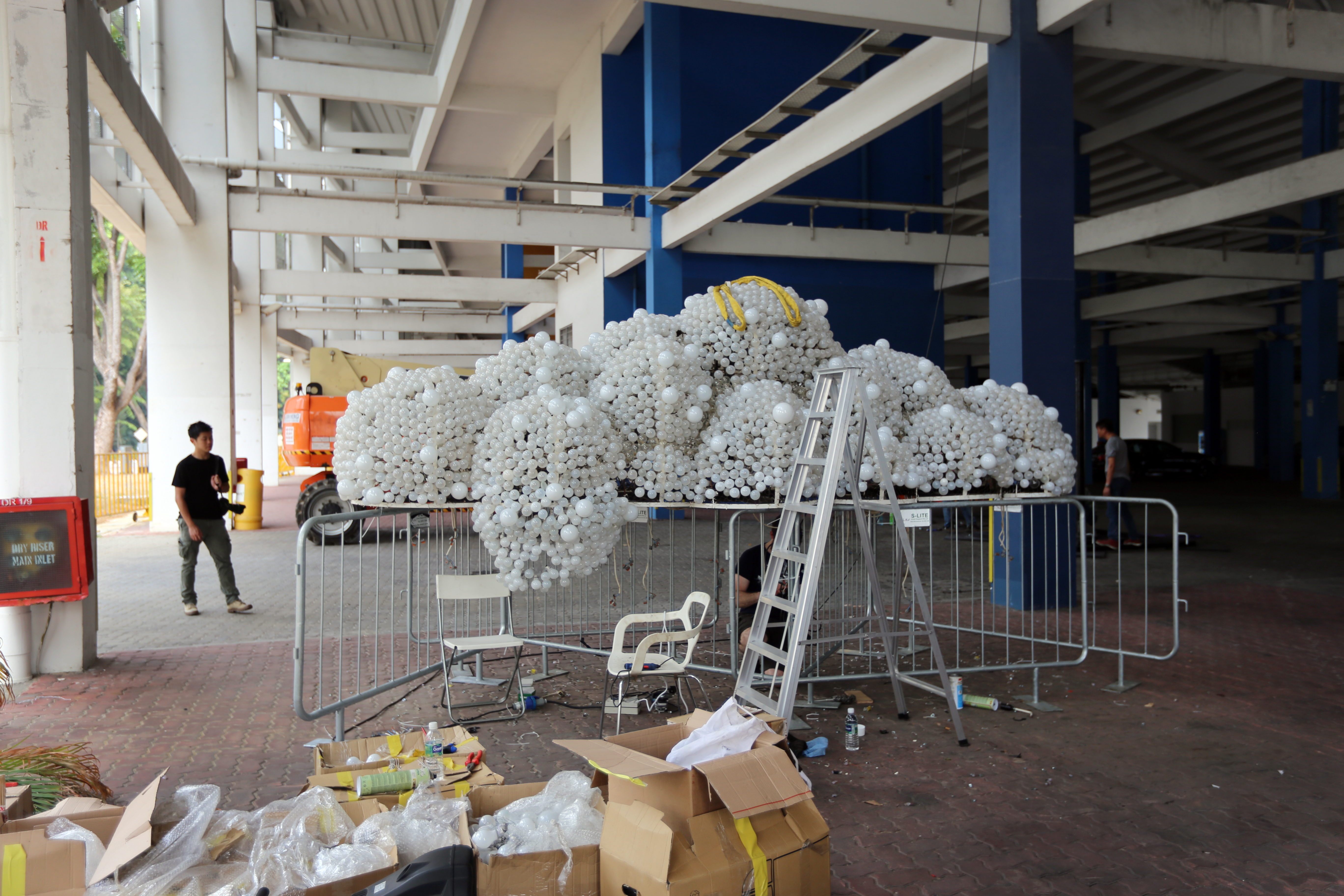
We were fortunate to participate in the I Light Symposium somewhere in the last several days (understandings of time melting as we slip between time zones). Fortunate, because the critical meat of light art is too often lost for many artists amidst the fury of installation, exhibition, and travel. Fortunate, also, because ideas of sustainability are coming to us at a critical juncture in our career, when we are beginning to ask ourselves to choose between commercial and conceptual fields (insofar as those two things are separated), festival versus fine arts contexts (ditto), and financial sustainability in relation to sustainability of heart/idealism.
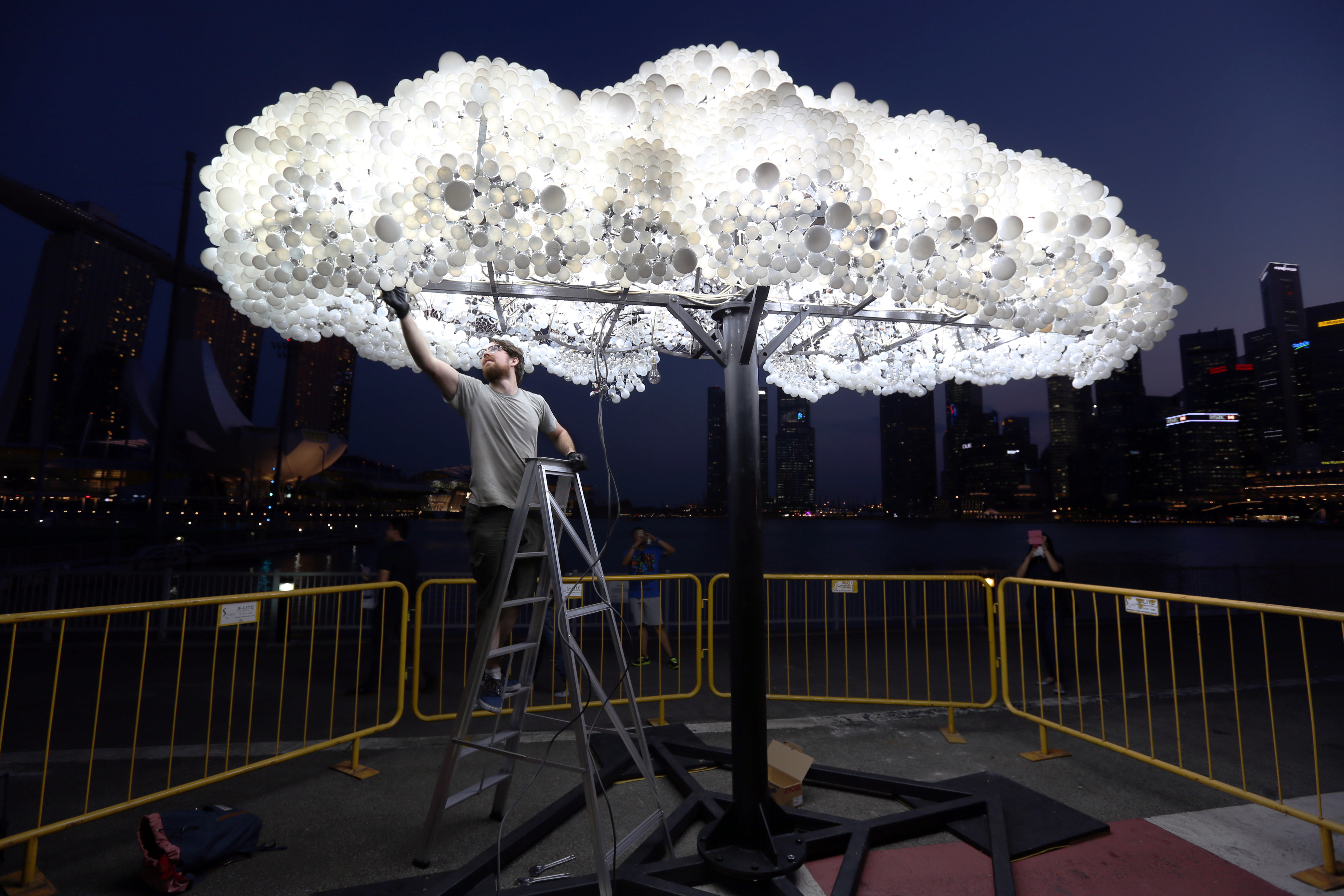
Since September 2012, we have been thrown onto an international playing field, and we must accept the credit and responsibilities that accompany the move into this territory. In the future, we will be examined, by others (curators, art critics, peers, the public) and, more importantly, by ourselves. How can we create art sustainably? And how can our art, in humble ways, play into notions of sustainability?
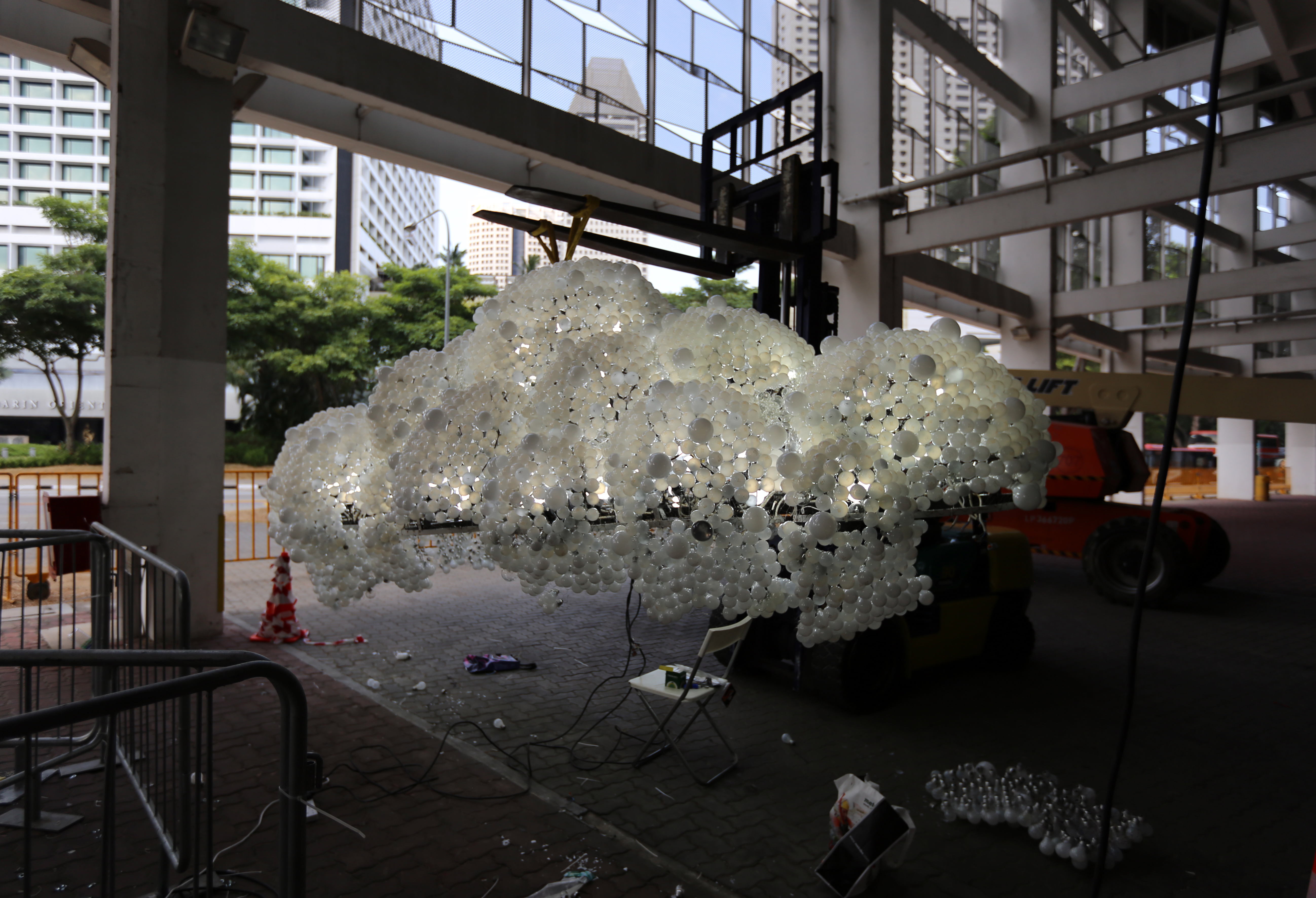
Please note, that this blog, consciously and unconsciously, may reference ideas raised by various panelists involved in the I Light Symposium, the first few chapters of a book written by Prof. Sacha Kagan entitled “Art and Sustainability: Connecting Patterns for a Culture of Complexity,” as well as ideas brought forward by ourselves, as a collaborative team and as individuals. Proper credit will be given whenever possible.
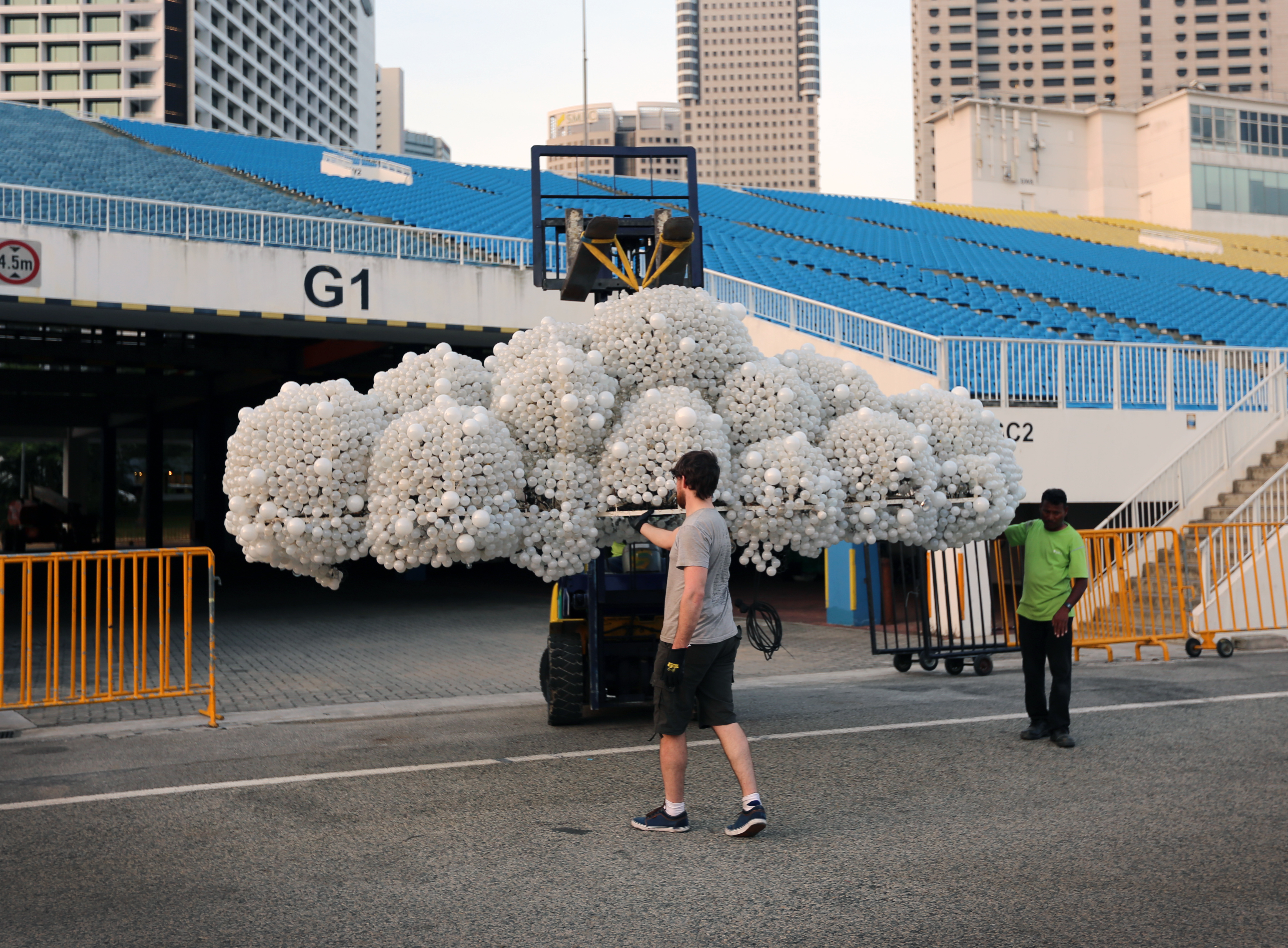
Sustainability is irrevocably tied to an obsession with “The Future.” This is a poignant concern in a city/country like Singapore, where 5-and-a-bit million people occupy an island, and must anticipate the future of a growing population within a finite space. (Interestingly, the location of the festival – Marina Bay – is man-made land, all re-claimed from the sea by entrepreneurs and corporate entities with a focused vision of one potential future).
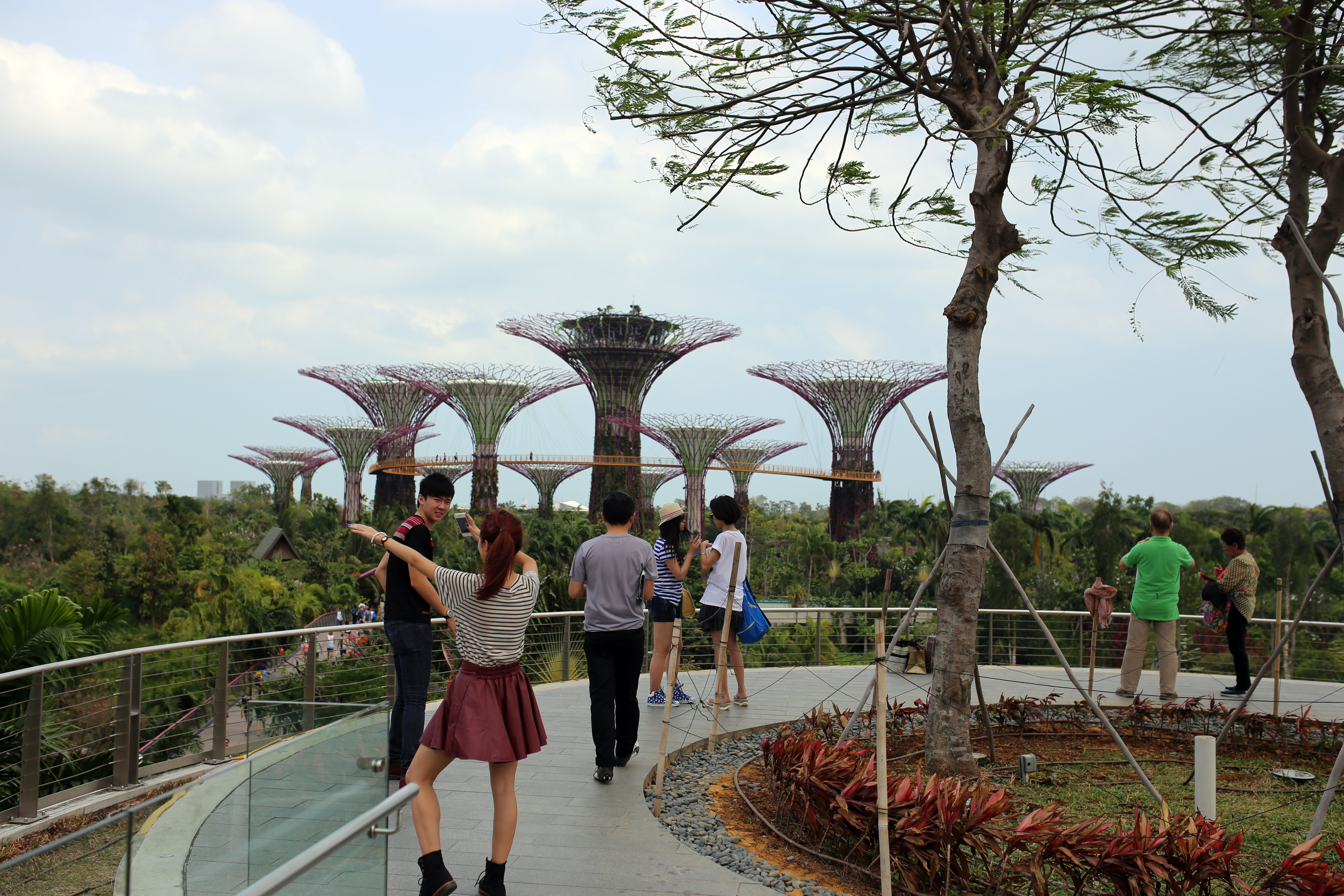
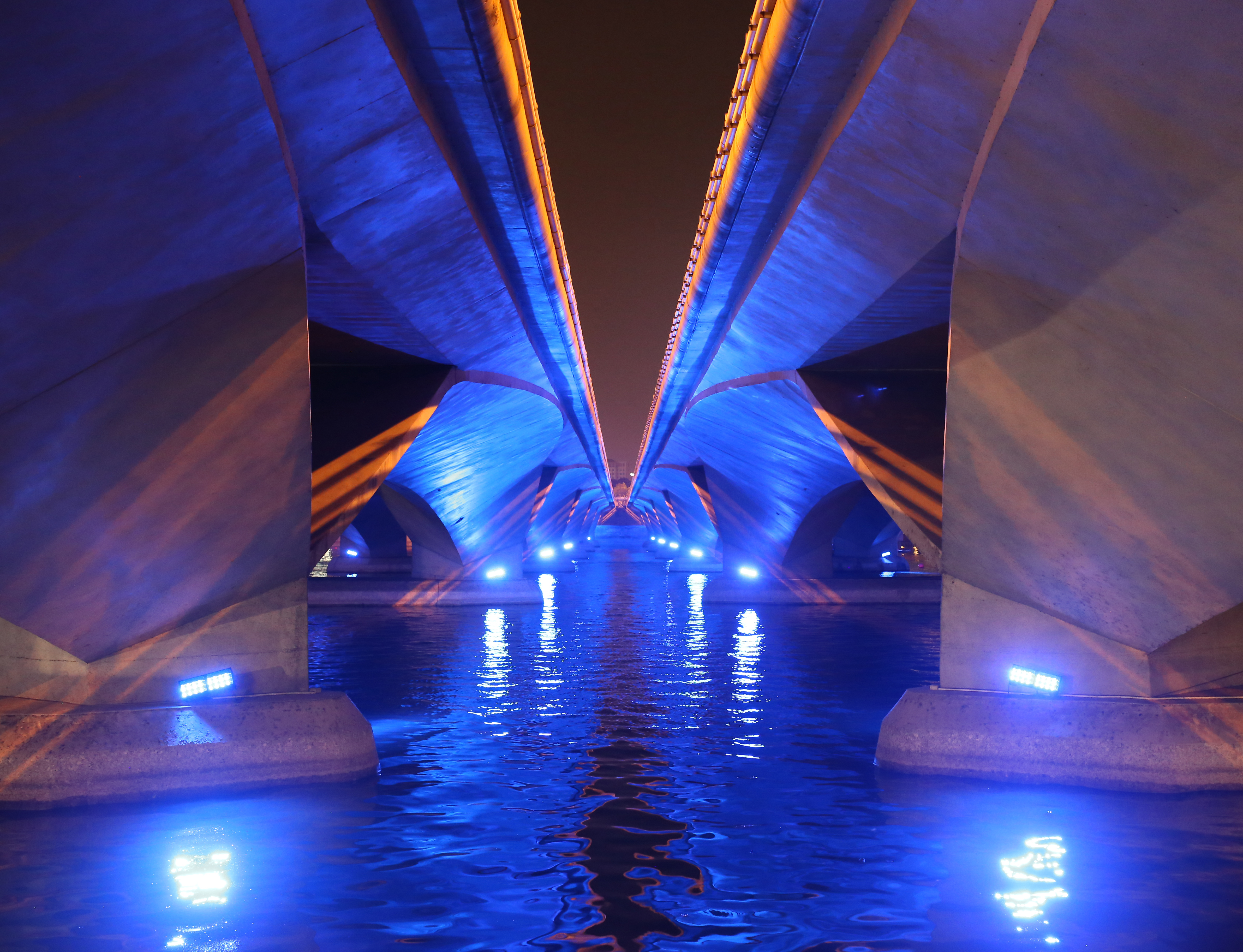
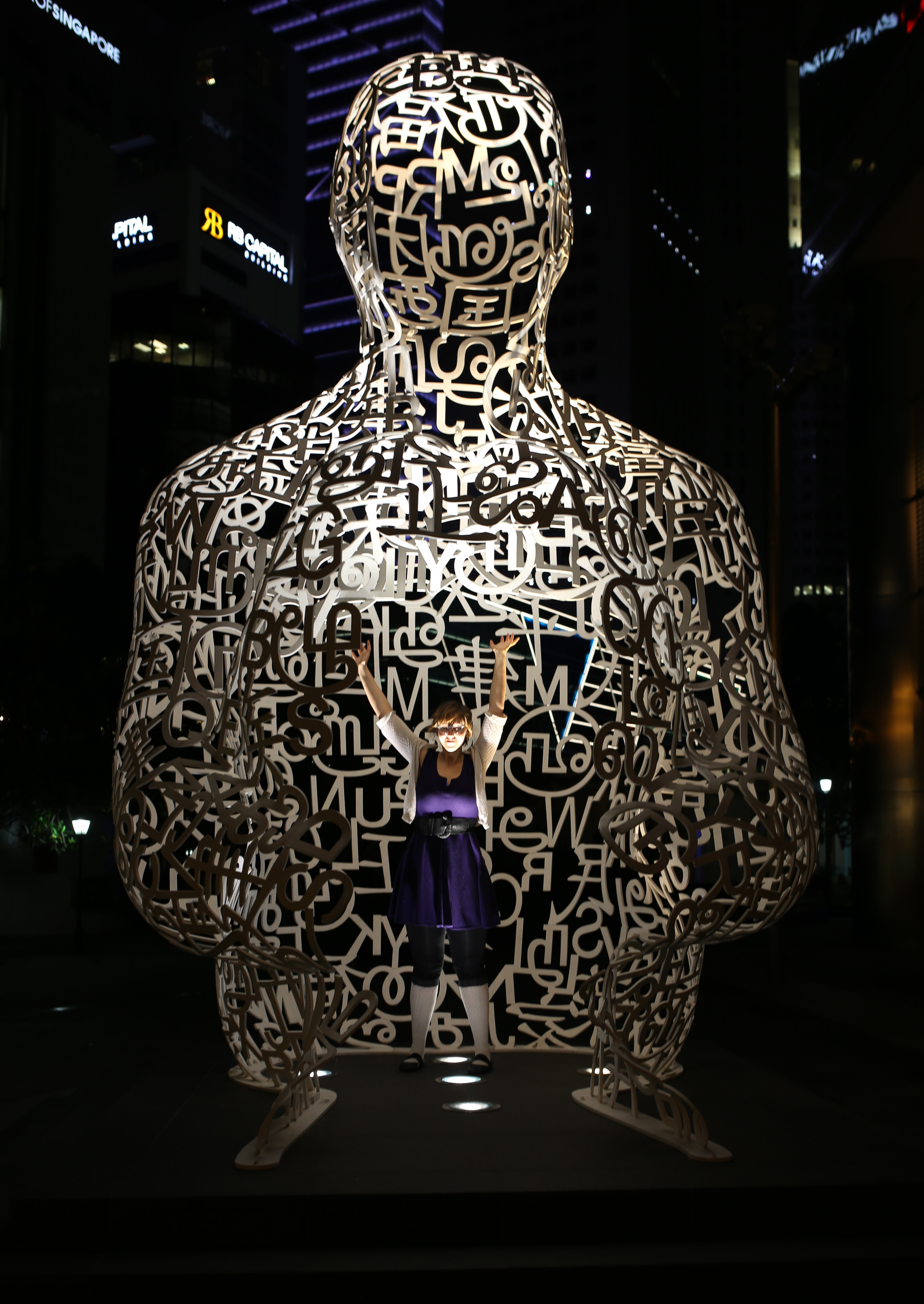
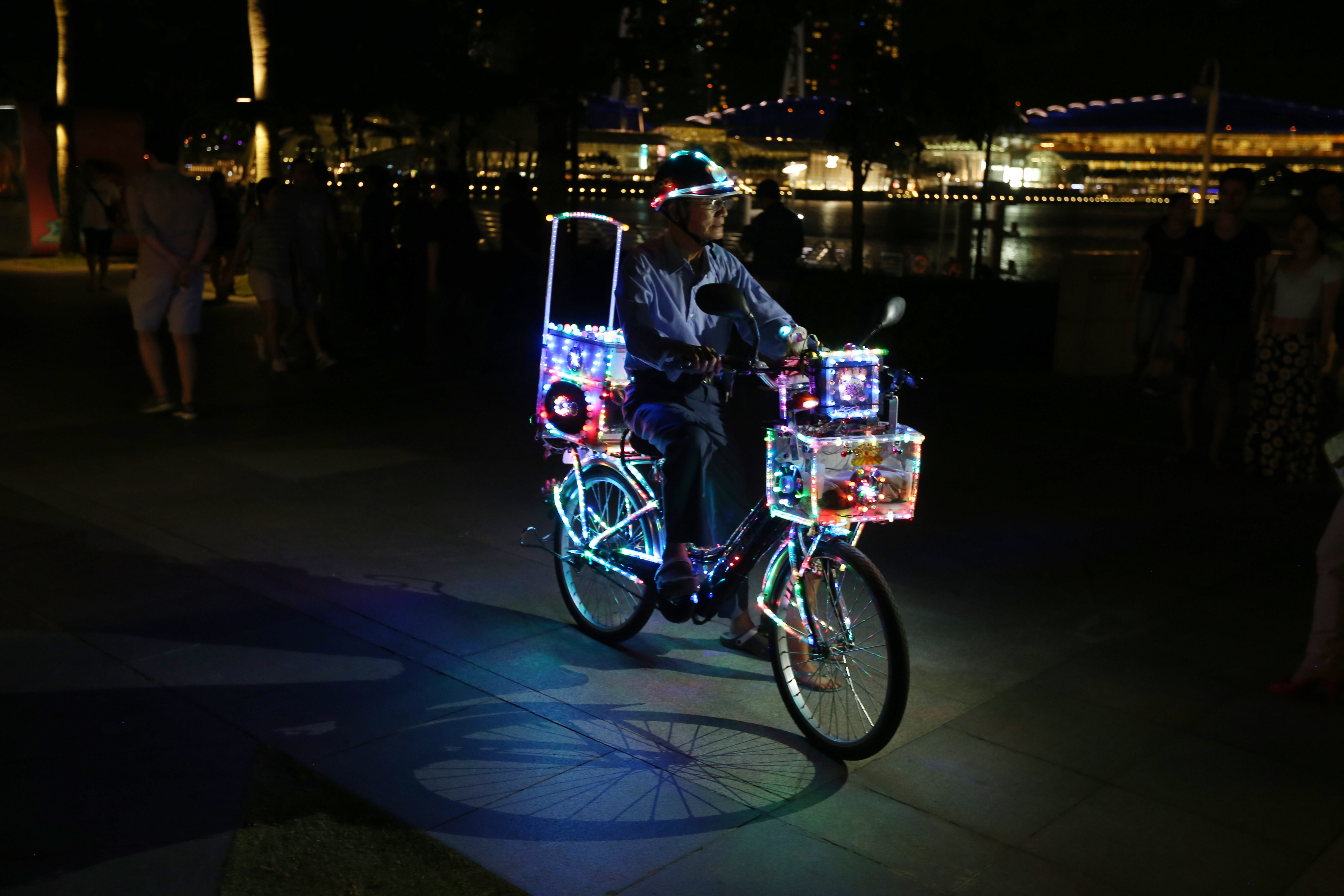
Above images: Singapore’s various characteristic splendors, as we saw them. Art, architecture, and awesome bicycles.
According to Prof. Kagan, traditional sustainability is broken into three pillars: social, environmental, and economic. His writings and lectures focus on a fourth pillar – Cultural Sustainability. This is contributed to by Art, amongst other things.
There are several thoughts around art as a contributor to sustainability. The most tangible, perhaps, is creating art using sustainable materials and processes (ie. using recycled materials, local labour, low-carbon footprint processes, etc). The other is less immediate. It involves exploring concepts of sustainability less overtly or literally, and more as “pure” and sometimes utopian ideas.
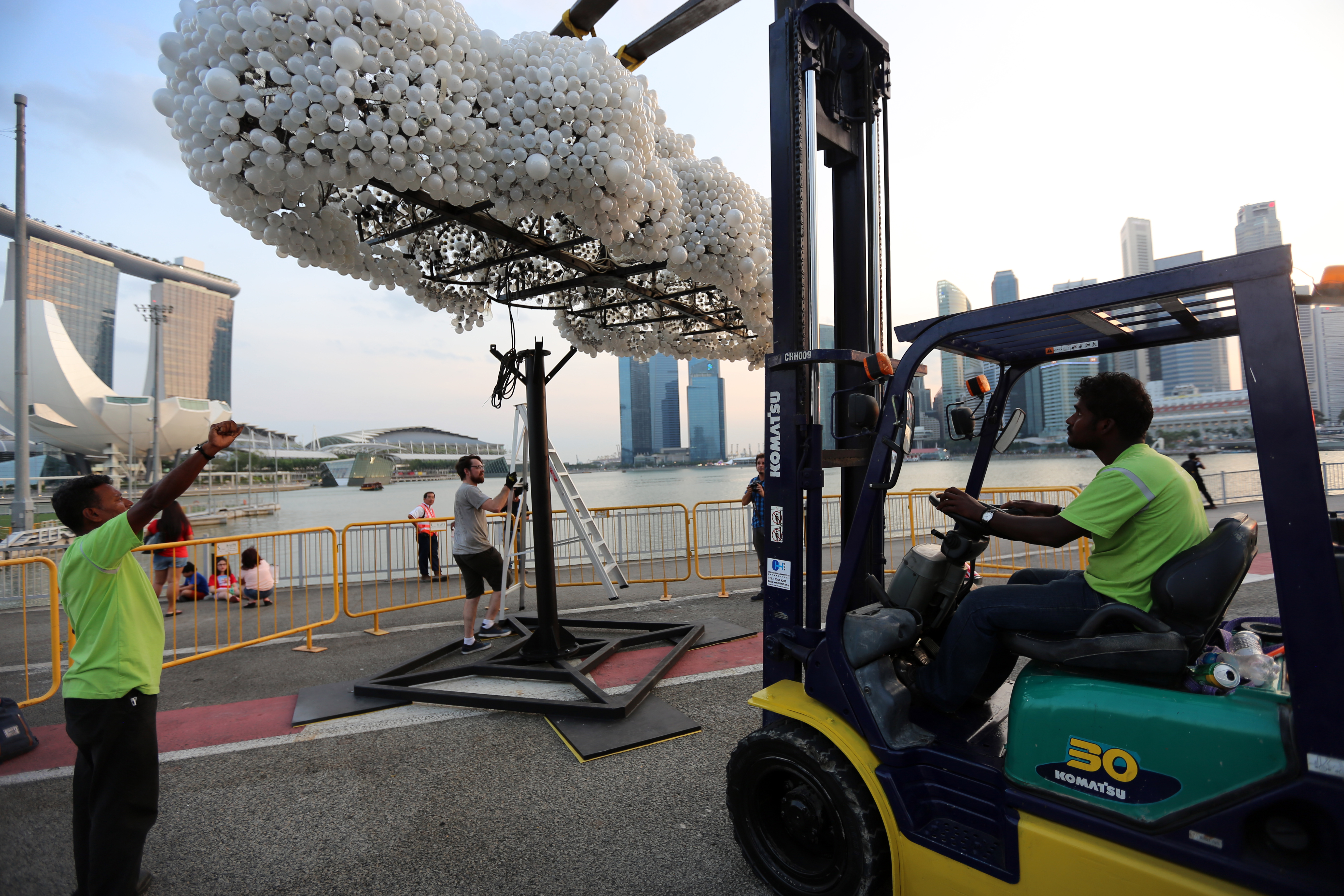
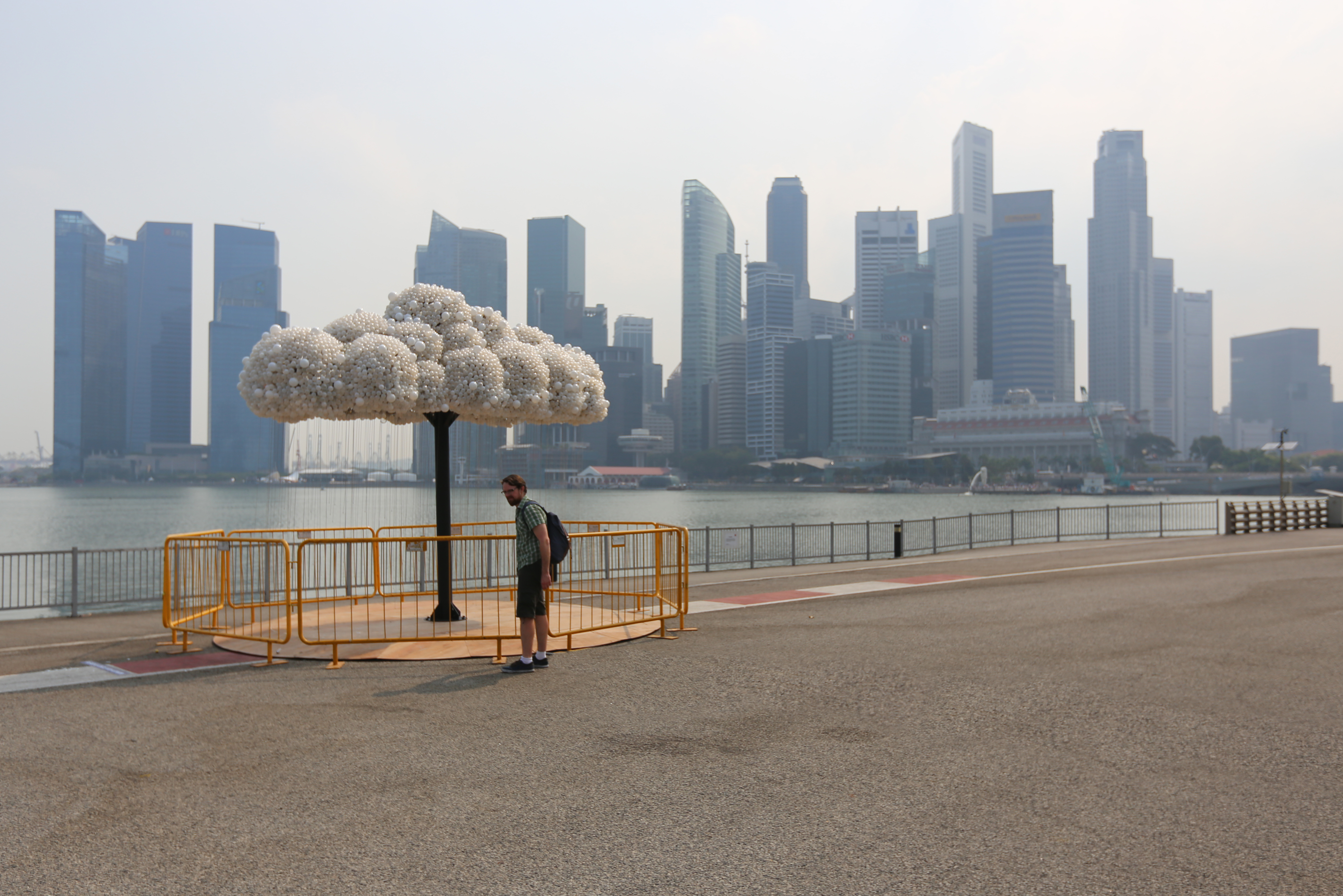
When characterizing CLOUD within a context of sustainability, Wayne and I struggled with various contradictions. Despite using partially recycled materials when creating the first CLOUD (burnt out light bulbs, scrap yard steel), we’ve always been hesitant to qualify the work as any sort of environmental statement. Our initial motivation for using re-appropriated materials were primarily financial, aesthetic, and social – it was a cheap and accessible way of creating a diverse aesthetic for a large-scale sculpture. It created a community surrounding the sculpture via crowd-sourcing materials from friends, strangers, and local organizations.
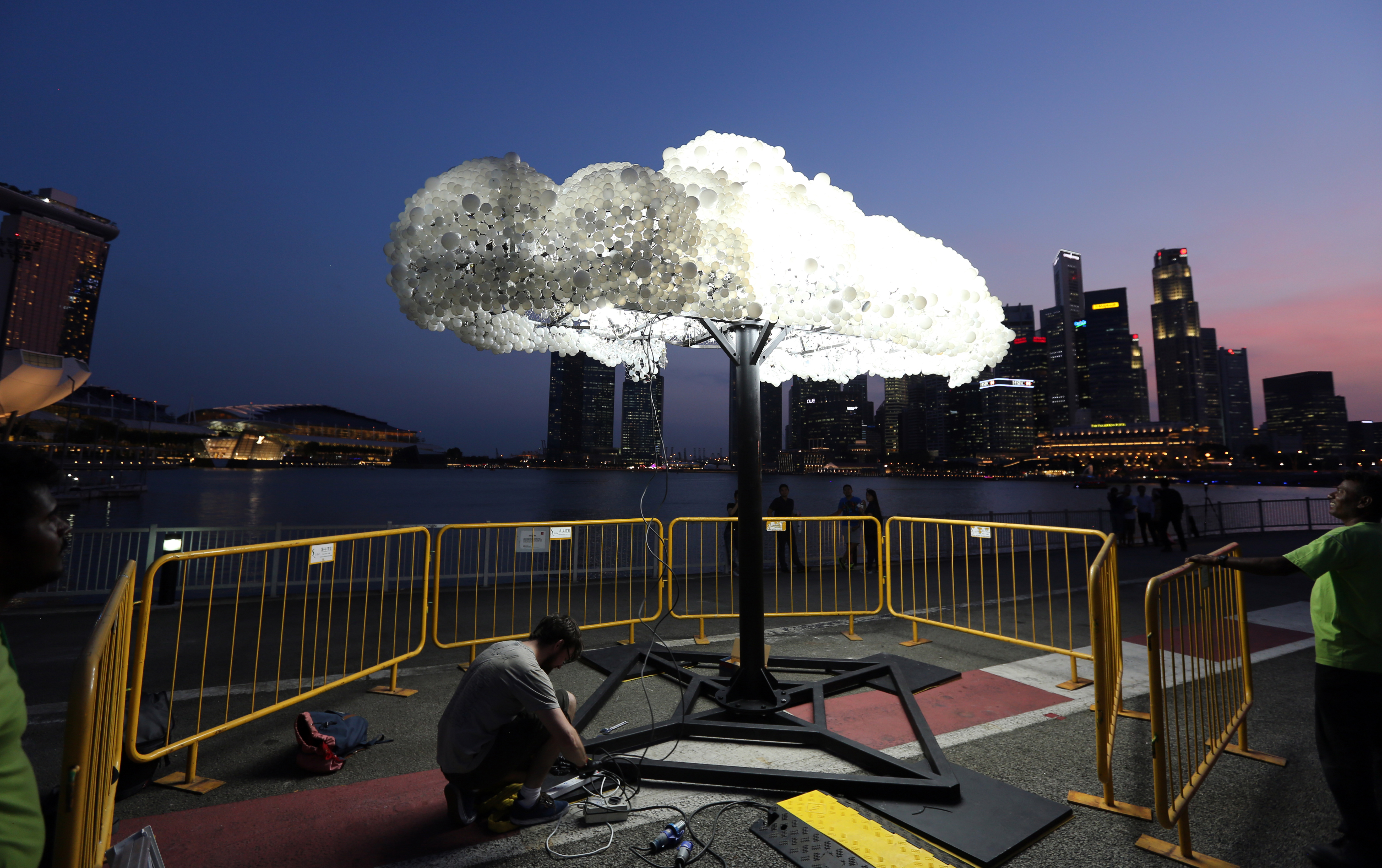
In the end, we fell in love with the history of the objects, the marks of their past in different domestic settings. We were heavily influenced by the much more sustainable works of Calgary-based artists Lane Shordee (who creates giant, beautiful sculptures out of dumpster-dove materials and thrift-store finds, recycling everything from the screws holding wood together, to the sawdust from his saw). We have created other projects, much more directly tied to ideas of sustainability (or unsustainability, perhaps), notably The House Project, WRECK CITY, and PHANTOM WING. But when I Light Marina Bay asked us to consider CLOUD within the frame of sustainability, we were being asked to acknowledge other, also present characteristics and concepts of the work.
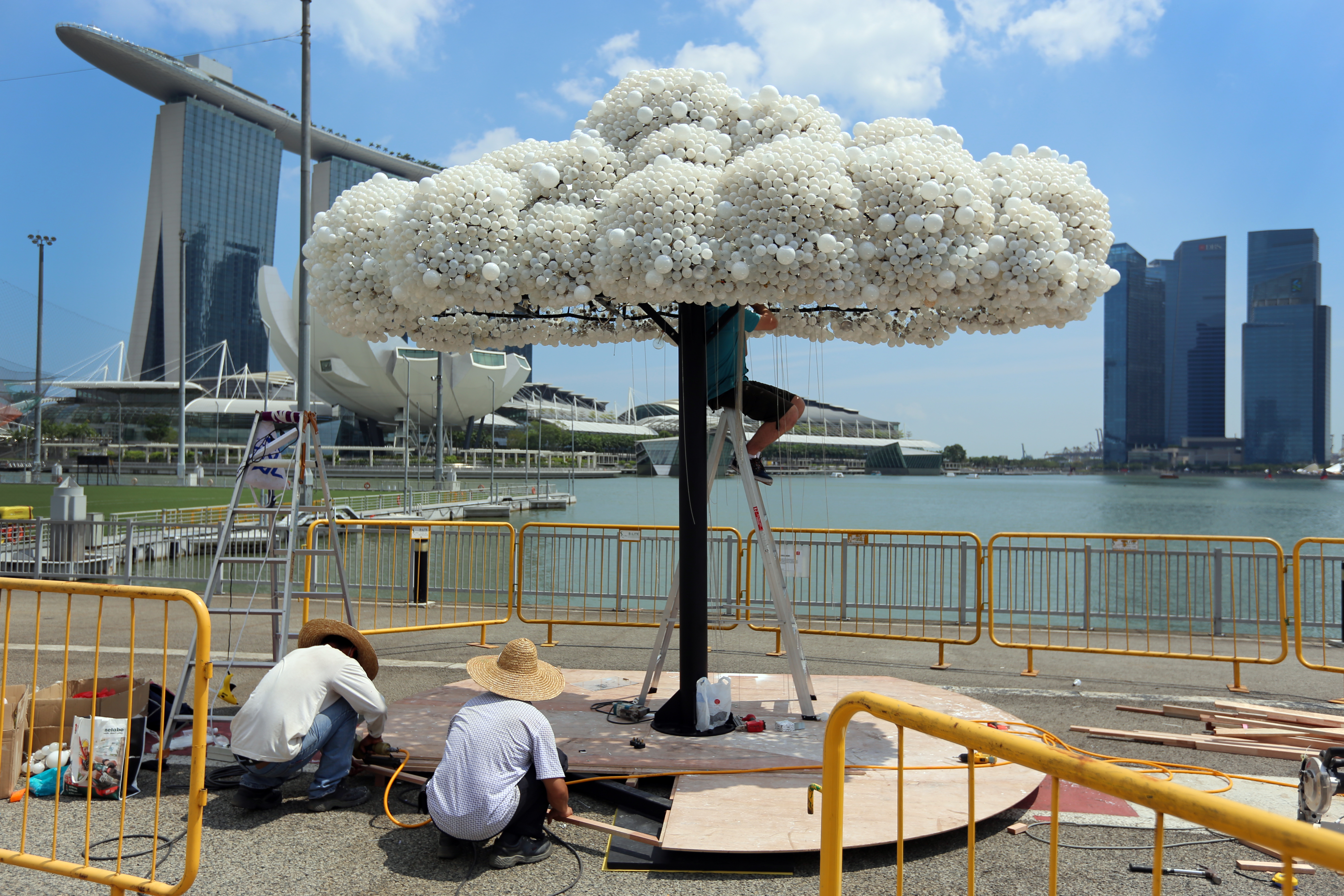
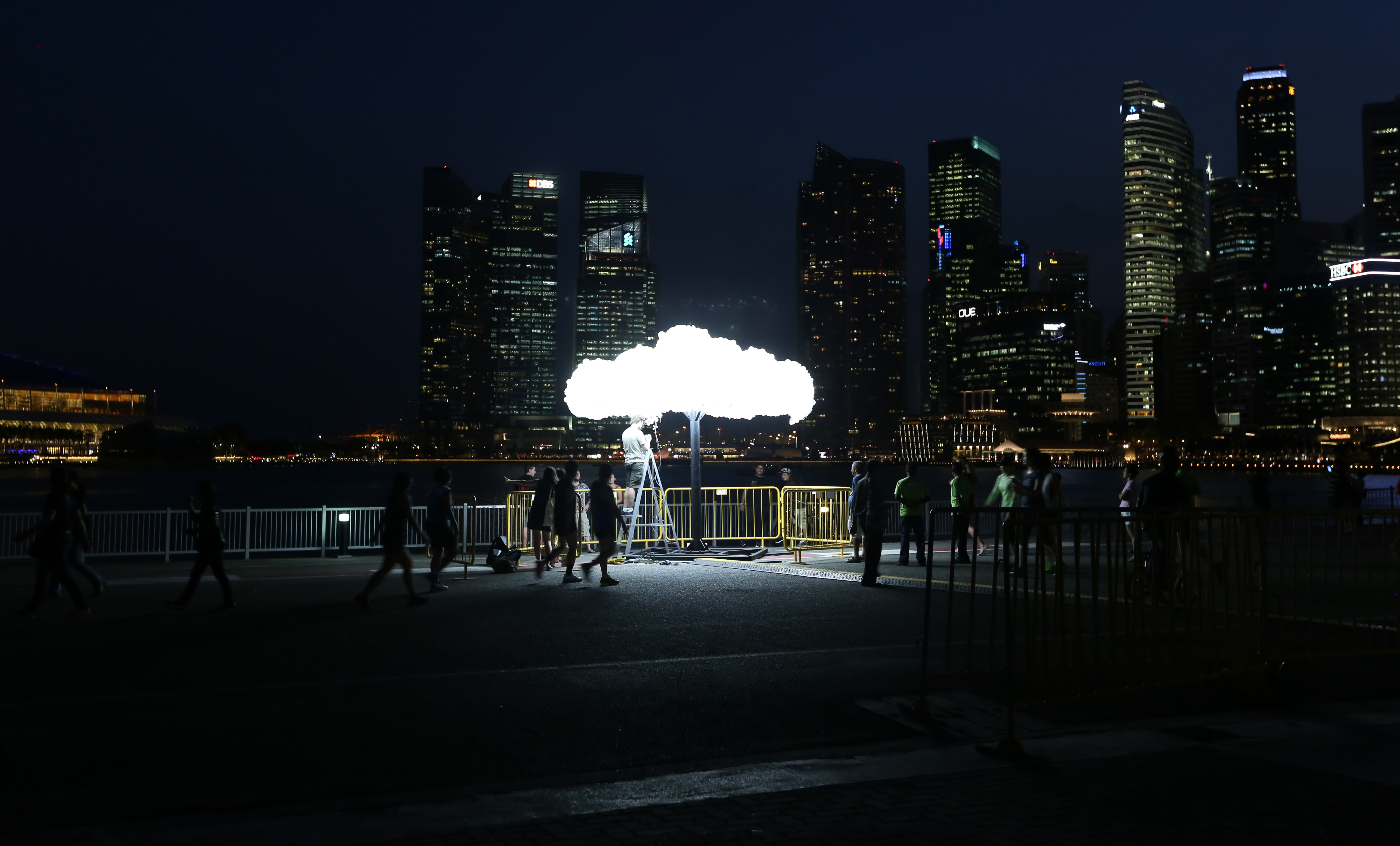
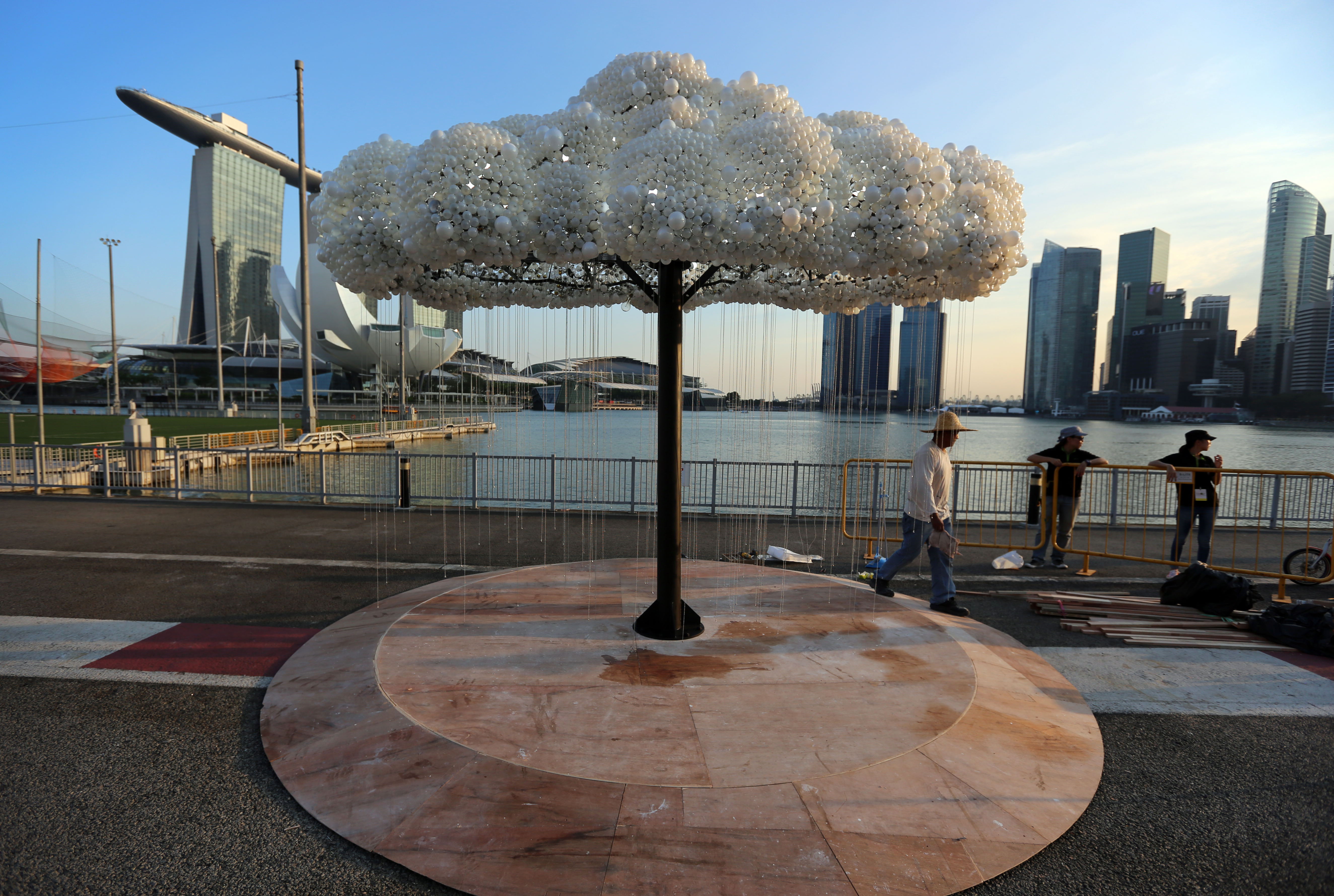
Typically, when we consider sustainability, it is in relation to ourselves as artists (lower income people, making large public things with an emphasis on collaboration, collectivity, and community). Art-making needs to be a sustainable path for us, financially, but also through other value-systems (the less tangible things that charge our batteries, stoke our enthusiasm, and convince us to pursue the dream). Showing our work needs to be a sustainable system (how do we create opportunities for ourselves? How do we meet deadlines? How can we continue to grow, change, and re-invigorate our practice as collaborators, friends, and individuals?) The administrative and organizational factors of being full-time artists influences this conversation (boring and invisible necessities like e-mailing, scheduling shipping, customs, visas, taxes, etc). The list goes on! – Our relationships with our contributors and community needs to be sustainable, our relationship with our City and each City we visit, our relationship with each other as autonomous human beings, etc…
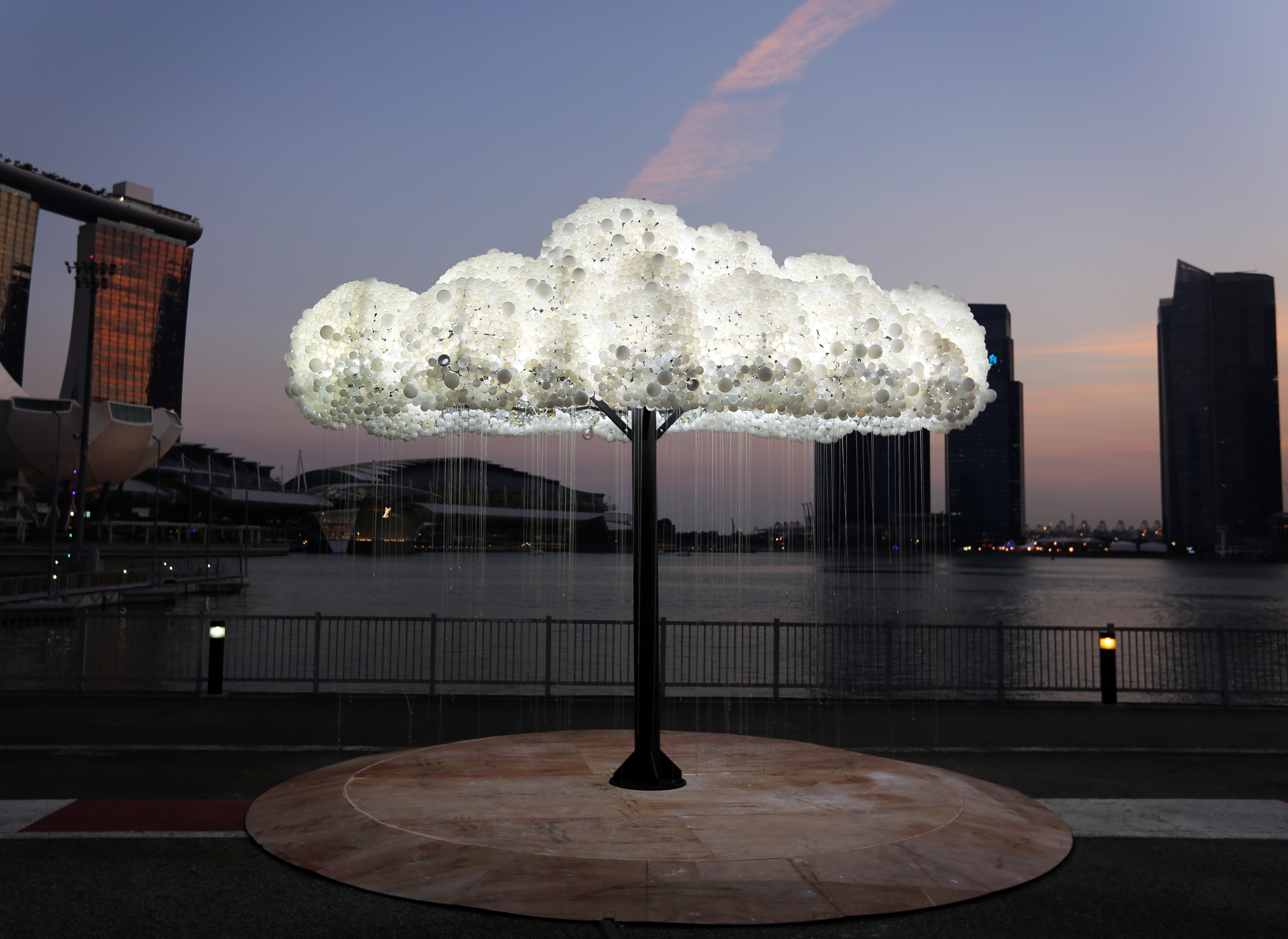

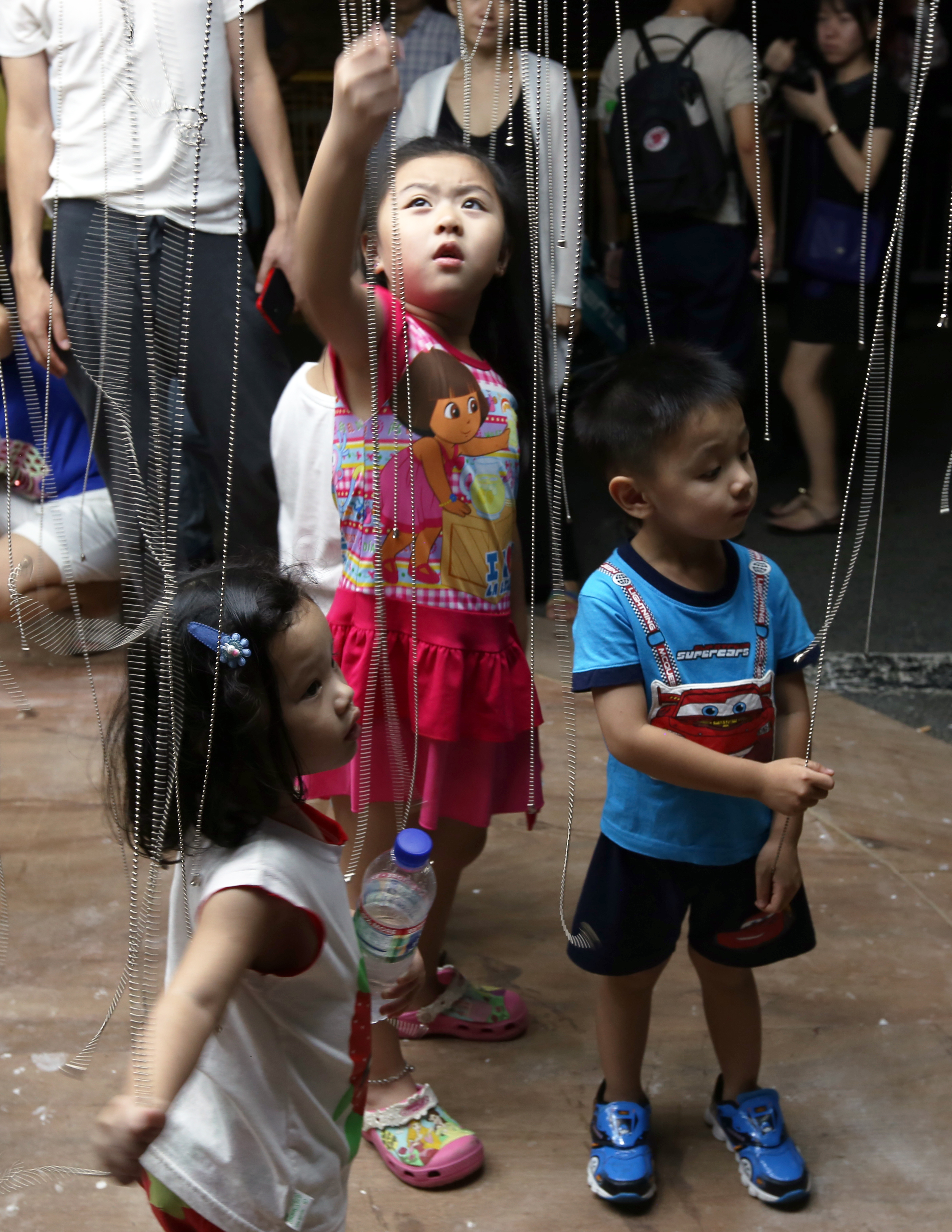
As we dissected CLOUD specifically, connections with sustainability that emerged were surprisingly less to do with physical and material connections (burnt out light bulbs, brand new LED technologies, etc) and more to do with ideas of compound action, the whole being greater than the sum of its parts, and human connections promoted by the piece.
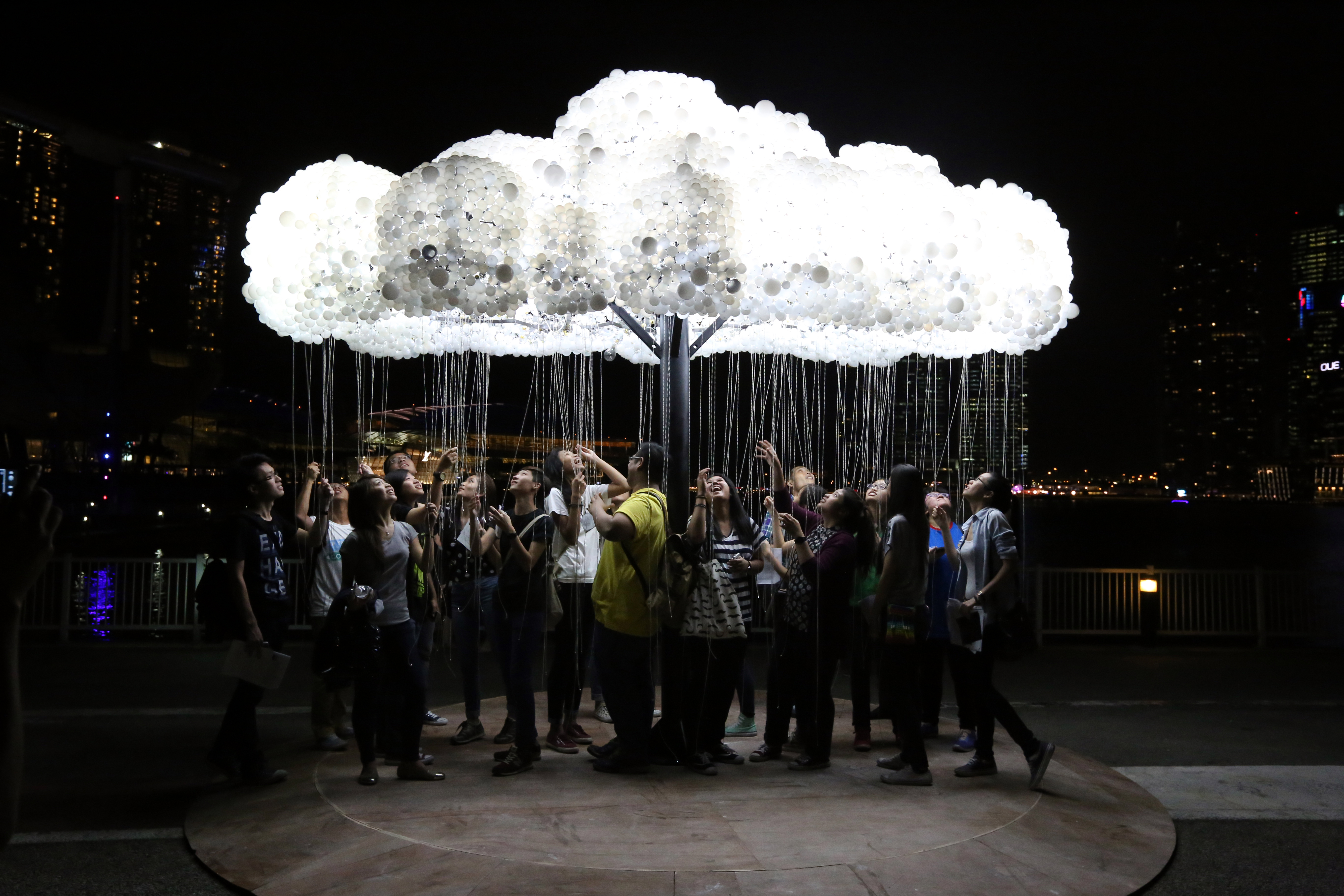
Art + Sustainability speaks about the changing relationship between human beings and our environment over the past few centuries, about our disassociation with the natural world, and about the sciences championing logic above intuitive connections. Technology has allowed us great advancement, while forming undeniable hubris. In some ways, we are outsmarting ourselves, propelling ourselves rapidly towards our own extinction. Logic alone won’t help us now. But collective action might.

An icon for hope and optimism, CLOUD speaks to the analog and collective social powers of community. The strangers beneath CLOUD, pulling switches, seldom realize the changes they’re creating on the exterior of the structure. It’s only when observant people recognize the potential of lights turning on and off and begin to solicit help from the people around them, collectively manipulating the sculpture, that “big change” happens.
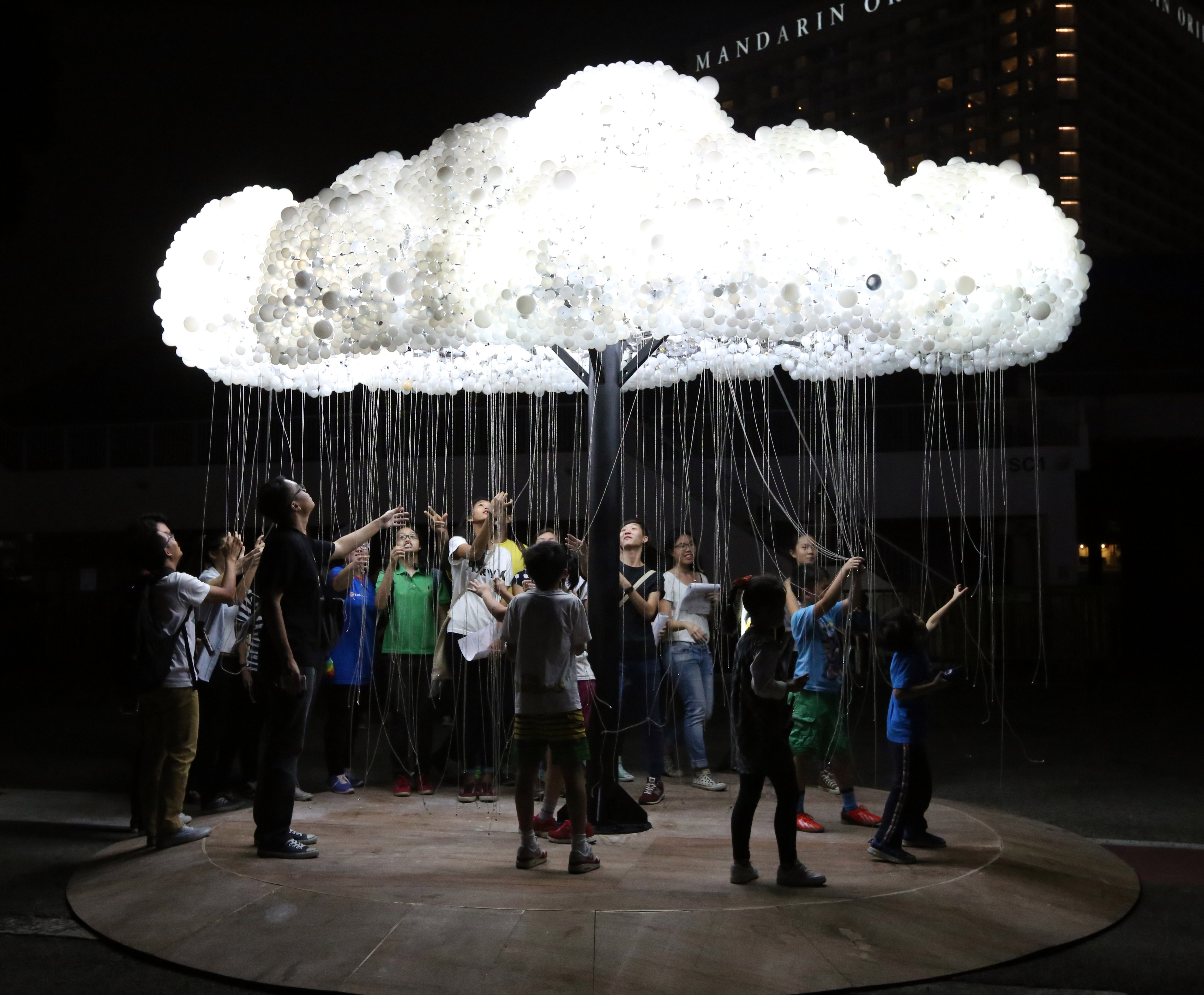
This becomes a metaphor for sustainable action, and for the unstoppable momentum of collective thought. This idea is mirrored by the materiality of CLOUD – each bulb on its own means nothing, but when multiplied 6,000 times, a new understanding forms. Lastly, in forming the first sculpture, each “garbage” bulb collected to from the community posed a tiny question – “What else could this be used for?” and subsequently “what makes garbage unusable? How can we challenge this notion?” Compounded by each bulb contributed, these questions are gently reflected by the sculpture itself.
In his lecture at the i Light Symposium, Prof. Sacha Kagan spoke of “art as a verb for sustainability and transformation.” He spoke about the “experiential process” of interacting with art being “collectively challenging for participants.” He spoke of art as a transformative experience promoting yearning, subverting understandings, encouraging experimentation, and creating empowerment. In Singapore, these concepts were palpable, and we are grateful for their influence, now and in The Future.
New Work by Caitlind & Wayne:


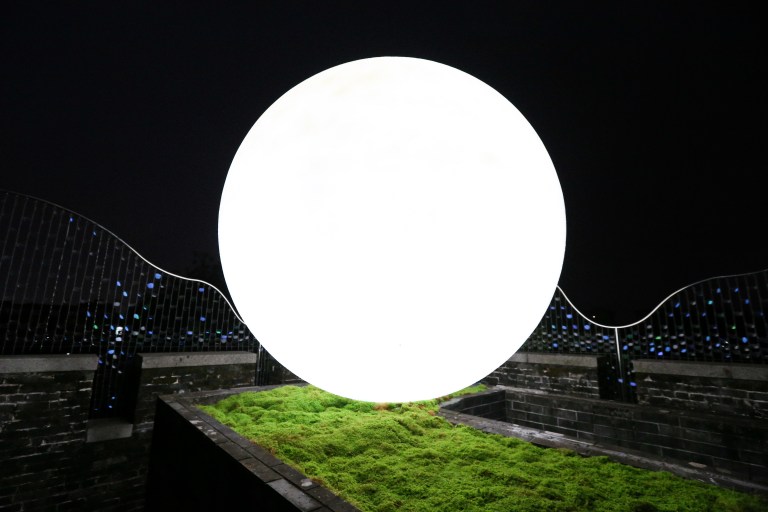
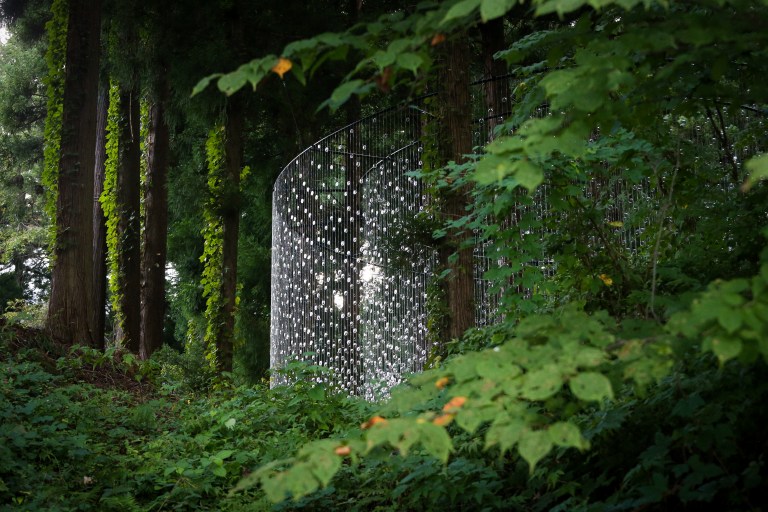

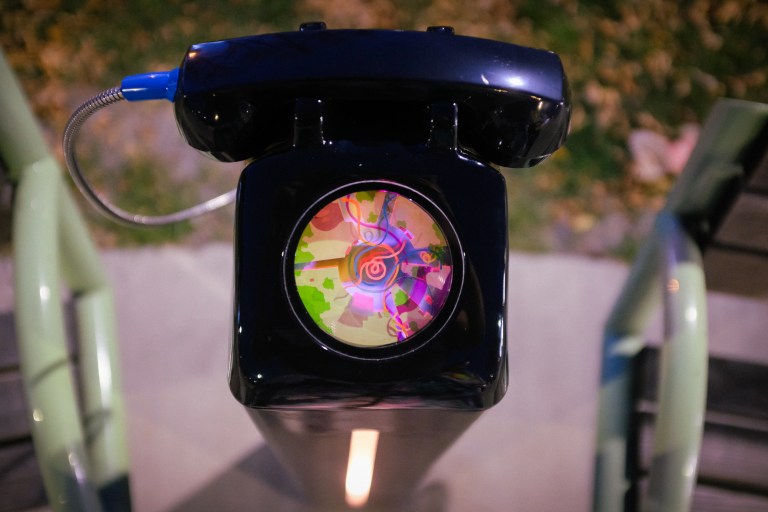
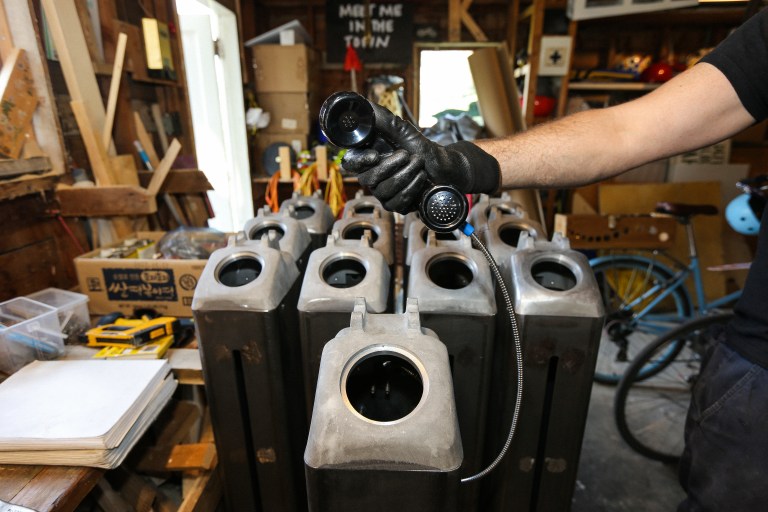
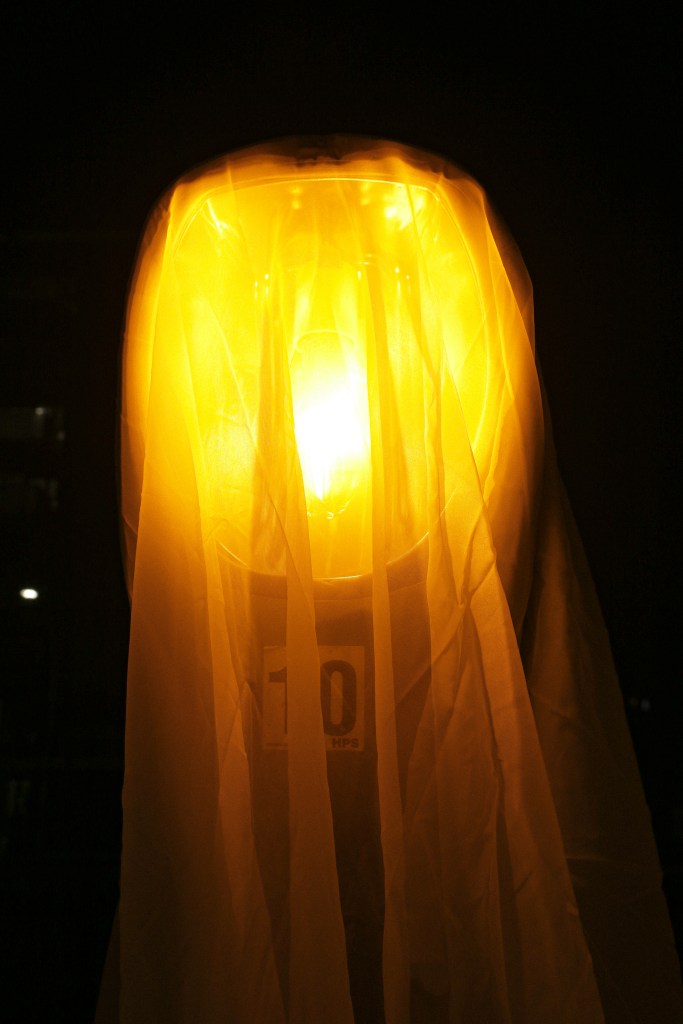






 Caitlind r.c. Brown & Wayne Garrett
It’s very impressive the way that through art is possible to give a very strong message. Use bulbs is a genius idea for ecology that makes his artist, a eco-artist.
At the first time i see that i think it’s very beautiful !
And after i read the blog and i think that’s a real good idea i love the concept it’s very smart and the lights bulbs are the perfect object to show people that every object can have a second life with recycle. These lights represents at the perfection the cloud like we can imagine in our dreams.
Hello , we very apreciate this artwork by the message behind it . More we agree to say that it is magnificent and that we all want to go see this work mainly with the link with the current climate situation in our world that we are experiencing today.
Hello, thanks for helping raising awarness about these modern problem , its incredible that art can be so meaningfull. #sustainability #togheterwearestronger #sigmaearth. Sending love to everyone, and grateful to the artists.
i think this artwork is really beautiful and i think it is very sustainable i love what you have done with recycled products because it really creates the illusion of a cloud that people can come talk together creating conversations
Joris Lagadic de
I always enjoy this kind of commited artwork. I especially like the idea of an outdoor cloud sculpture because it shows that we need to make a point of noticing and enjoying trivial everyday things such as clouds. But it saddens me a little to think that we have to resort to art to make people realize that something as important as reducing waste can be and needs to be done by people like us. And the clever use of lights really attracts attention and brings it to the sculpure showing that everything can have a second life even burned out light bulbs.
I love this art and i found this cloud very beautiful…
I think it is a very good idea to use recyle materials like light bulbs instead of throwing them. I love these artist who choose to reuse materials like that!!!
A striking message ! It really encourages sustainability and shows us that with “garbage” we can make beautiful things like this artwork. Recycling objects and especially those who cause pollution should become an habit.
Your artwork is very original. I like the fact that this is beautiful but also the fact that there is a really meaning throught this. I think that gives hope to the future generation to take more seriously the environmental issues.
I really like this art, I think it is beautiful and useful to show that we can obviously reuse some materials and wastes instead of only throwing them. It can show to everyone that we have the choice to recycle and it shows it worldwide. It is a really good idea and it is impressive the work that has been made on this artwork.
It’s a good way to raise awareness to become conscientious of environmental issues. I like the atypical aspect of the art work but in my opinion, it will still end up littering the environment soon or late. So, for me it’s not the best exemple to expose the environmental issues.
This art is very interesting because are 2 aspect : beautiful and modern for this city; but allow for promote tourism with social media and to share this creation and work who is behind this project. And, is very good for to struggle against polution and for raise awarness about plastic waste problem. This project is very beautiful and touristic but have a really message behind this project more liked.
I think this artwork is beautiful because he is really impressive and difficult to make. Me I see it in two ways: the first is that is artwork is a tree and the second is that he is a cloud. I like the fact that people see it the way they want it. The use of waste shows a very important cause and denounces a problem of current society.
Hello, first, we are very interesting about this project. This is a good idea, to make this cloud with recycle materials to denounce pollution, to give them a second life. Besides, that very original and beautiful with all this recycles led. This artwork is a good way to convey a message about environmentales problems
I think this type of work perfectly combines beauty with the fact of denouncing a cause that is rather important for us and for the future. This artwork convey a beautiful message of coworking and the struggle against the plastic pollution . Finally i really like this artwork because it’s very beautiful and very similar to a real cloud.
Hello. I like your art work, is beautiful, I’m fascinated! Also, it gives a wonderful effect when we look it from far, and makes us feel emotional, especially because he is made of recycled materials . We can see from your art that instead of throwing away objects we can re-use them for art and convey a strong message.
Hello, I really enjoyed this blog first by all the photos we give us, to see all these people around, appreciating and playing with it. With all of this, we understand the message, act alone isn’t the good solution, act together is the right. What an exemple of art with old and reuse materials, it’s proof we can move forward in this ever-growing issue. Theo world needs more art like this!!
We think this art is really attractive at the first side we love it immediatly, and want to see it in reality.
This artwork is really enchanting. It is a very good way to show that sustainability can be a really beautiful thing. This art is a great example of what humanity can do if they make their mind into it. I am grateful to those who made thsi work because i got to see this kind of art which is very impactful in my eyes. And i hope that this art work reached the right audience to make changes and to, at least, reduce our pollution nowadays, that is dangerously degrading. Anyways, i believe this is a great and beautiful way to express this danger through art.
I think that this artwork is a really good message who deals with beauty and denouncing the warm of the earth. The message of the artwork is really important and all the people should listening the message of the artist. To finish I really like this art because I think that every people should do something for the planet.
Congratulation for your artwork it’s a great idea for raise awerness the people while assimilating the art and the ecologic creation. I very like the use of light bulbs and continue like this to create a new future for us.
hello, I really enjoyed this blog first by all the photo we give us to see these people around the cloud, appreciating and playing with it. With all of this we can understand easier the message you want to convey. The loneliness isn’t the good way to change world but together we can do it! This cloud is the perfect exemple of art with old and reuse materials, it’s a proof we can move forward in this ever-growing issue. The wolrd needs more art like this!!
I think this artwork is really beautiful, and I like that it is good for the environment. Use recycled materials is very creative because it really looks like a cloud. It is a great idea !
Your artwork is really interesting !! And the fact that it’s represent a cloud, it’s beautiful and kind, principally when it’s turn on. And the fake rain add a form of reality, and a interactive artwork for everyone. Also this artwork send a beautiful message !!
We think this artwork is really attractive and beautiful. When we se it we immediately want to go to Singapour for see it by ourself. The fact it’s next to the water remind us the natural cycle of water. The LED probably represent the rain and it’s probably really funny to be under that cloud and touch this fake rain. The light give an impression of carring place. We really like this artwork wich is very agreable to watch.
LEA & MORGANE G
I think this artwork is original but beautiful. I think it’s a good element for decorating a town. Also this artwork is like a dream , when you trying to touch the sky but you touch a lighter cloud. That’s great.
LEA & MORGANE G
I think this artwork is original but beautiful. I think it’s a good element for decorating a town. Also this artwork is like a dream , when you trying to touch the sky but you touch a lighter cloud. That’s great.
omgggg
In my opinion, it’s a very good idea for us, for planet Earth . It’s also a beautiful creation, it can raise awareness people with reuse materials and be a beautiful place for visitor. I really love it congratulations continue in that way.
We find your art poetic, the fact that it represents a cloud in the middle of these large urban constructions brings a kind of softness to the city. We think its a really good idea !
This cloud is a very beautiful creation, it allows to convey a very beautiful message with recycled materials, the work is impressive. The people can see this art and to question oneself about pollution.
This project is an interesting idea, because that prove the art and recycling can make a great pair. This little cloud is not only beautiful but also a positive point for the environment. The link between the materials used and the Festival of Lights was very well thought out.
This artwork is nice and beautiful, we appriciate the history of this place, and the way it was made. Using recycled materials is very creative, also the message conveyed is a message that the new generation should know. The light in the installation attract the eyes and made us want to look at it. To sumup, we this art work because of the impact it has on the audience and the impact it will have on the next generation.
We think that this art is very interesting and unique, it shows to the population of Singapore how recycled materials can be used to make an art work that moves in the light art festival so that more people can see it and interact with it. The artists are very talented and impressive.
Hello, wou’re work is a great idea ! Effectively is not only beautiful, but also eco-friendly. It makes children dreams and at the same time, it’s a strong message to raise awarenes people thanks to recycled materials. The cloud makes with light bulb, elicits an emotional response. Moreover, it’s representative of Singapour because is modern like the city. It’s encouraging tourists to respect environment and fight against plastic pollution. It’s attractive to attract more tourists, and give us the desire to go to Singapour to go to see this !
This artwork is really incredible, it conveys a very beautiful message. The intended message is very well conveyed and important in relation to the environment which must be protected.
I like this art because it is very beautiful and useful for the planet. The fake rain adds reality to the cloud and reuses light blubs it’s a good idea because it encourages people to recycle. I love it !!
okay
Nuage” in Singapore is more than just a project — it is a poetic vision materialized, a delicate balance between ecology, art, and architecture that redefines the way we think about urban living. From the very first glance, Nuage feels like a breath of fresh air in the dense urban landscape — a place where buildings don’t dominate the sky, but rather float within it. Just like its name suggests, Nuage (French for “cloud”) evokes a sense of lightness, fluidity, and harmony with nature. It’s not simply a place to live or work — it’s an invitation to experience the city differently.
At the core of Nuage lies a profound ecological philosophy. Every structural element has been designed with sustainability in mind. The buildings are covered in vertical gardens that cool the air naturally, reducing the need for artificial climate control. Solar panels are seamlessly integrated into the architecture, collecting energy without compromising aesthetic form. Rainwater collection systems and circular water reuse technologies help minimize waste, while natural ventilation systems reduce energy consumption. Nothing is left to chance — Nuage is a model of low-impact, high-awareness design that reflects Singapore’s commitment to a greener future.
But what makes Nuage truly exceptional is the way it intertwines ecology with art — two forces that often speak different languages, yet here, they coexist in perfect symphony. The entire site is conceived as a living museum, where every space — whether a walkway, a façade, or a rooftop — becomes a canvas. Sculptures made of recycled materials rise like organic extensions of the landscape. Interactive installations respond to wind, light, or even human movement, creating a dialogue between people, nature, and the built environment.
Artists from across the globe have contributed to this vision, blending cultural diversity with a shared ecological message. One can wander through immersive light tunnels inspired by cloud formations, or sit beneath kinetic mobiles that mimic the rhythm of falling rain. The result is a sensory journey — one that stirs not just the eyes, but also the mind and the heart. Art in Nuage is not confined to galleries or walls; it floats, it breathes, it reacts — much like clouds themselves.
Nuage reimagines urban space not as something that must conquer nature, but as something that can coexist with it. Walking through the project feels like drifting inside a dream — a suspended space where the sharp edges of urban life are softened by organic design, natural materials, and open skies. The architecture doesn’t impose itself; instead, it mirrors the movement of the wind, the softness of daylight, the ever-changing moods of the sky. It is flexible, ever-adaptive, and alive — just like the clouds for which it is named.
This project is also deeply human. Community gardens flourish on rooftops where residents can grow their own food, strengthening both sustainability and social bonds. Open-air amphitheaters host performances and public art events, transforming Nuage into a cultural hub that celebrates creativity in all its forms. Even the layout encourages connection — between neighbors, between disciplines, between the individual and the environment. In a time when many urban spaces encourage isolation, Nuage does the opposite: it brings people together under a shared sky.
The symbolic power of the cloud — ephemeral, ever-changing, universal — is at the heart of Nuage. It reminds us that cities, like nature, must be dynamic. They must adapt, evolve, and breathe. Nuage is not just a space; it’s a philosophy. It’s a response to the urgency of climate change and urban alienation, a gentle yet powerful demonstration that we can design differently. That we can live better. That beauty, sustainability, and community are not opposing forces, but essential parts of a new urban harmony.
As cities around the world grapple with pollution, density, and disconnection, Nuage offers hope. It is a working model of what the future could look like — where architecture is inspired by the sky, not in its attempt to dominate it, but to learn from it. Where buildings don’t just shelter people, but uplift them. Where art is not an afterthought, but a foundation. And where ecology is not a constraint, but the very source of creativity.
Nuage is not just in Singapore’s skyline — it is now a part of its cultural and ecological identity. A floating symbol of what is possible when bold design meets deep care for the planet. A cloud you can walk through, live in, and be transformed by.”
XOXO
This form of art is very kindly because this mix the beauty of art and the message he want to delivery about electricity consumption and light pollution. He allow to raise awareness people about this subject and encourage them to watch ou about
the pollution, the Earth and people too.
I like this art because it is very beautiful and useful for the planet. It shows to the population of Singapore how recycled materials can be used to make an art work that moves in the light art festival.The light give an impression of carring place. We really like this artwork wich is very agreable to watch.
I was so excited to discovering this! This type of project is pretty cool and really important to standing with sustainabilty. I am so impatient to seeing that in France ! 😀
This artwork was insane and really poetic . It’s important to convey a message about climat change and global warming
congratulation.
Hello it’s a beautiful message to help our planet.