


How do you envision something for a particular place?
In 2017, we visited the shrinking town of Omachi, Japan to create a piece called Beyond the Veil for the first edition of Northern Alps Art Festival. The experience was wild and eye-opening, offering insights into the psyche of a place suffering from the impacts of declining populations. This year, we were invited to return to create a new work responding to the context of this beautiful town in the heart of the Japanese Alps: A Whisper in the Eye of the Storm.

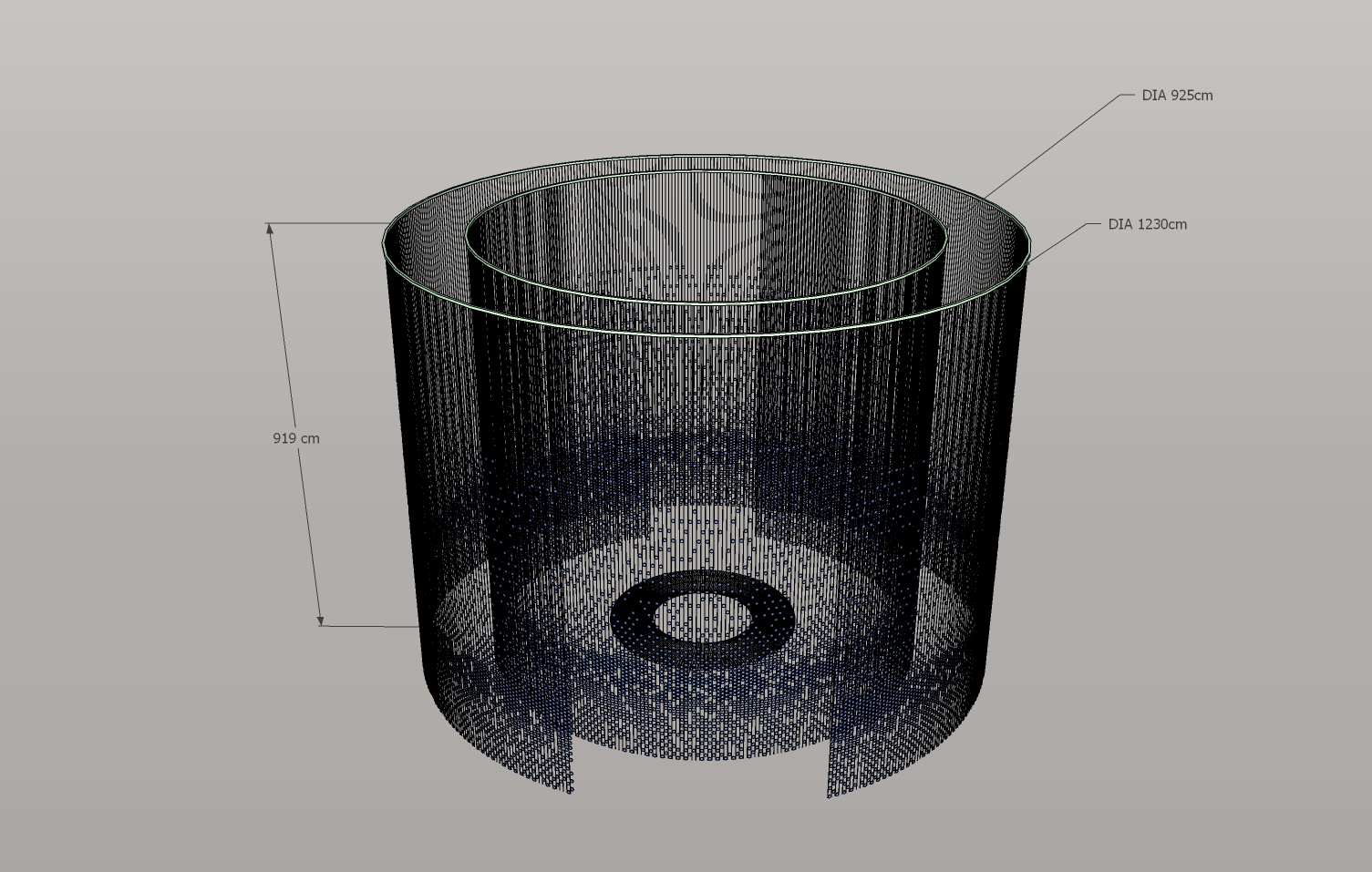

Early renderings of A Whisper in the Eye of the Storm
From the moment we were invited to return, we knew we wanted to work with vision as a conceptual foundation – biologically, psychologically, spiritually, and relationally. We are interested in the relationships between site and sight, and the eye as a point of gentle, touch-less connection between human, landscape, and so much more.

With this in mind, we began to explore correlations between vision and water – one of the main aspects of Omachi’s living landscape, as well as a theme of the festival – which eventually led us to A Whisper in the Eye of the Storm.
We’ll talk about more about the finished artwork in our next blog entry, but here we want to share some of our process and approach to conceiving and creating this sight-responsive work.

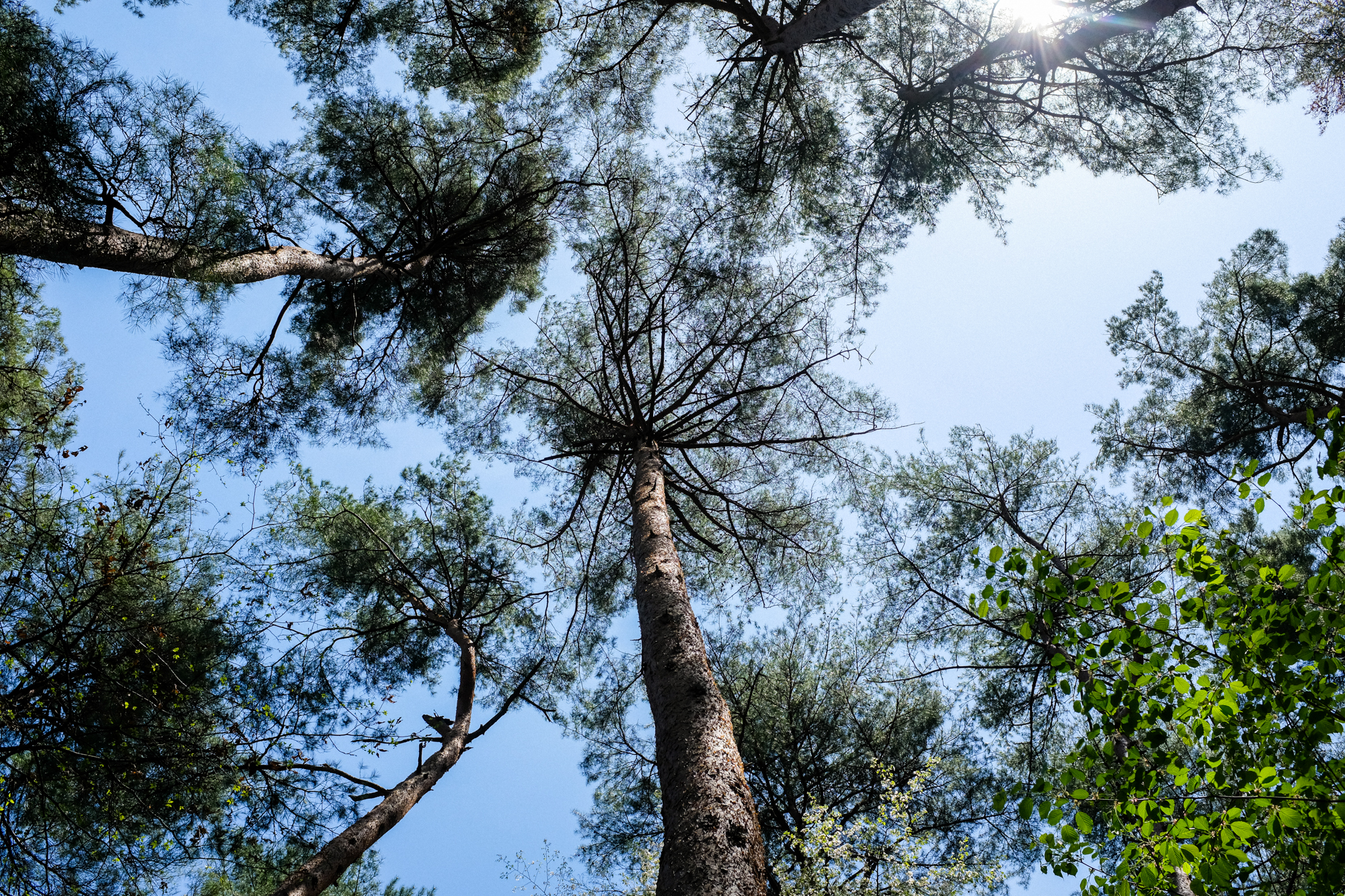
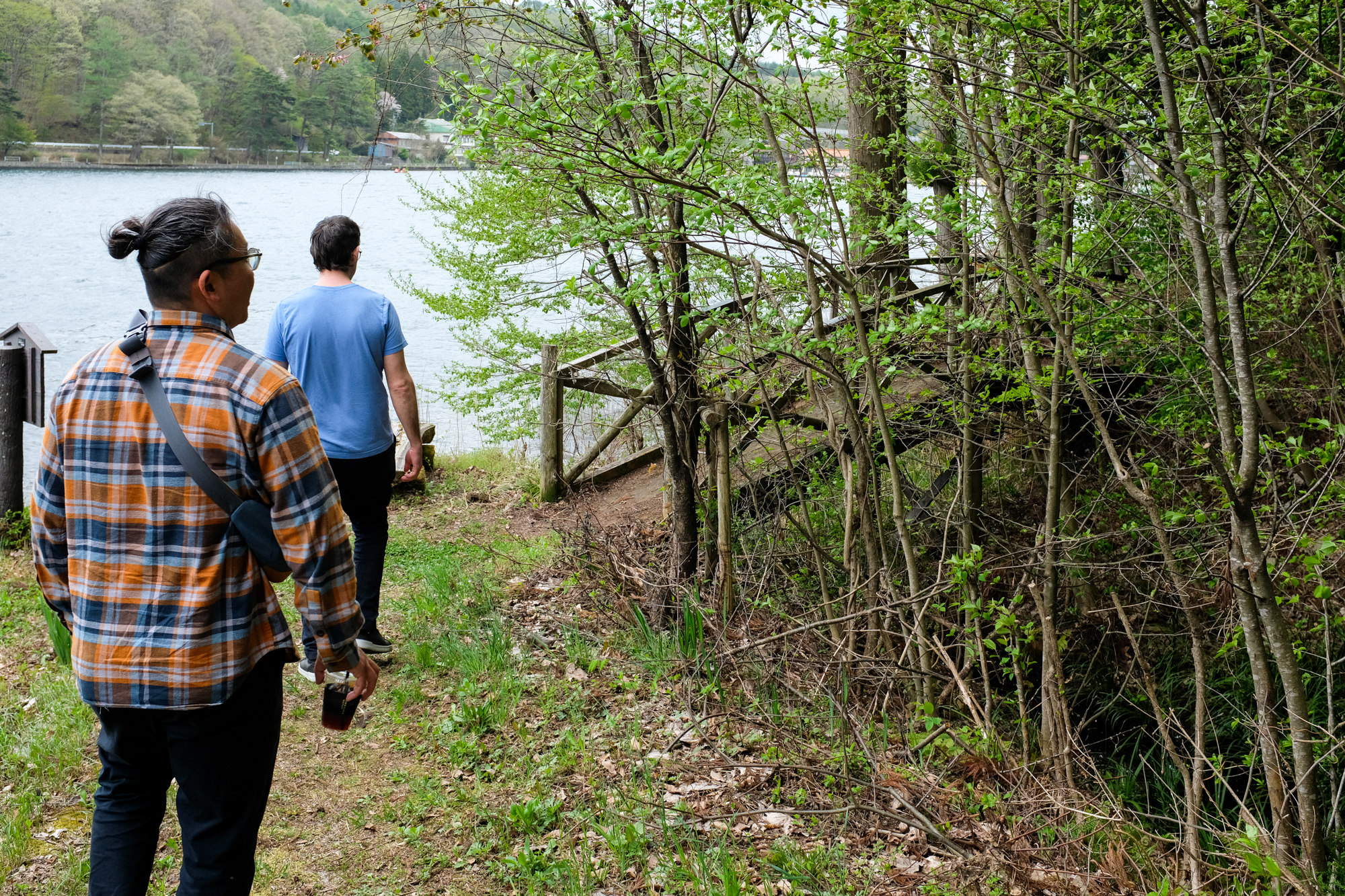
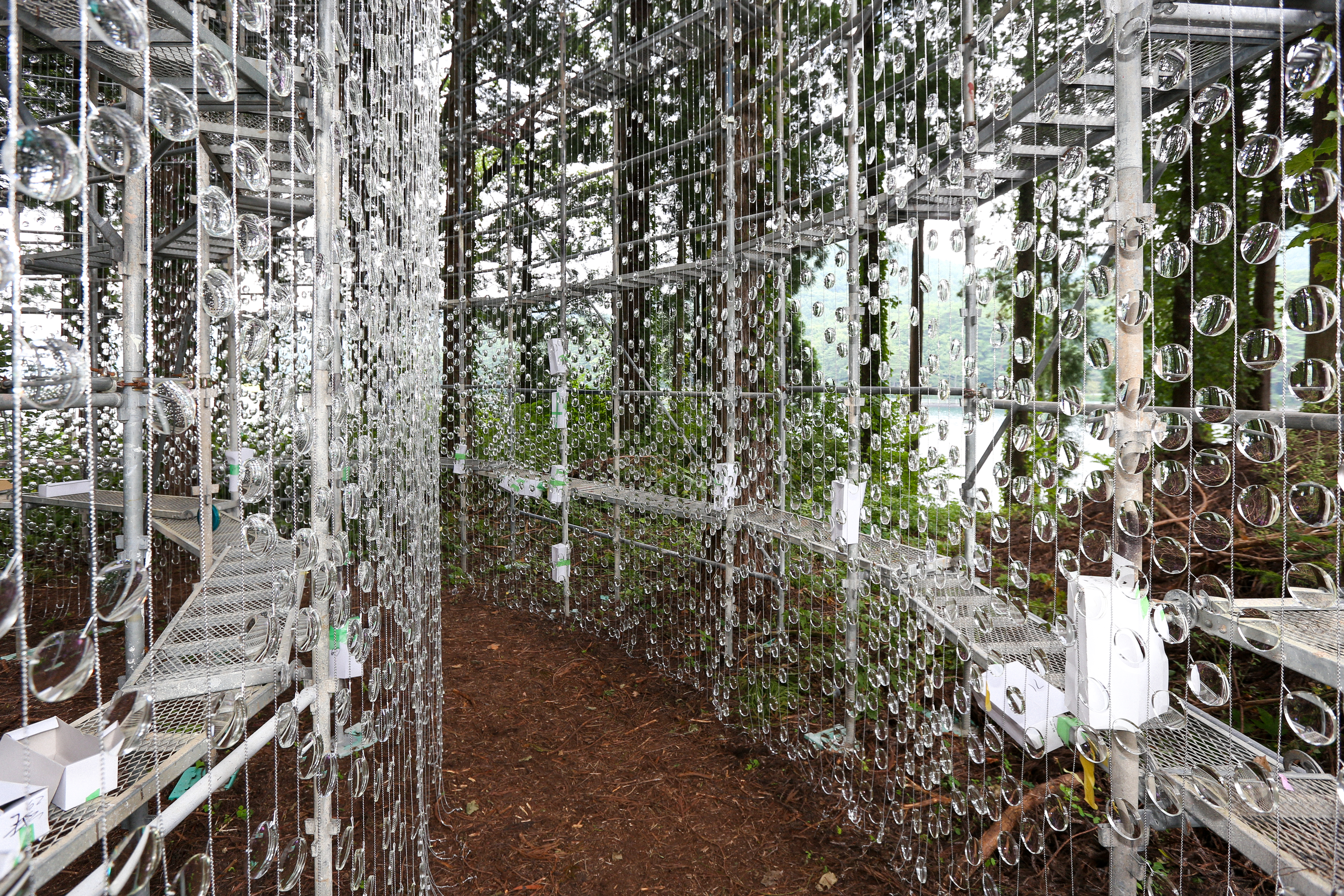
We worked with Festival Coordinator Sosei Sato to select our site: a cedar forest behind Nishina Shrine along the shore of Lake Kizaki. Tall centennial trees tower above a soft forest floor, crawling with insects and amphibians. It was important that the work be placed at the edge of a forest, near an iconic view, in a place where the sounds of the land could be heard.


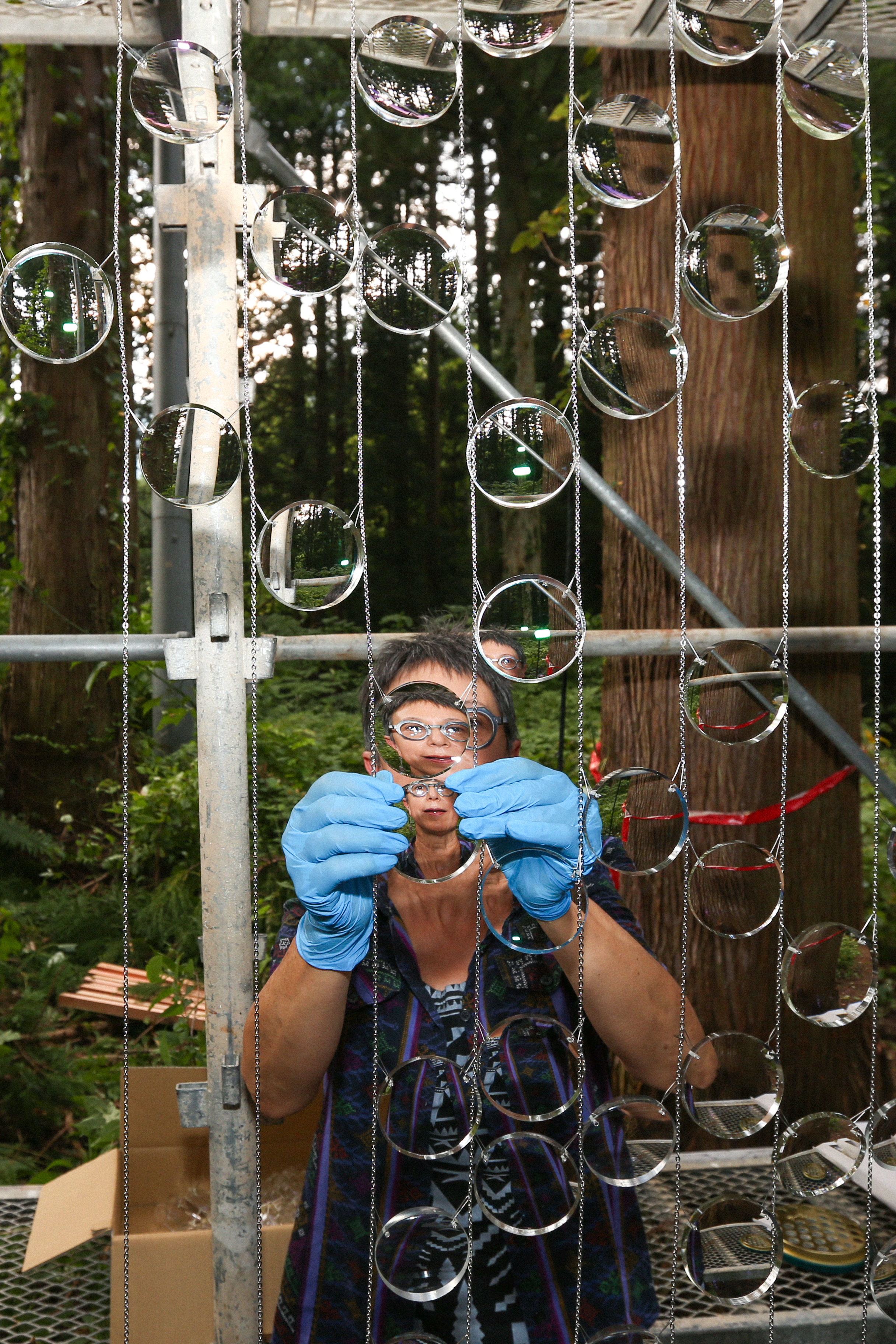
As a material, we used recycled (deadstock) prescription eyeglass lenses. We acquired thousands of lenses secondhand through the Canadian Lions Eyeglass Recycling Centre – a vision-based charity located in our hometown of Calgary/Mohkinstsis. We have collaborated with CLERC on multiple eyeglass-based projects dating back to sea/see/saw in 2015.
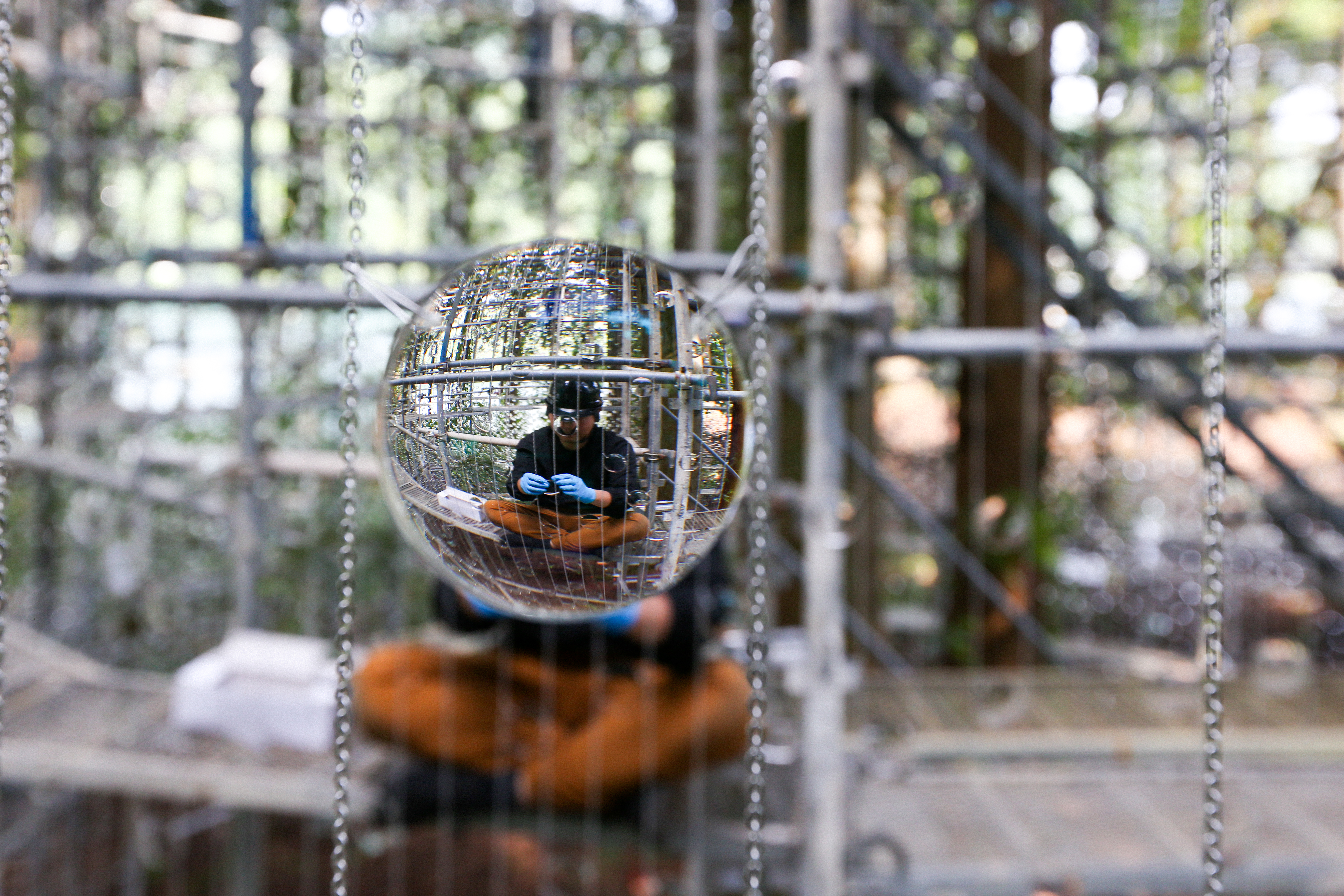
Lenses speak to the mechanisms of sight and collective vision. For this particular piece, we wanted to use long-distance prescriptions, which shrink the landscape into small “scenes,” and multiply your vision – almost like the eyes of a dragonfly.

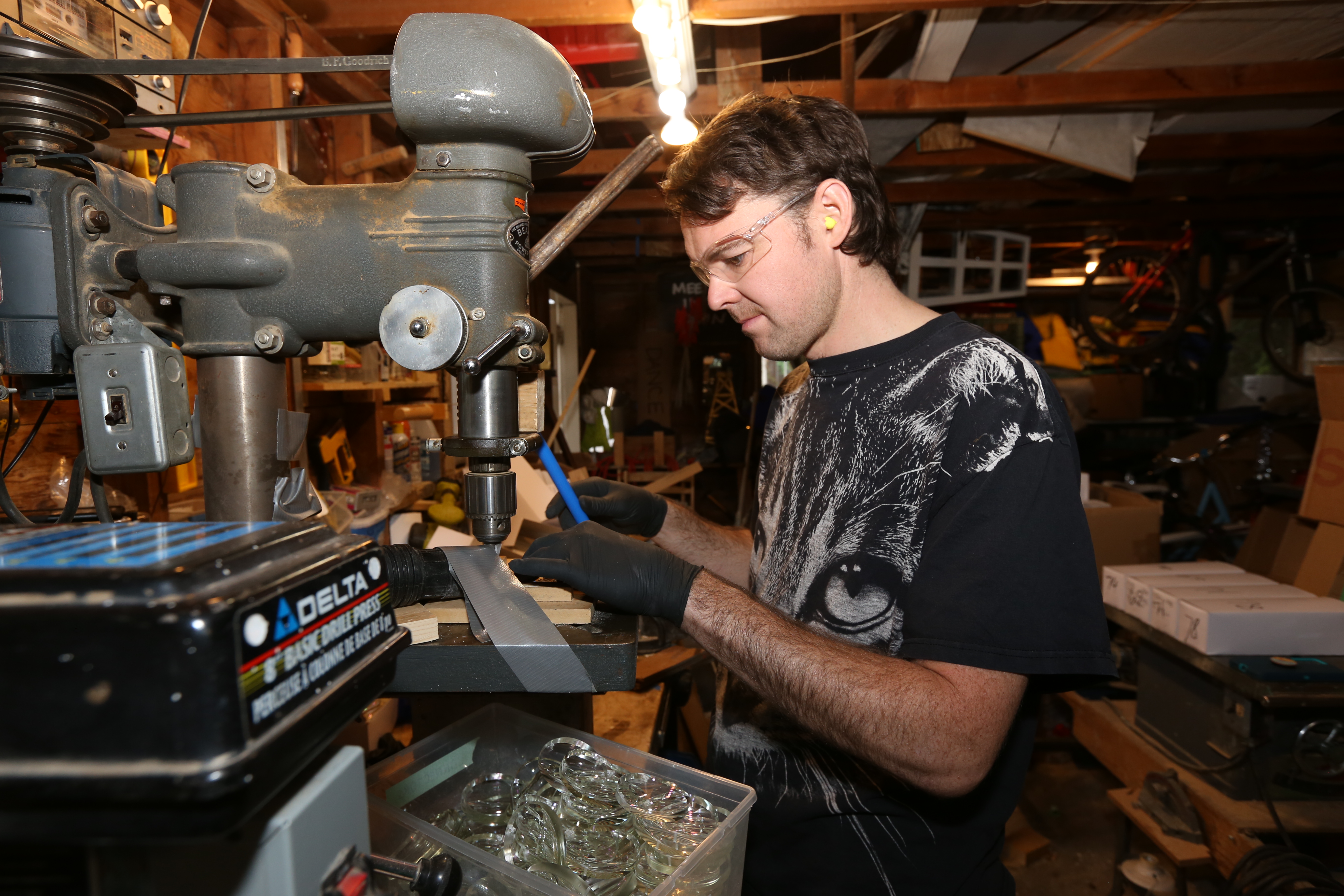
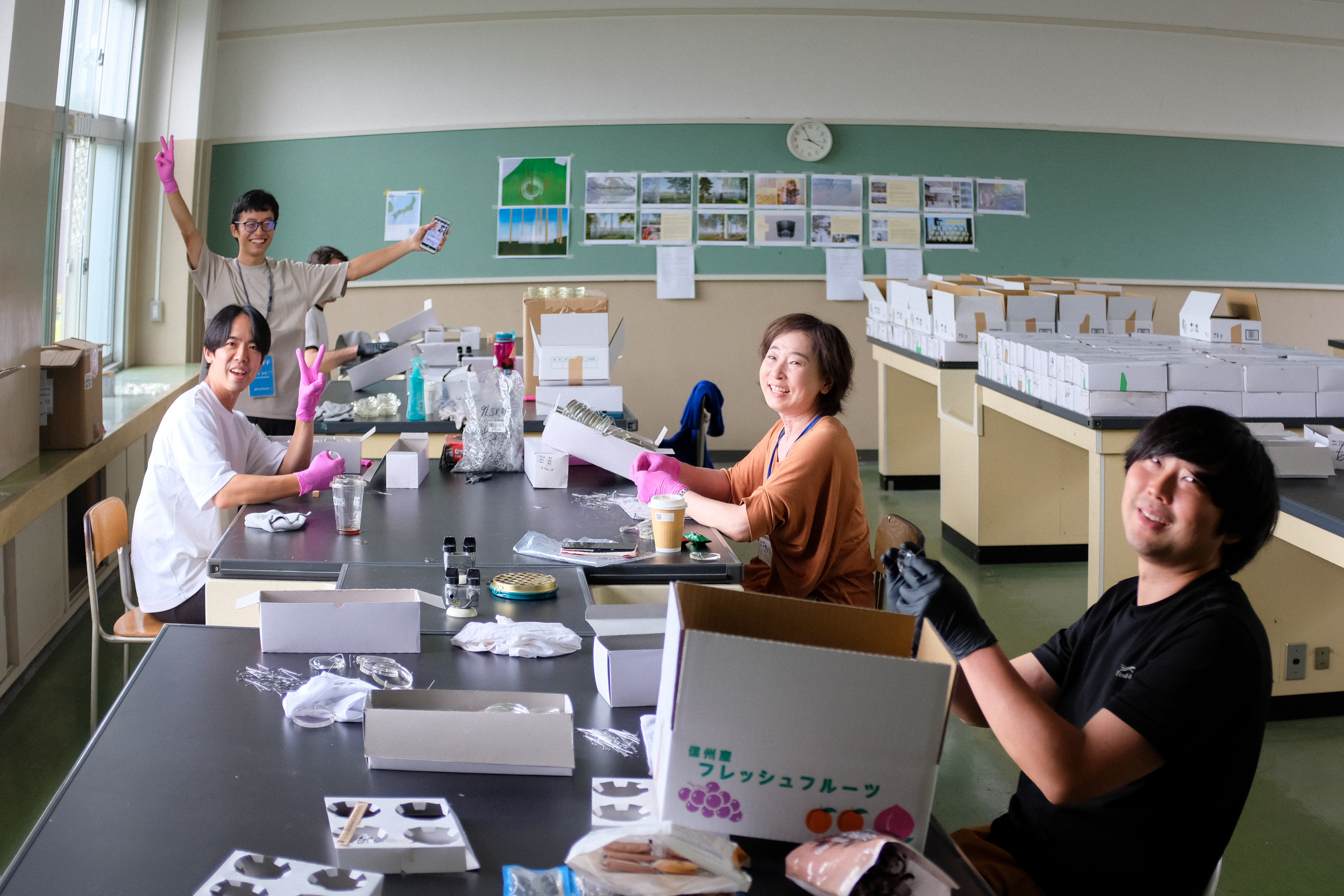



We drilled holes in the ~14,000 lenses in Canada and then shipped them to Japan where dozens of volunteers assisted us in assembling components. First, we worked in the old science classroom of an abandoned school. The High School was closed about 6 years ago due to shrinking populations. One of our volunteers had graduated from the same school over 47 years earlier.
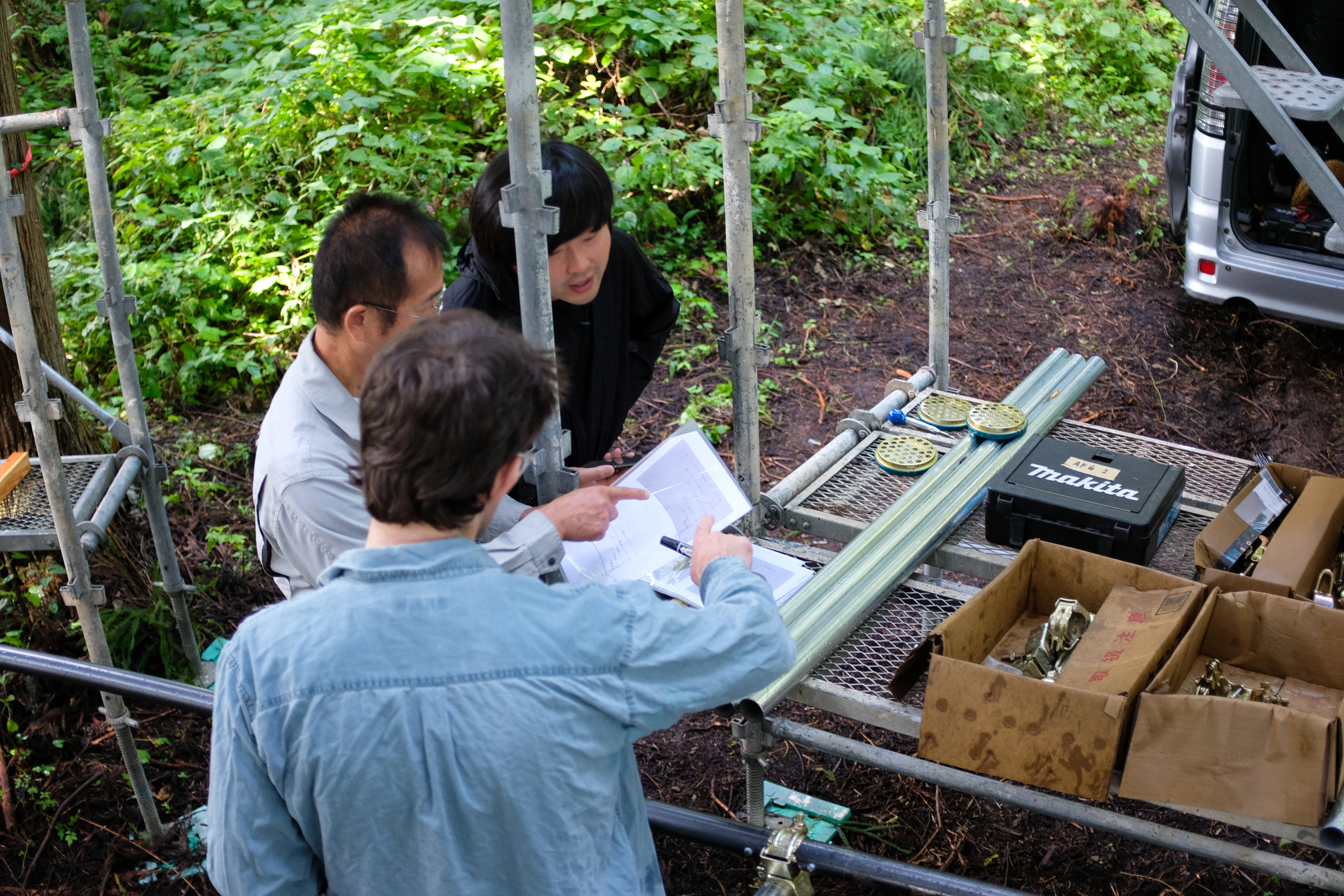
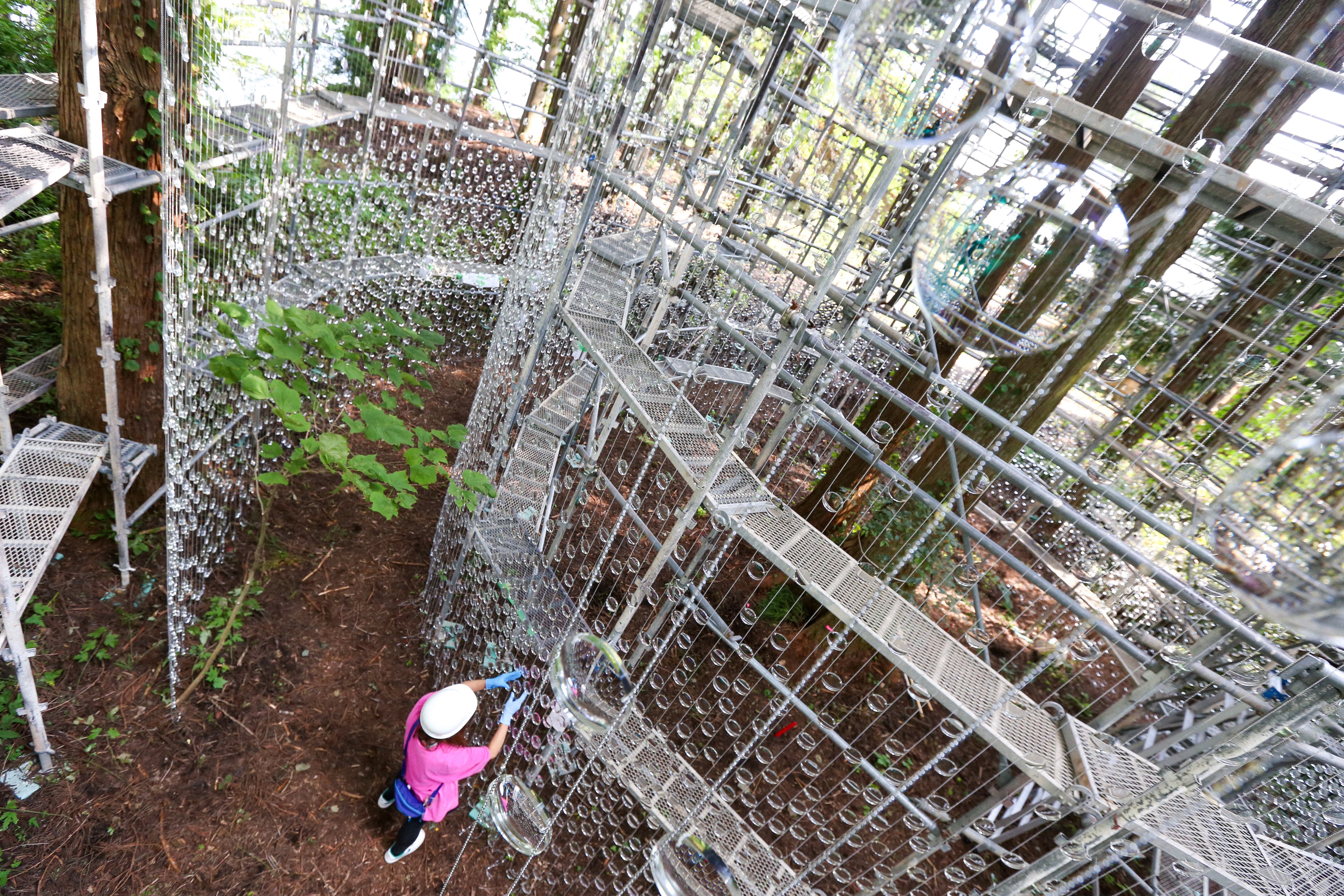
Then we moved to the forest, where the remainder of the installation was constructed onsite.


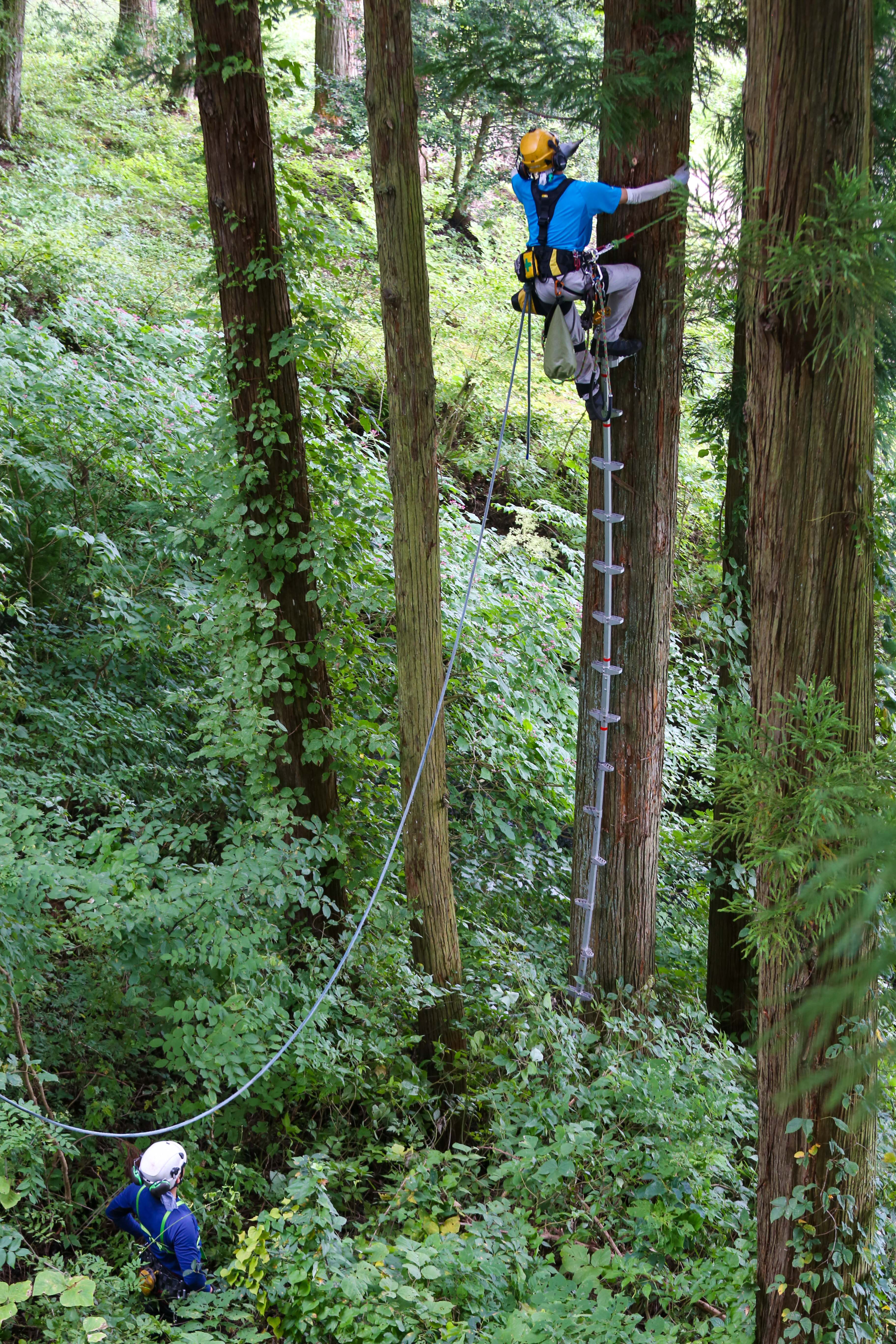

The frame of the installation was suspended from the surrounding robust cedar trees by a group of Omachi-based foresters. Thanks to Anchor Engineering for their satellite guidance.
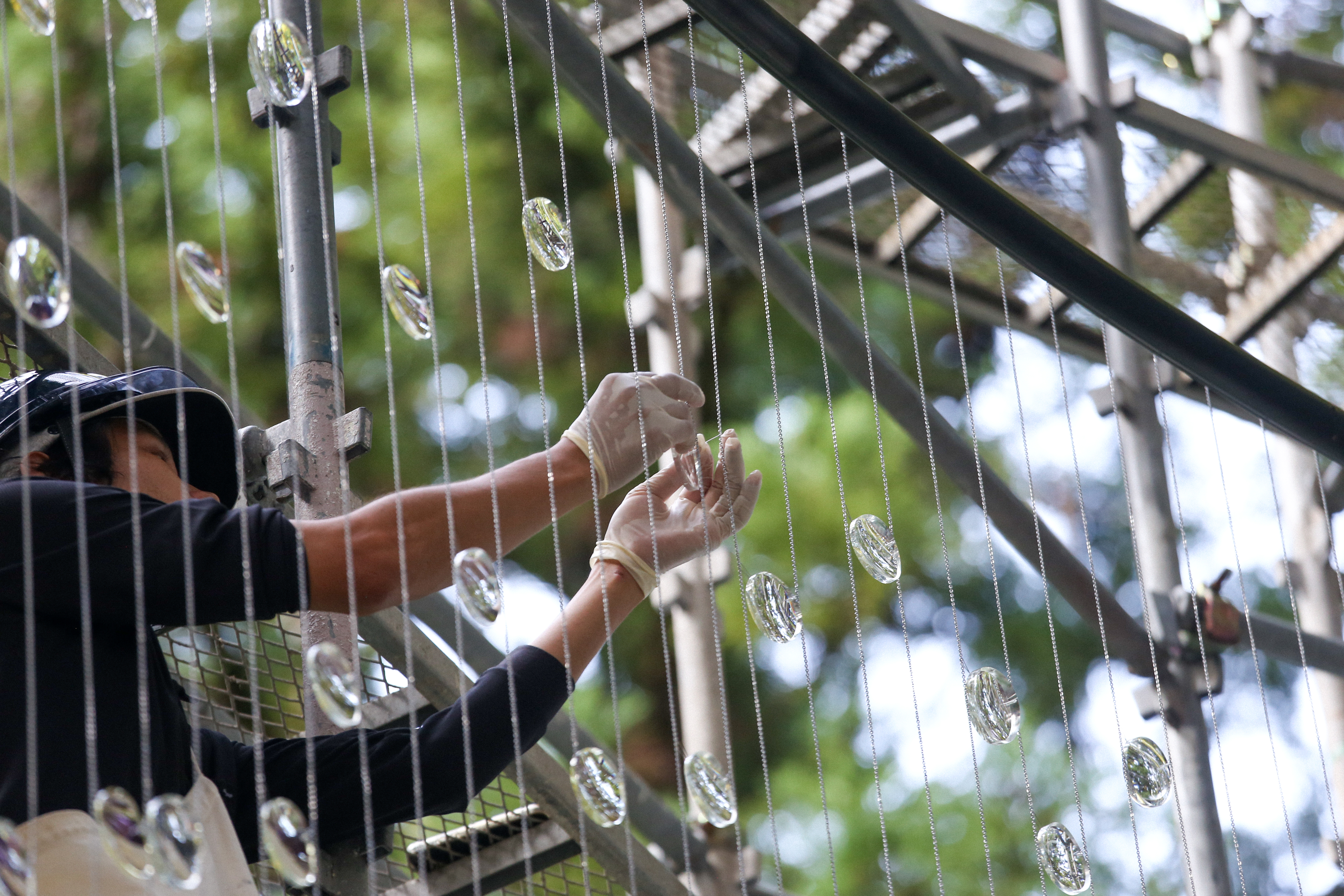
Our onsite Coordinator was Takafumi Shimooka – a venerable presence who pushed us to make the best work possible. We worked with installers Daigo Honma, Aoki Kunito, and around 30 volunteers to assemble the installation over 3 weeks onsite in Omachi.

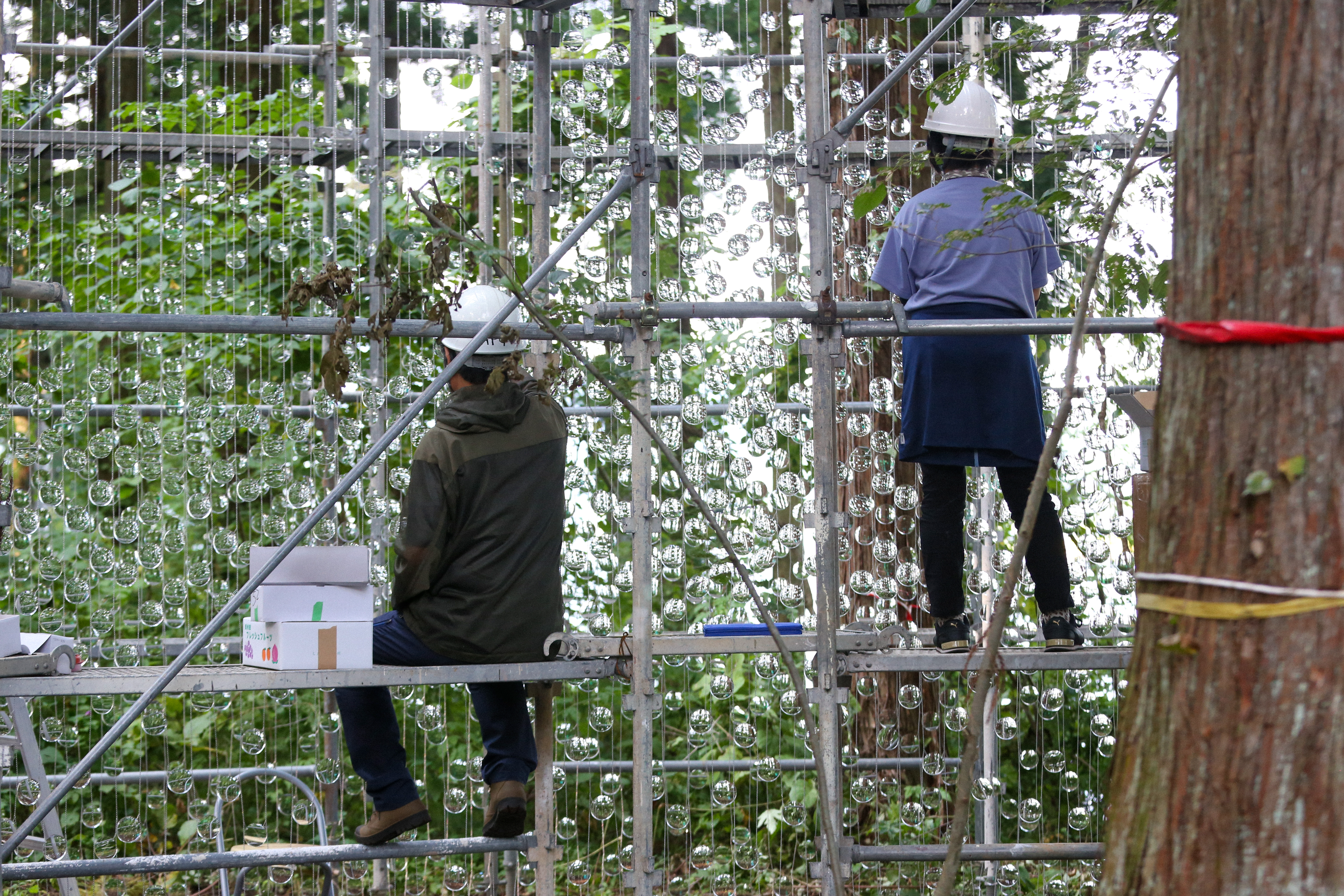


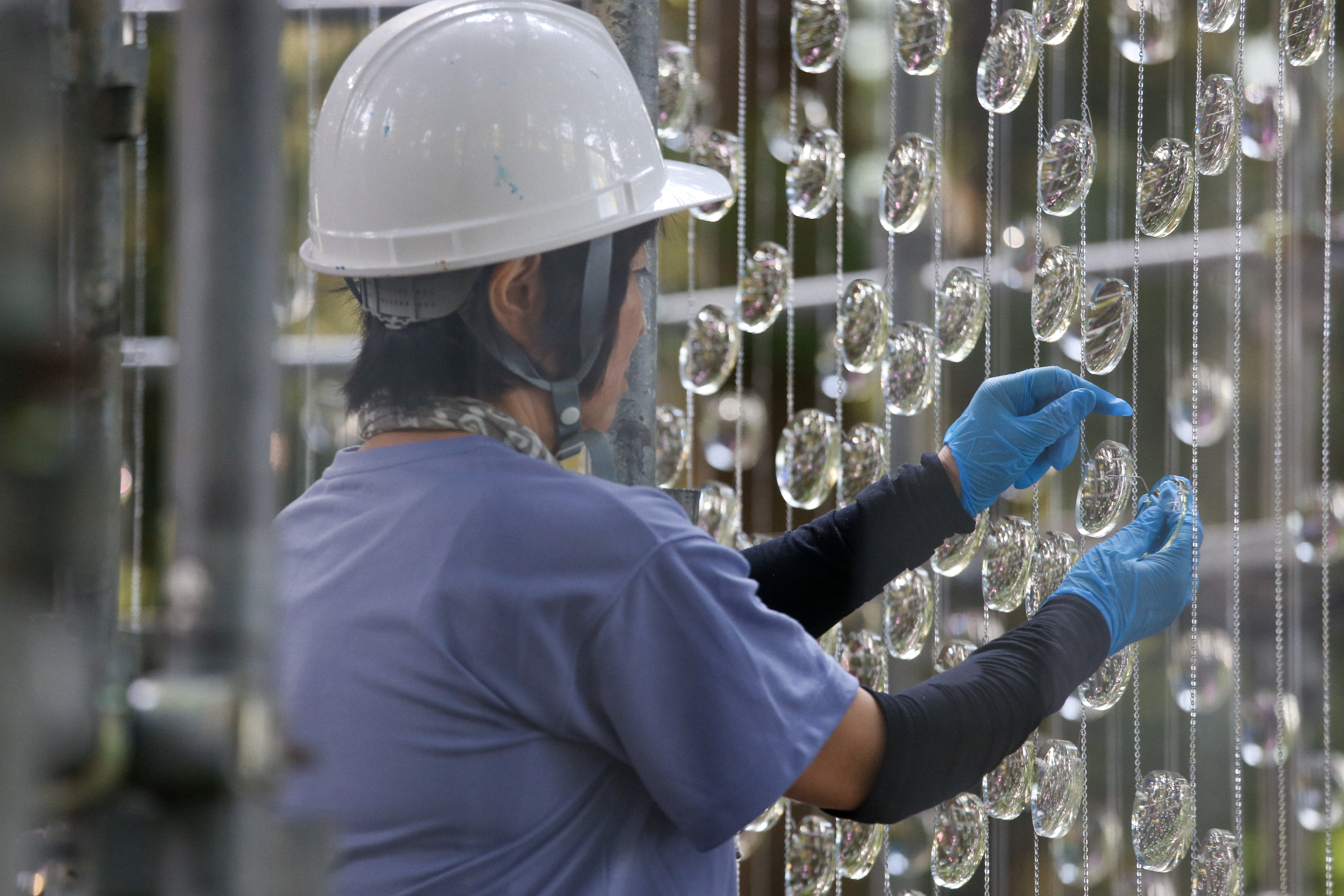


The process was long and labour-intensive, requiring many hands, but experiencing the forest over many days came with its perks.

We listened to the soundscapes of frogs, cicadas, giant hornets, and the occasional power boat. We watched the light shift throughout the day, changing colour and casting shadows through the foliage. We swam in the blue mountain water of Kizaki Lake. We heard stories from the Keeper of the Shrine, learning about the Samurai Fort that once stood upon the very mound where our installation was created. We had conversations with volunteers. We received spontaneous visits from strangers who had never experienced art before.
Time onsite brought new insights, allowing us to see the place we were visiting a little more clearly.

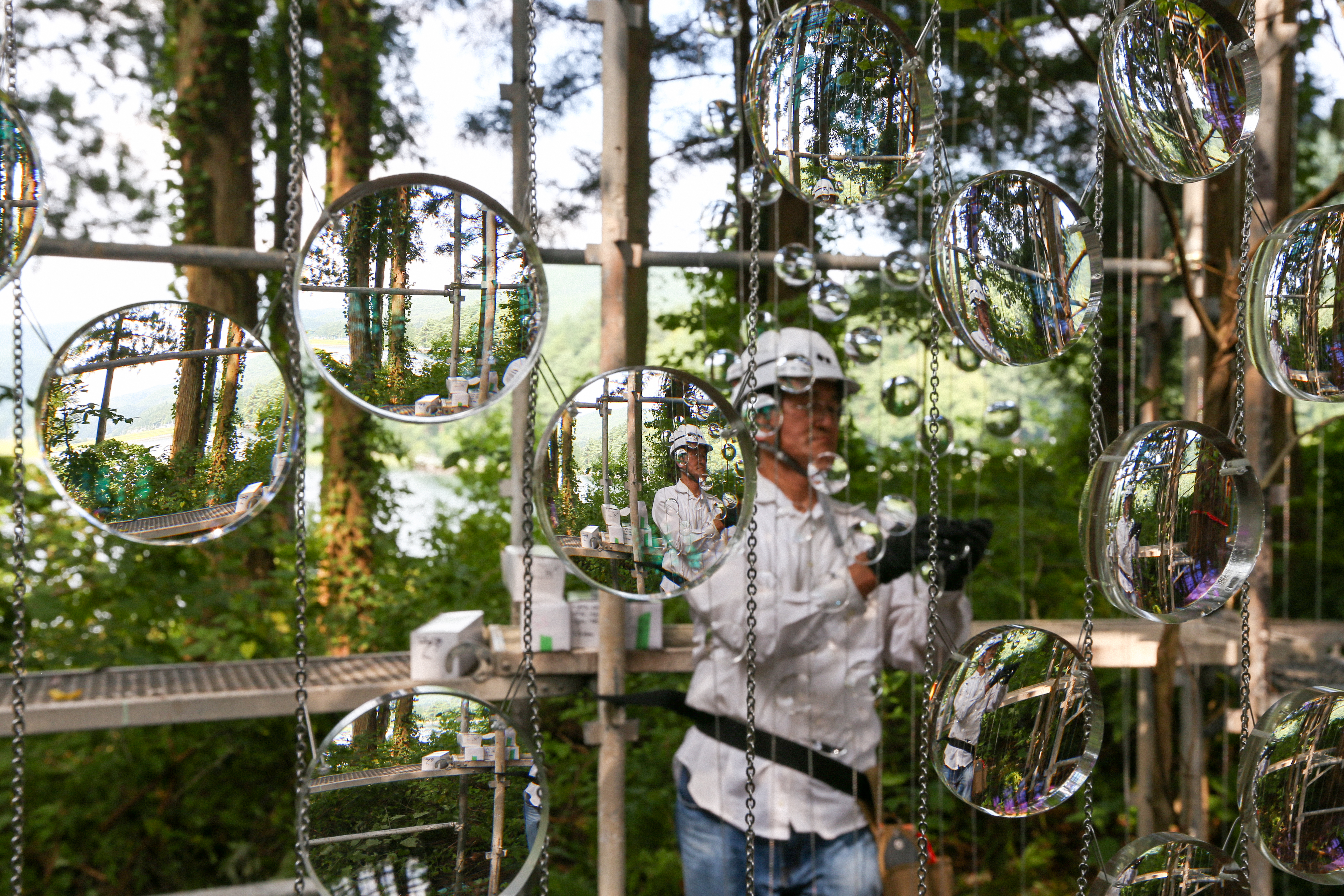






We hope you can feel this place in the final work. We hope it is a tool to help us better see the world around us, allowing the beautiful forests and lakes of Omachi to speak for themselves.
Thanks to the many volunteers who made this work possible. We couldn’t have done it without you, and we’re so grateful. Stay tuned for the final installation…!


 Caitlind r.c. Brown & Wayne Garrett