
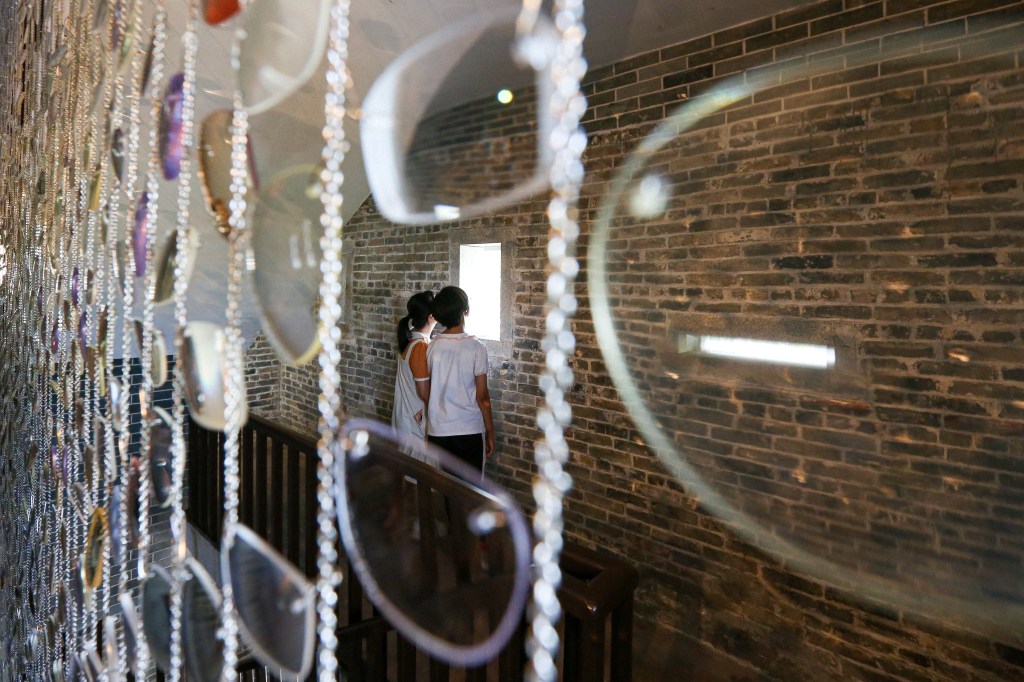
Tears of the Moon by Caitlind r.c. Brown & Wayne Garrett (2024). Commissioned by HUBART & Art Front Tokyo for Art Field Nanhai.

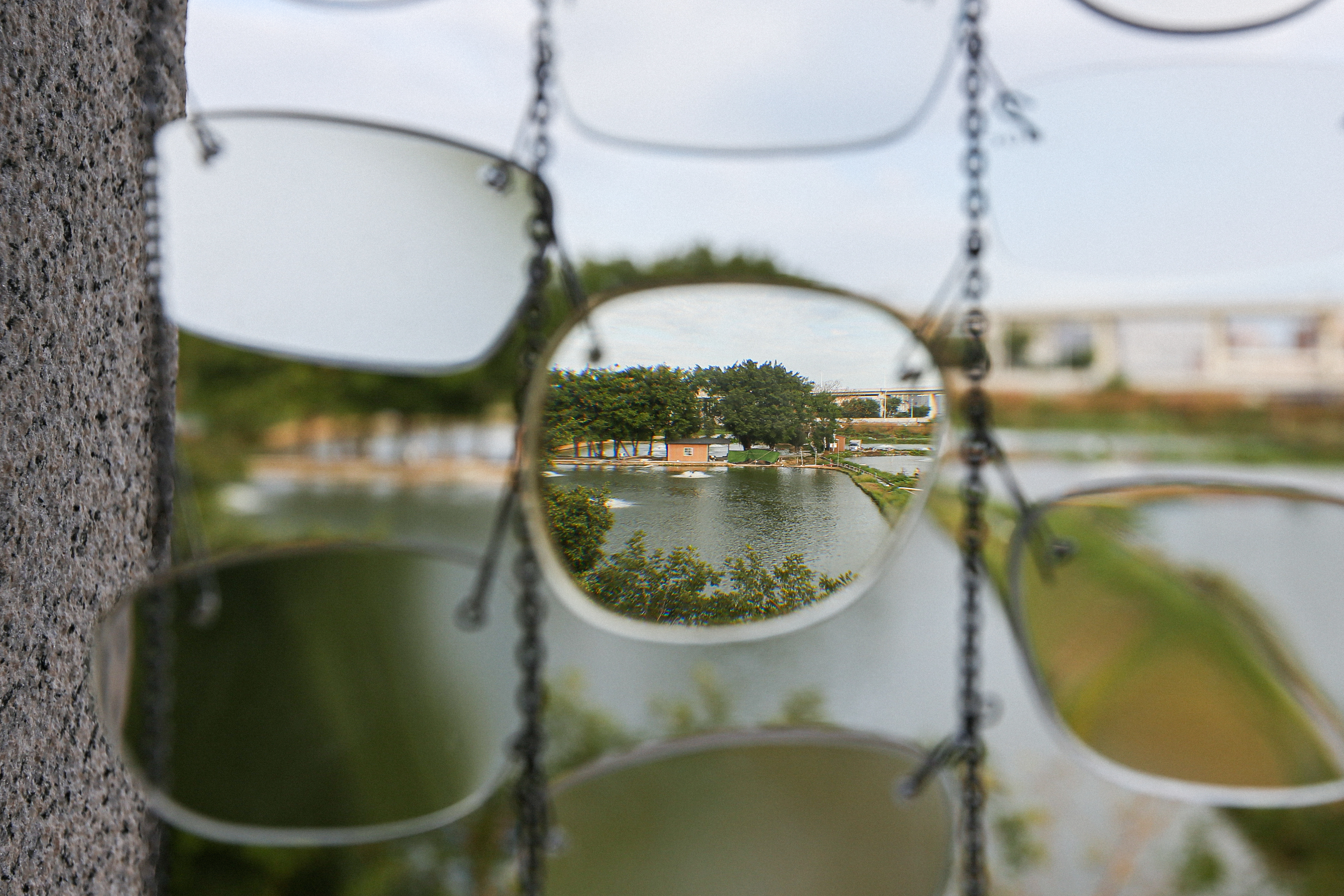
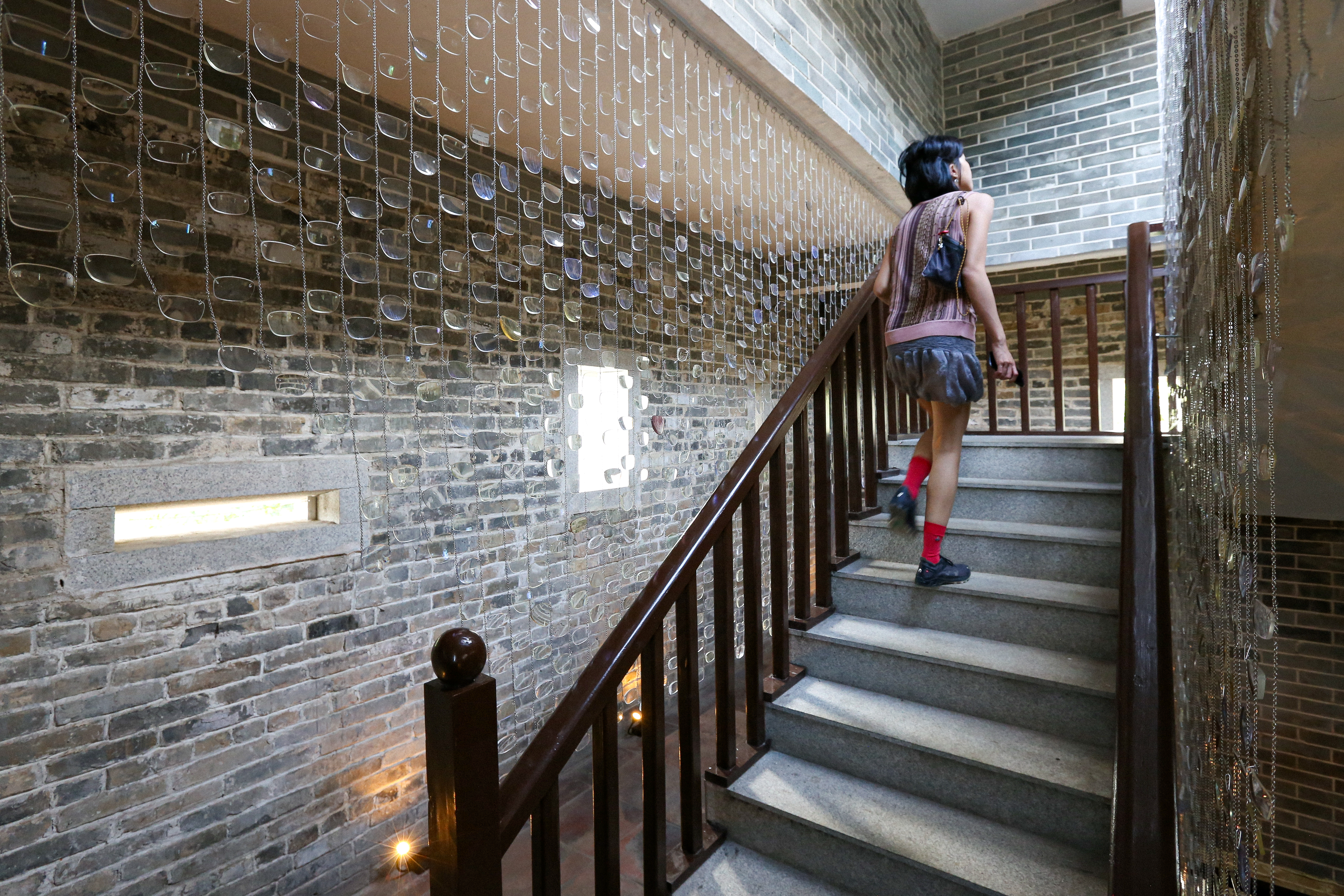
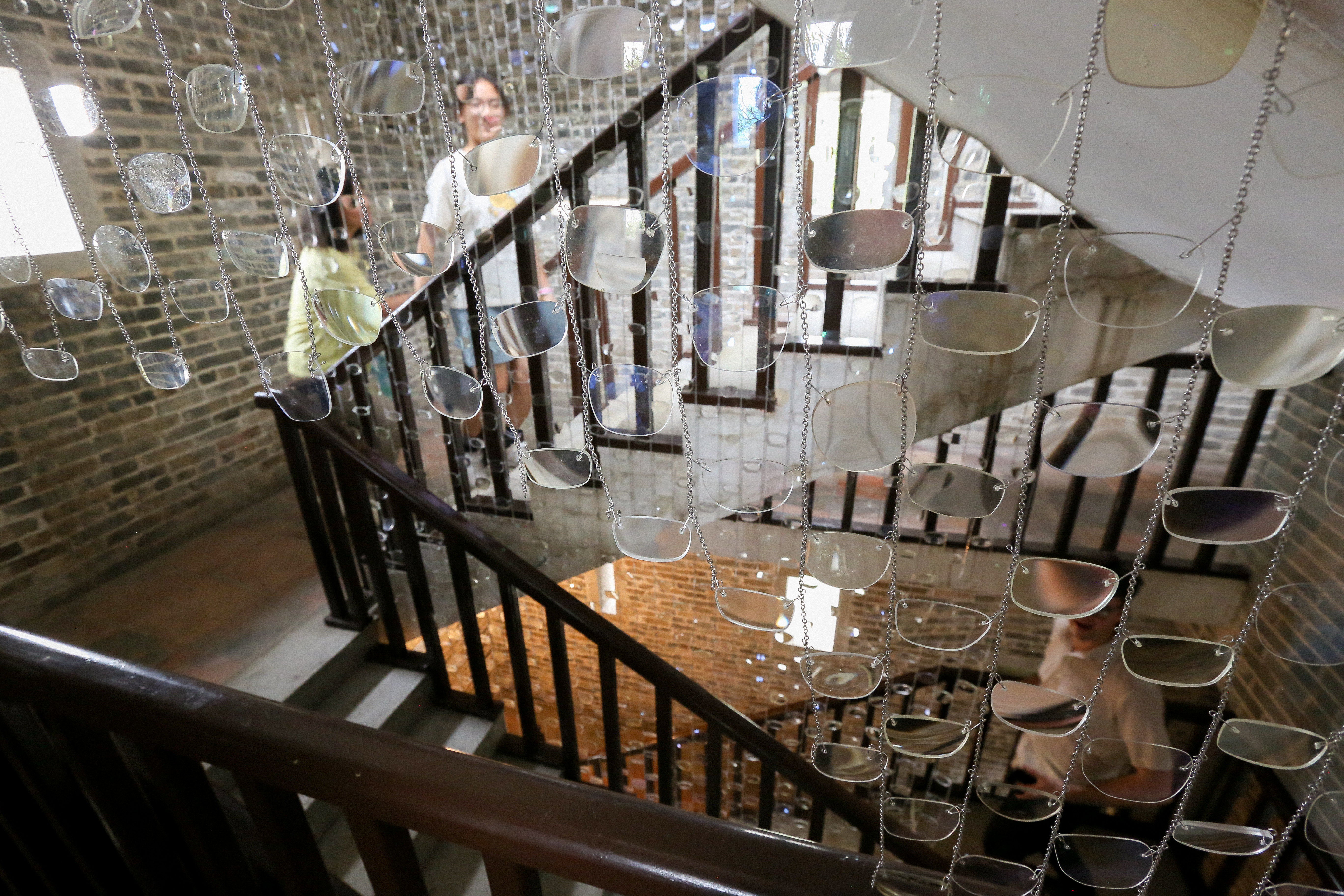
Tears of the Moon is a towering installation inviting visitors to climb the historic Yan Nan Gun Tower in the Guangdong Province of China. As they climb, they pass through a multi-story installation of glittering curtains rising towards the top of the tower where a luminous surprise awaits: the Moon Pearl.
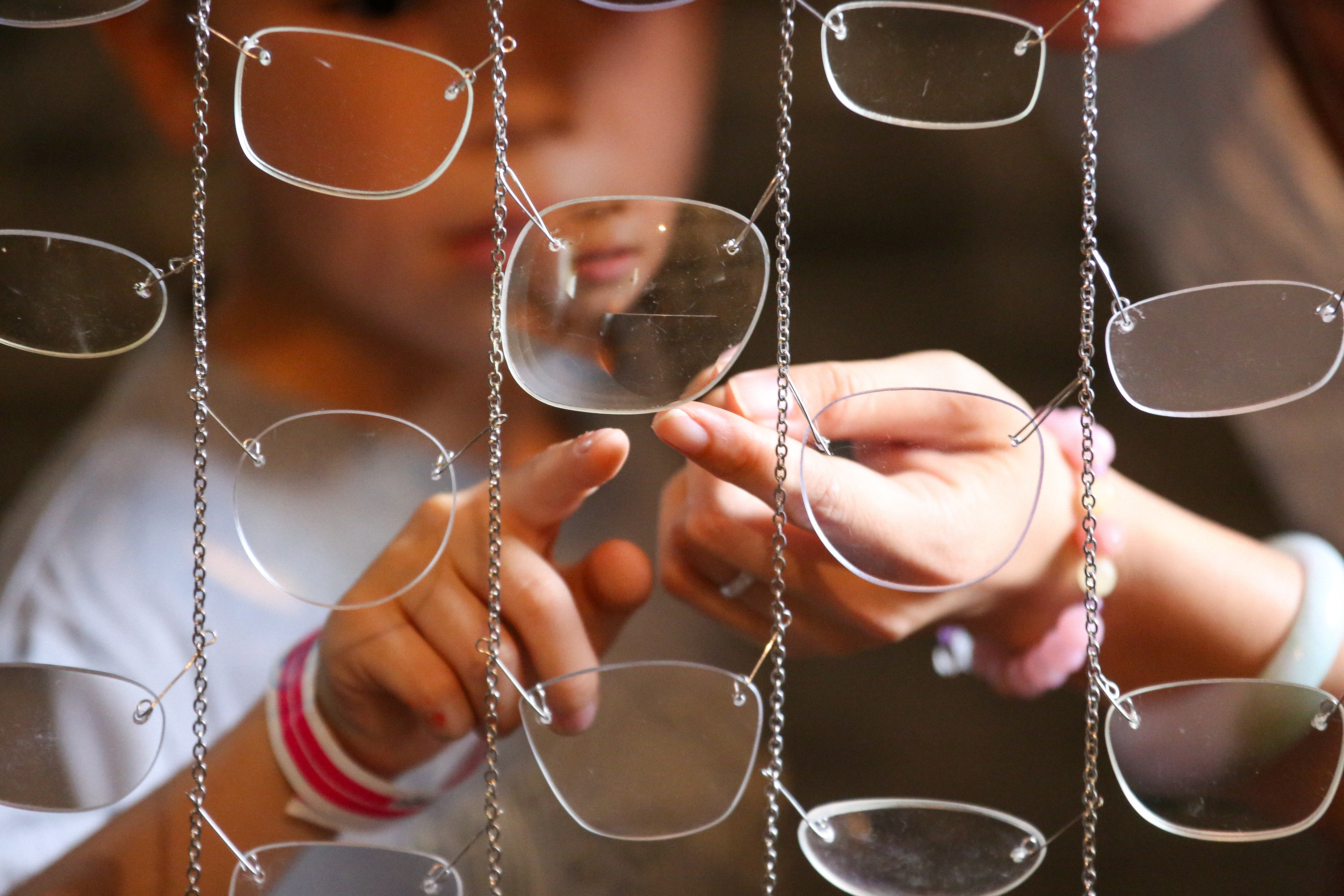
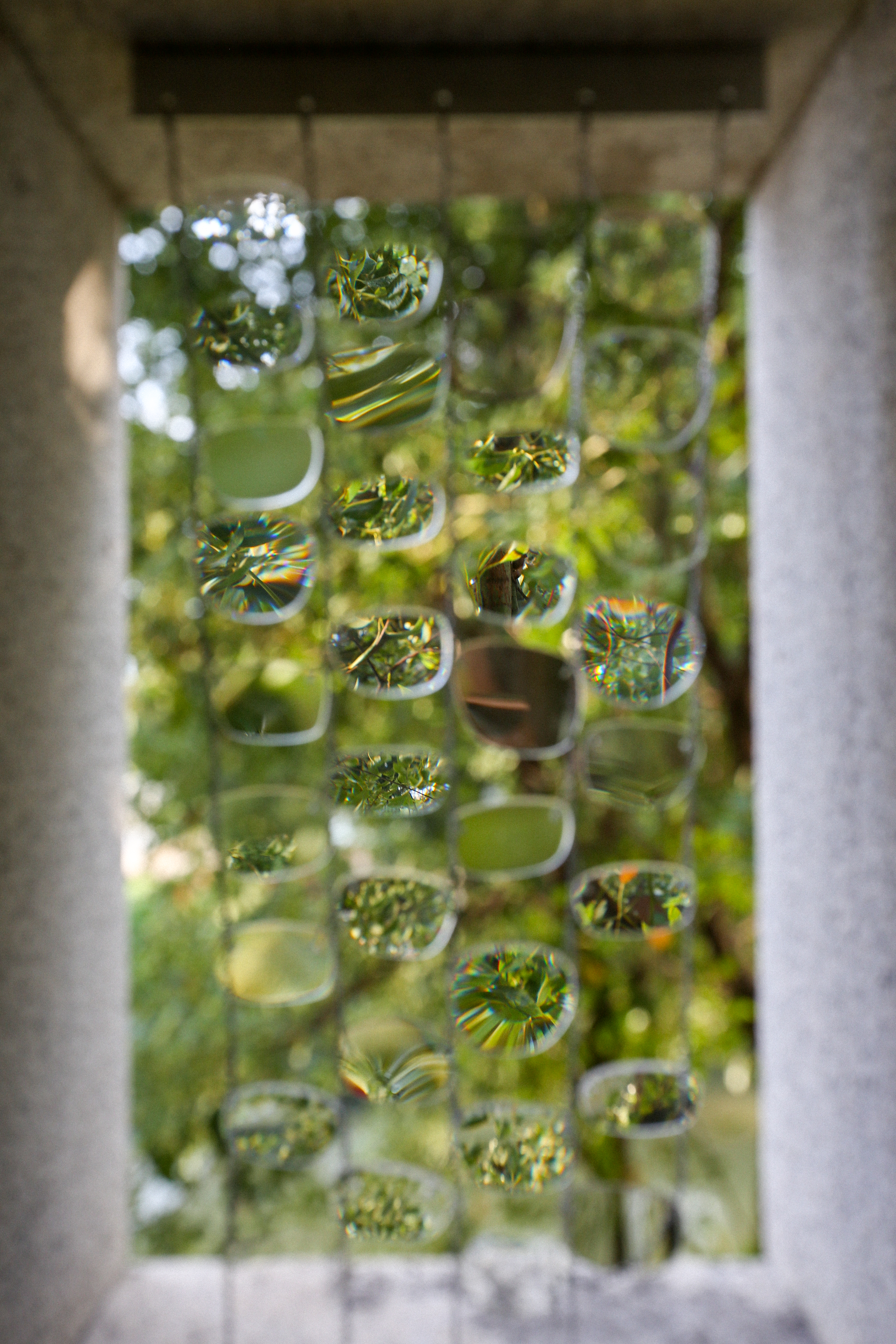
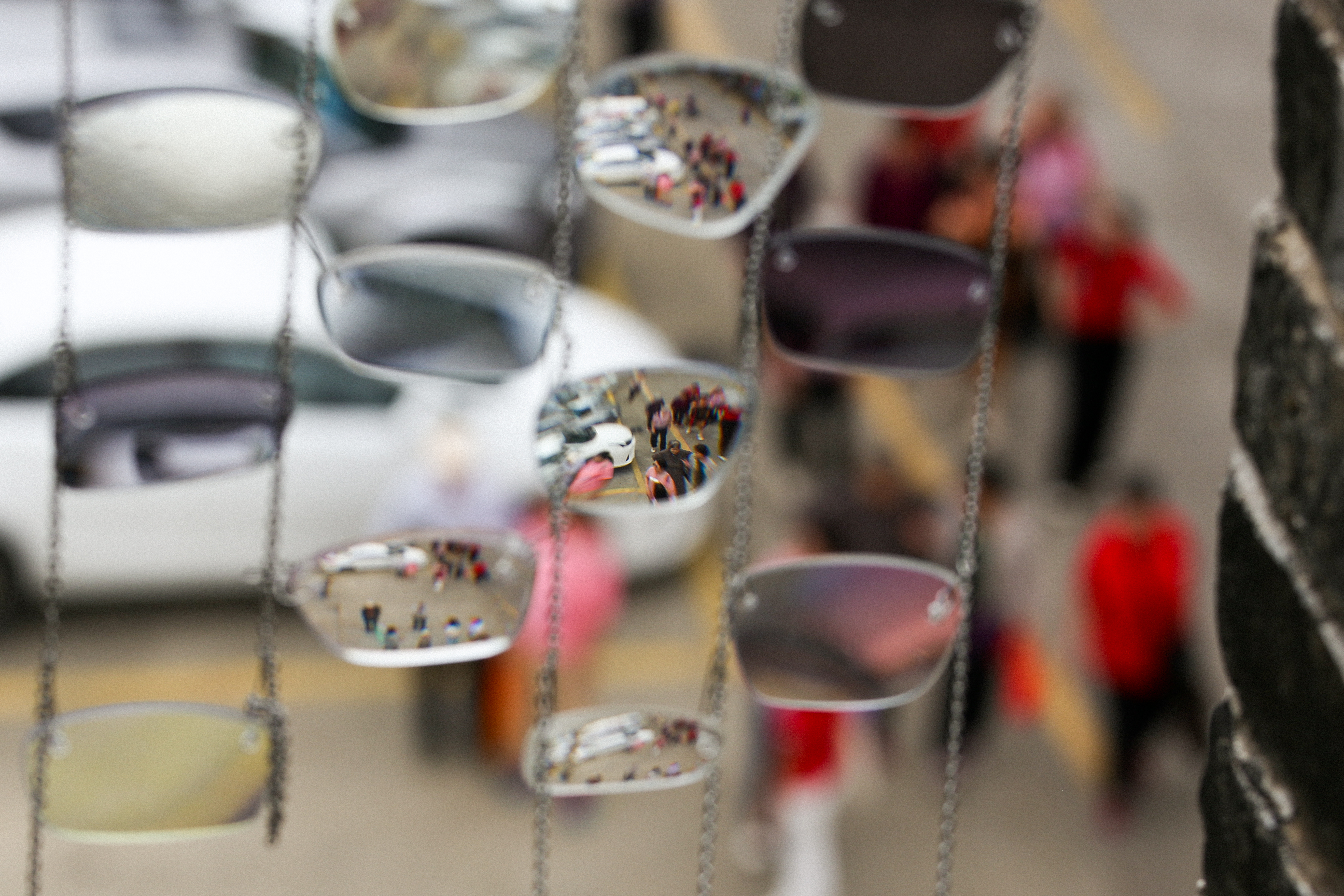
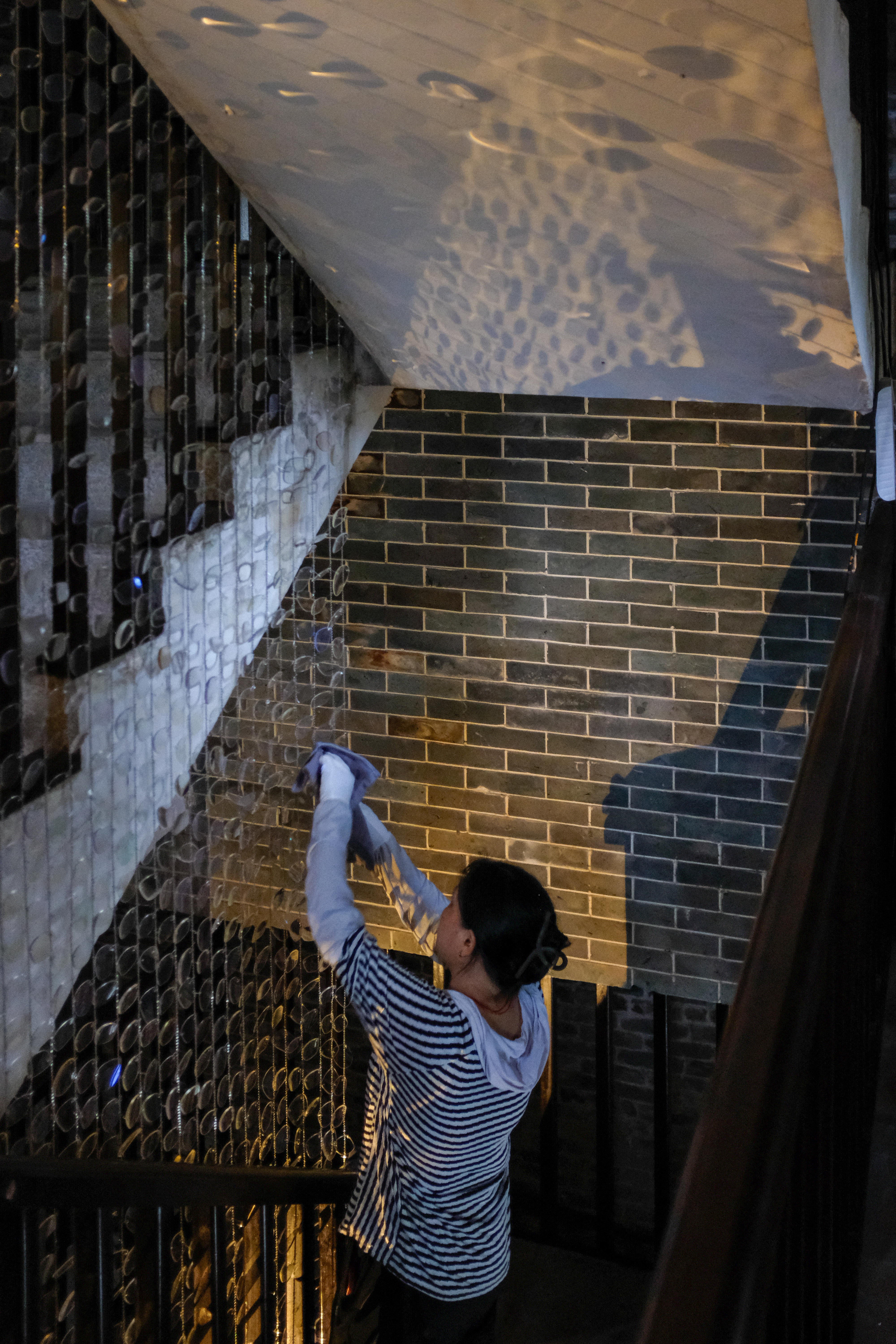
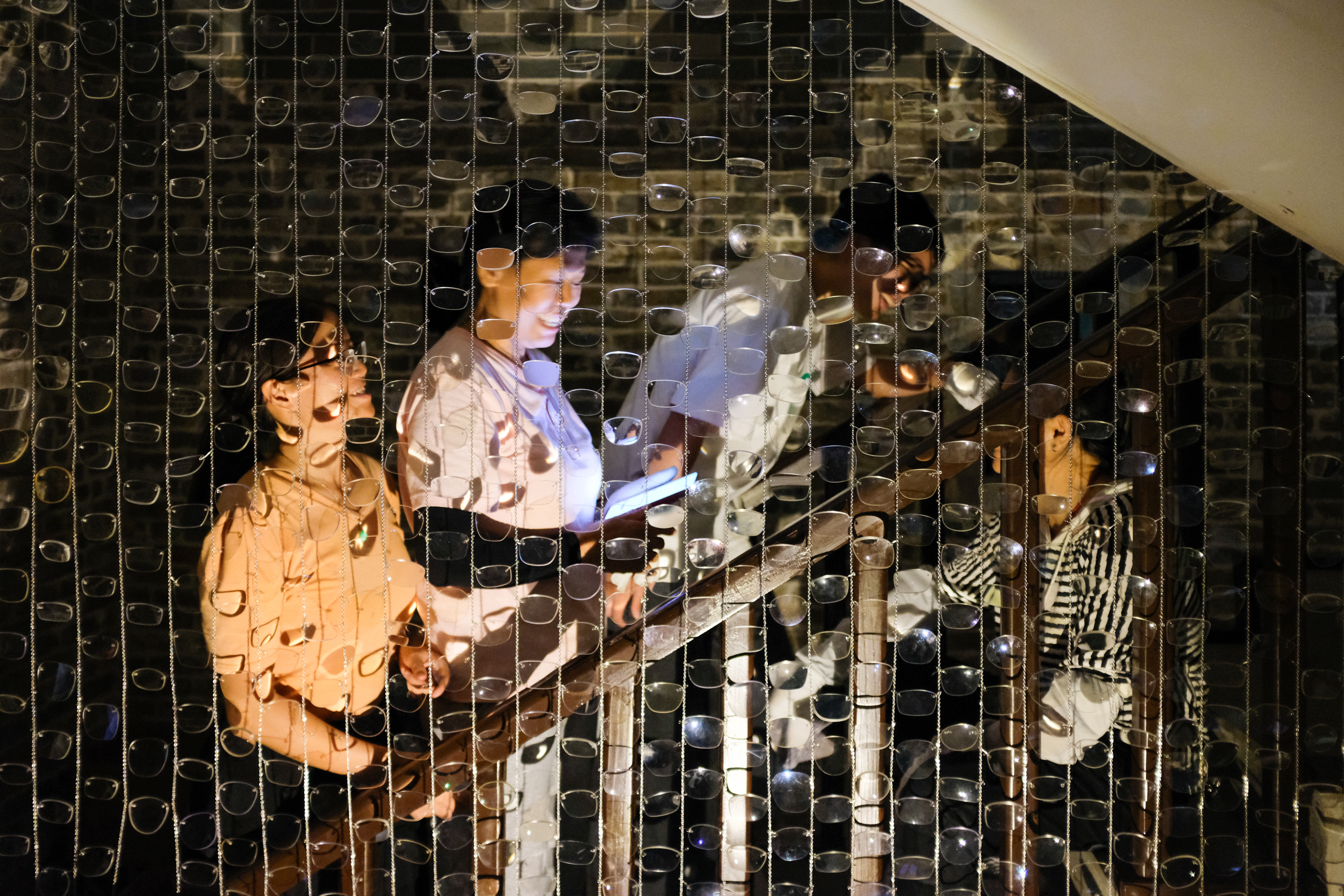
The curtains of the installation are constructed from thousands of repurposed eyeglass lenses and fine silver chain, creating layers of falling “water” that speak to many perspectives on water in Guangdong Province.


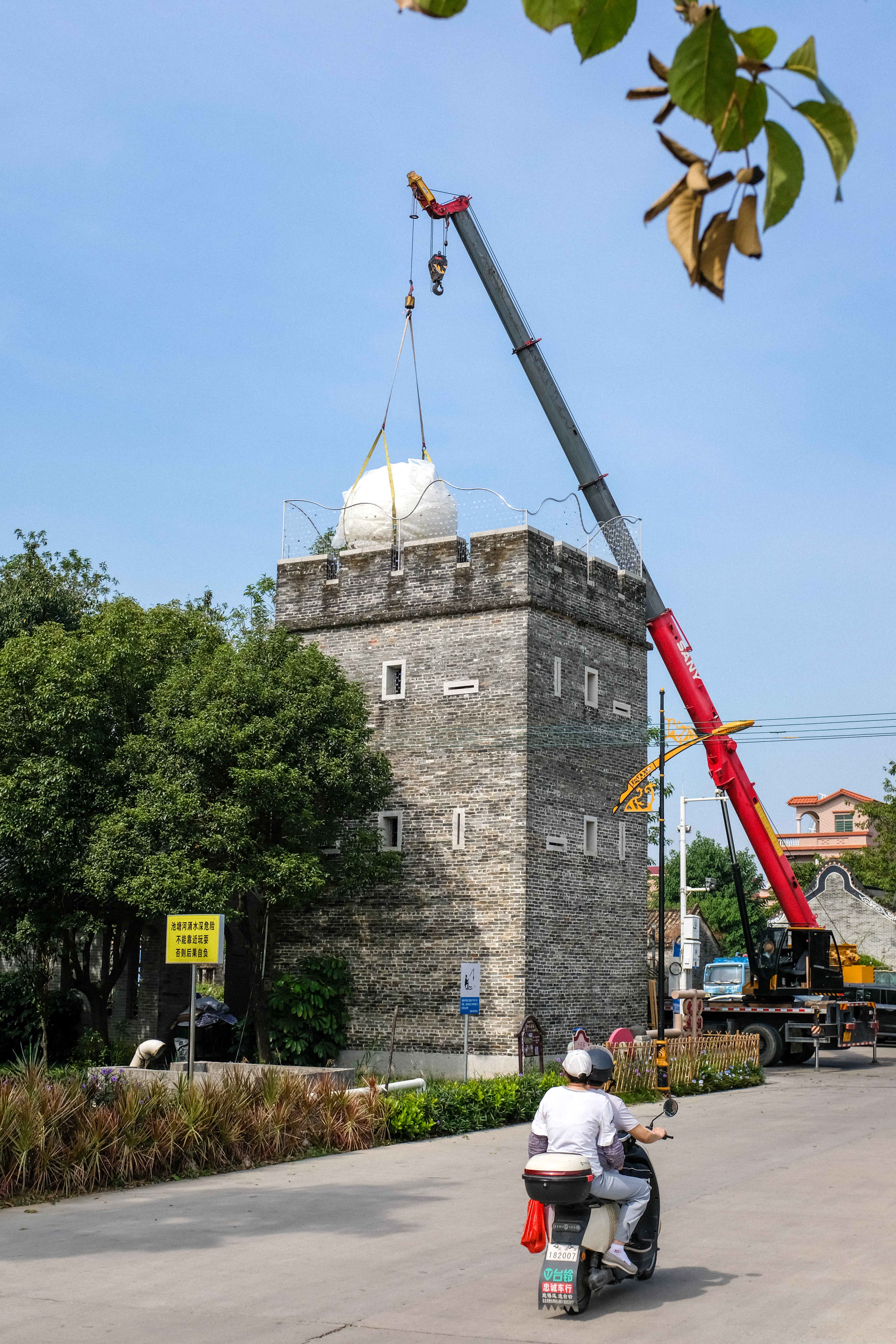
Above: Yan Nan Gun Tower is on the Pearl River Delta, surrounded by many fish farms
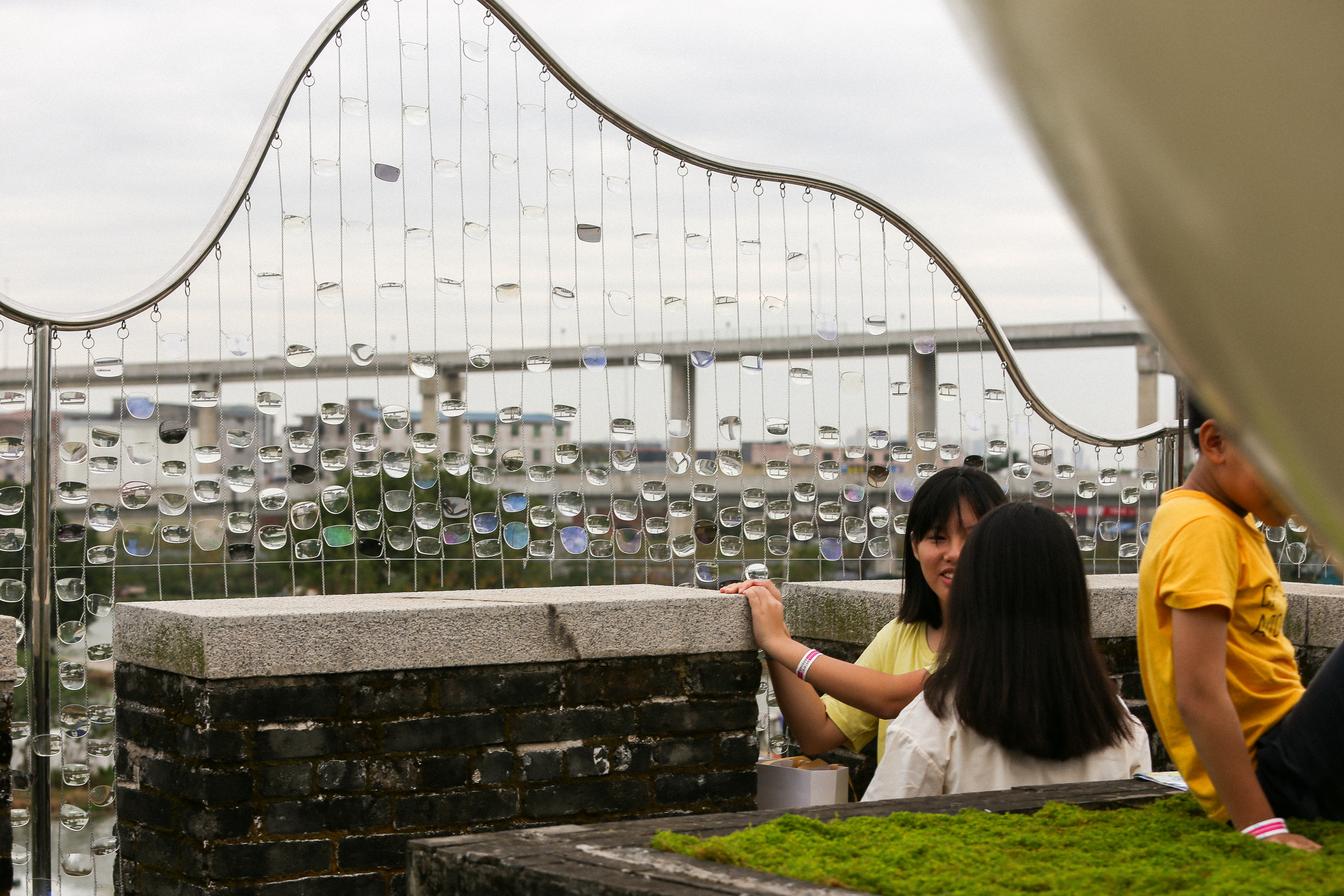
This place has a long-standing relationship with water, both as the original Guangdong-Hong Kong-Macao Greater Bay Area, and as a region that relies on water for transportation, commerce, farming, recreation, and many livelihoods.
However, water can be both a blessing and a curse: heavy rain, flooding, mold, moisture-borne illness, and water-related dangers are also present in Nanhai. Tears of the Moon evokes both beautiful and melancholy memories, acknowledging the complexity of our human relationship with water. Eyeglass lenses speak to the many perspectives of water seen by the people of Nanhai over their lifetimes.


Above: project plans showing the layers of curtains (left) and the rooftop installation (right)
When visitors enter the tower, they immediately encounter a long curtain that descends the full height of the 3-storey building. As they move upward through layers of the installation, they encounter different conditions on each floor.

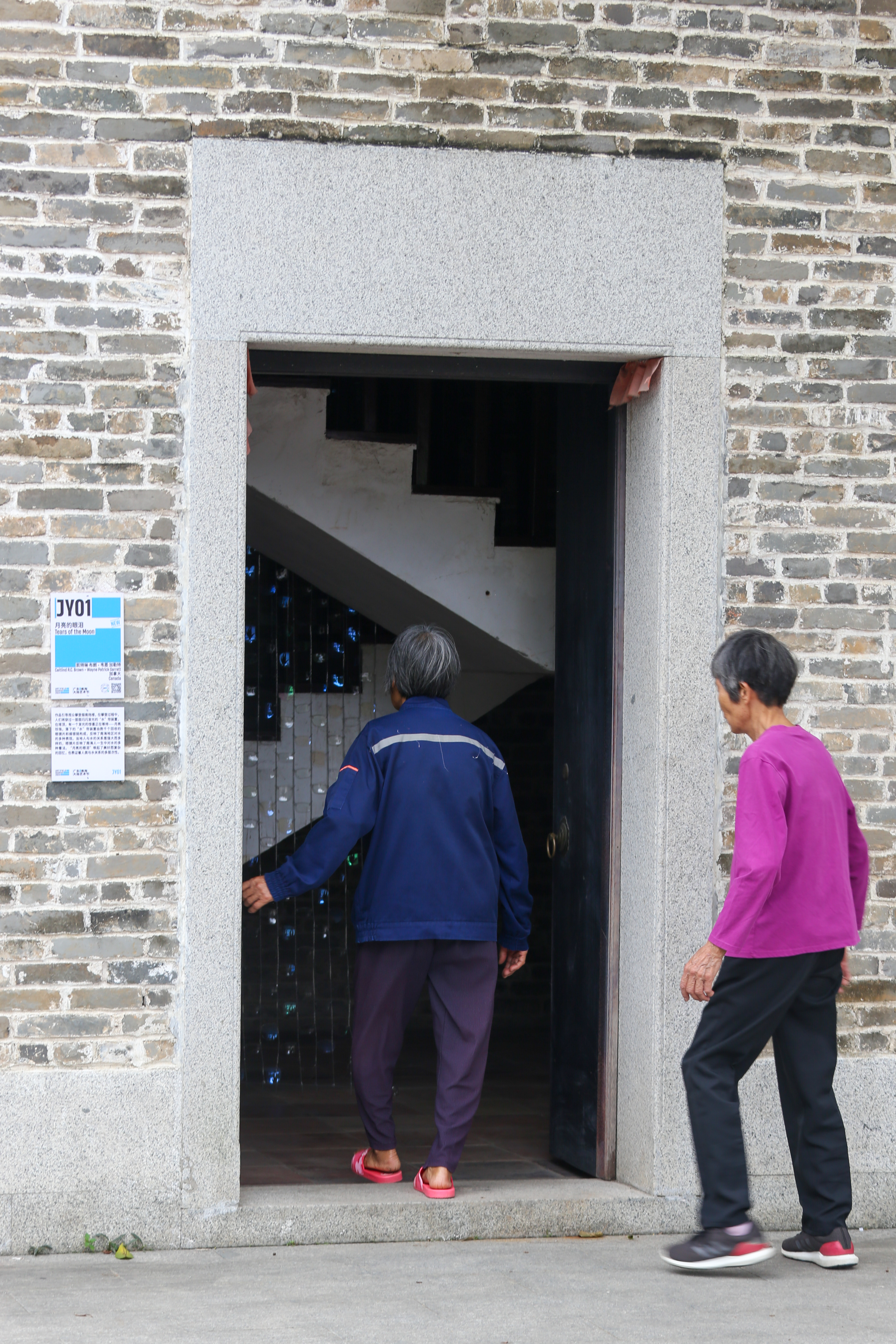

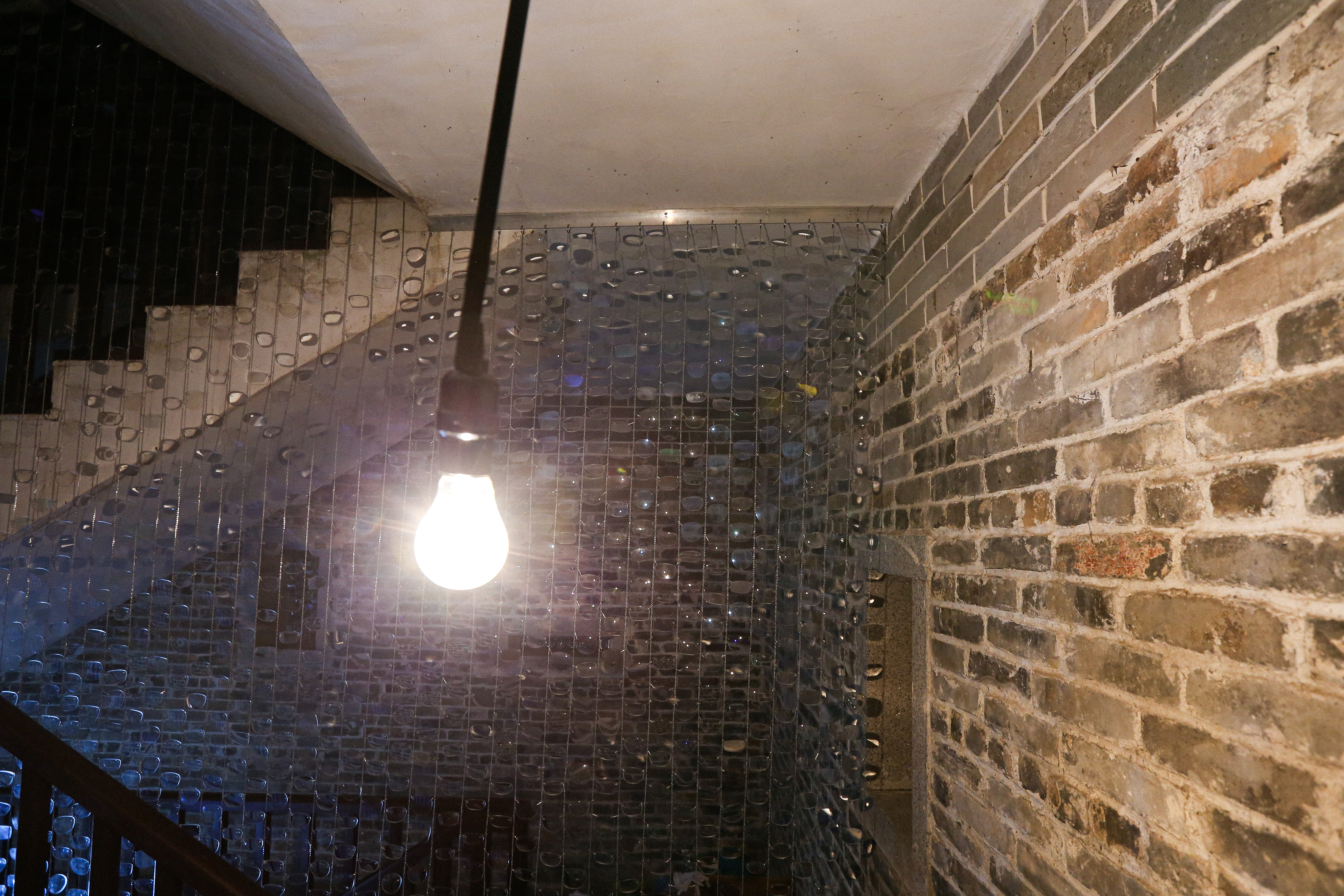
Above: the bottom floor, where the 3-storey curtain begins. Below: the second floor of the installation.

On the second floor, the curtain bisects the tower, forcing visitors to walk the long way around to ascend the second set of stairs. A bare light bulb swings slowly, casting shadows that rock like light inside the belly of a ship on seas. The effect is intended to be destabilizing.

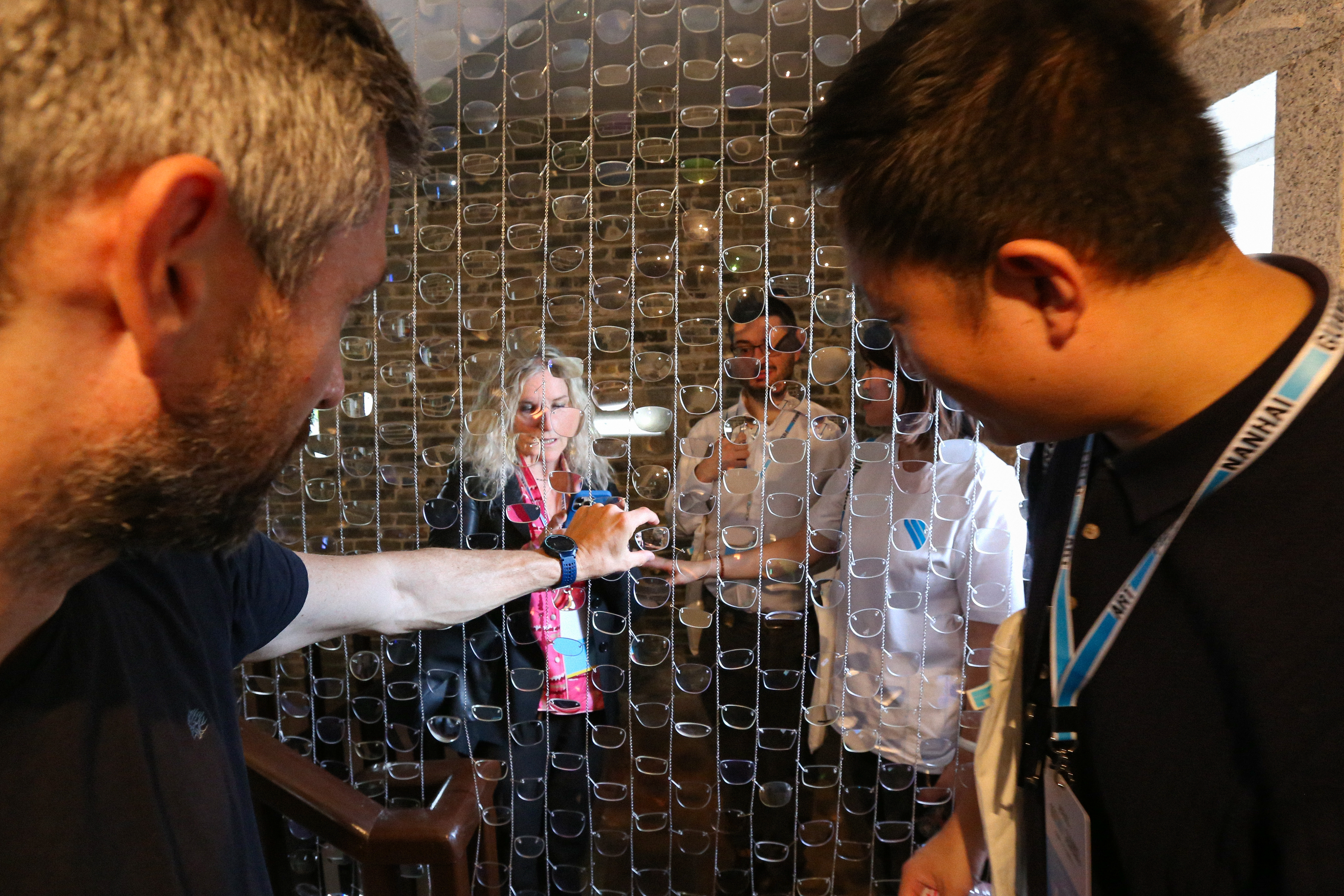
On the third floor, short curtains allow visitors to peer through multiple layers of lenses at once. These curtains create “corridors” of bright waves – like being just below the surface of the ocean.


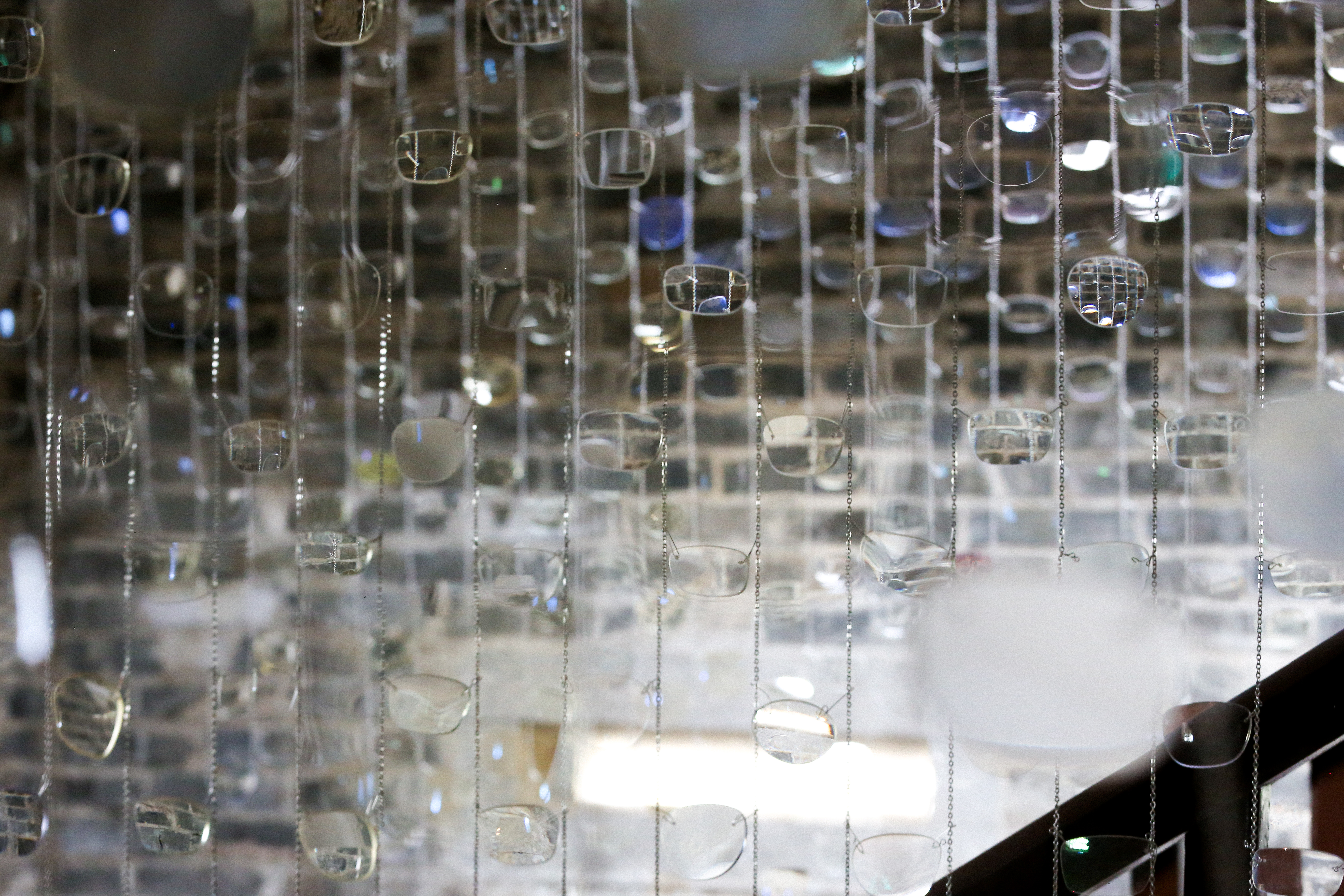

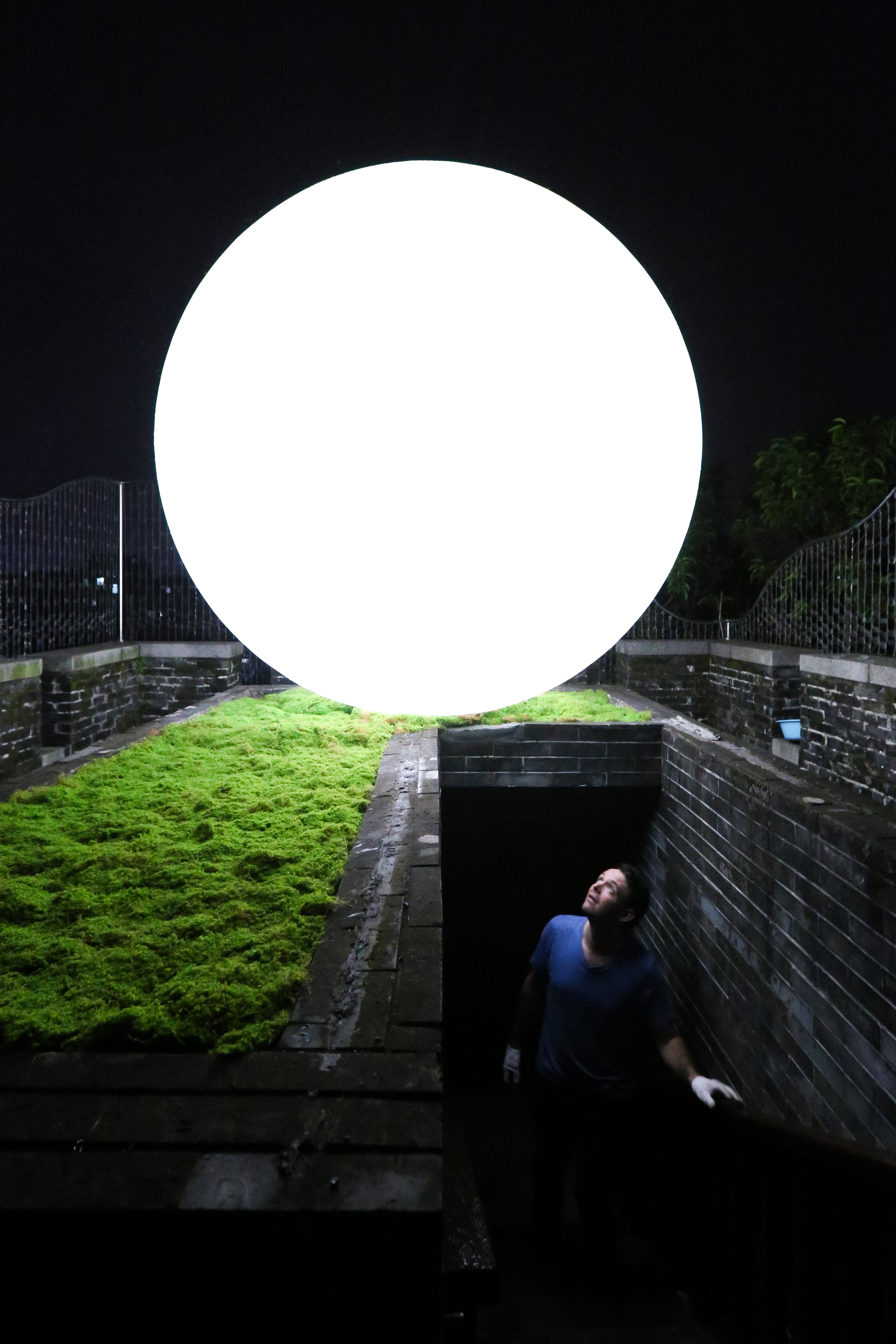
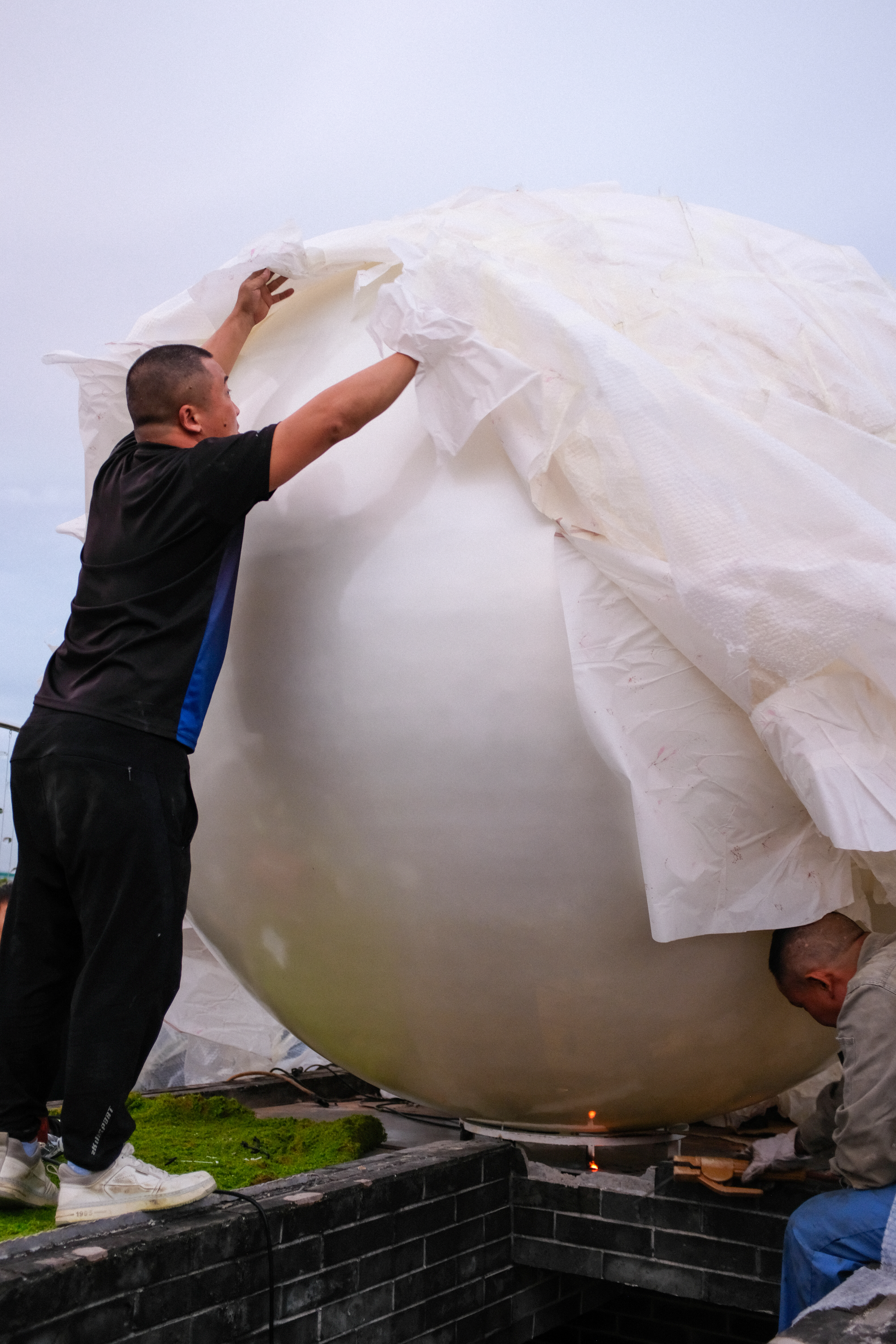
From the third floor, looking up, viewers see a strange and pearlescent shape – the final chapter of their adventure climbing the tower. The roof of Yan Nan Gun Tower holds the Moon Pearl.


Nanhai district is part of the Pearl River Delta. Pearls evoke a variety of myths, legends, and symbolism, both in China and beyond. In China, pearls are associated with wisdom, beauty, purity, and sometimes sadness, as seen through the story of Shark Girl who cried pearls like tears into the sea. This imagery is shared with Greek mythology, where pearls were the tears shed by Aphrodite (Goddess of Love) as she emerged from the sea foam. Across cultures, there is a relationship between pearls and the moon.

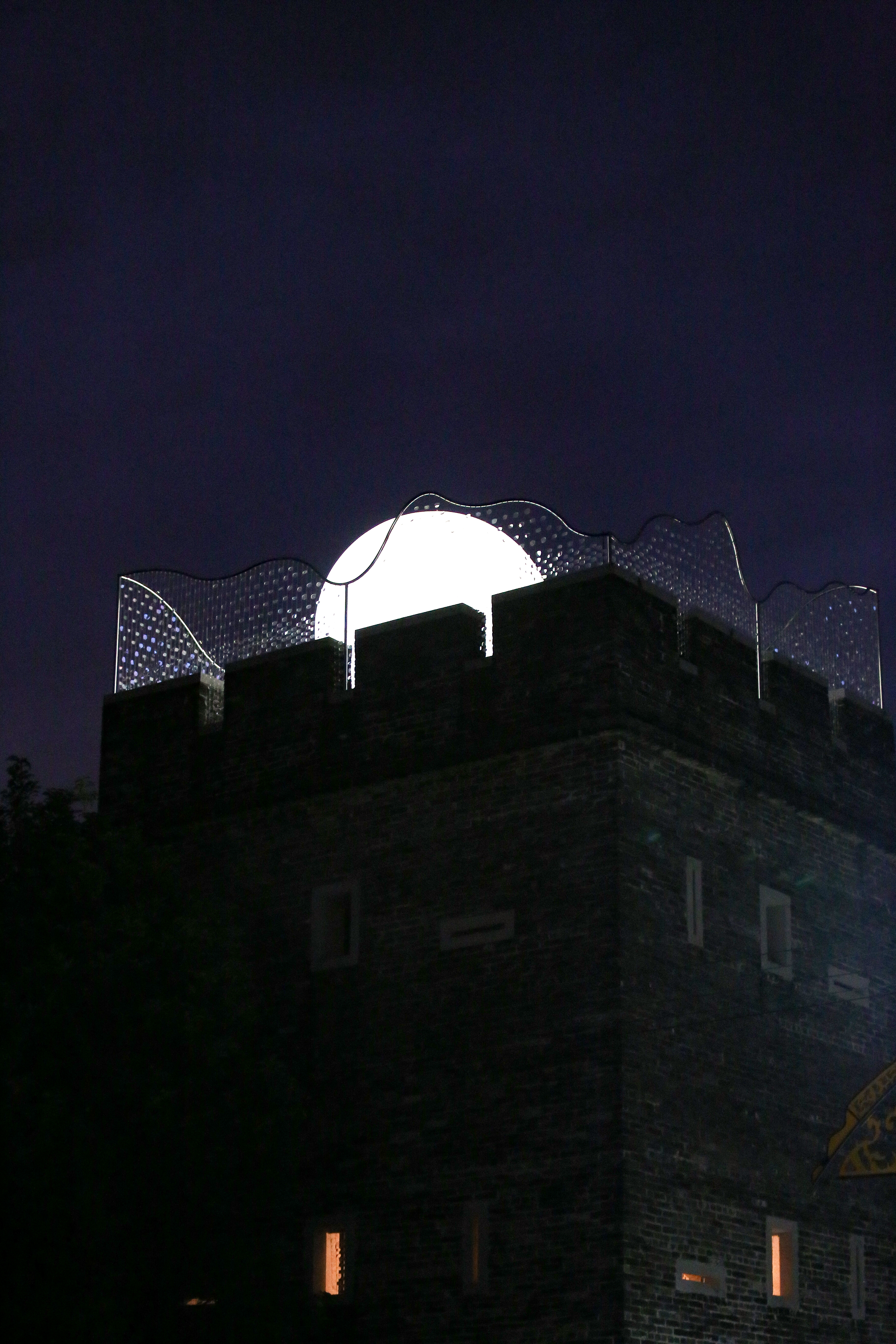
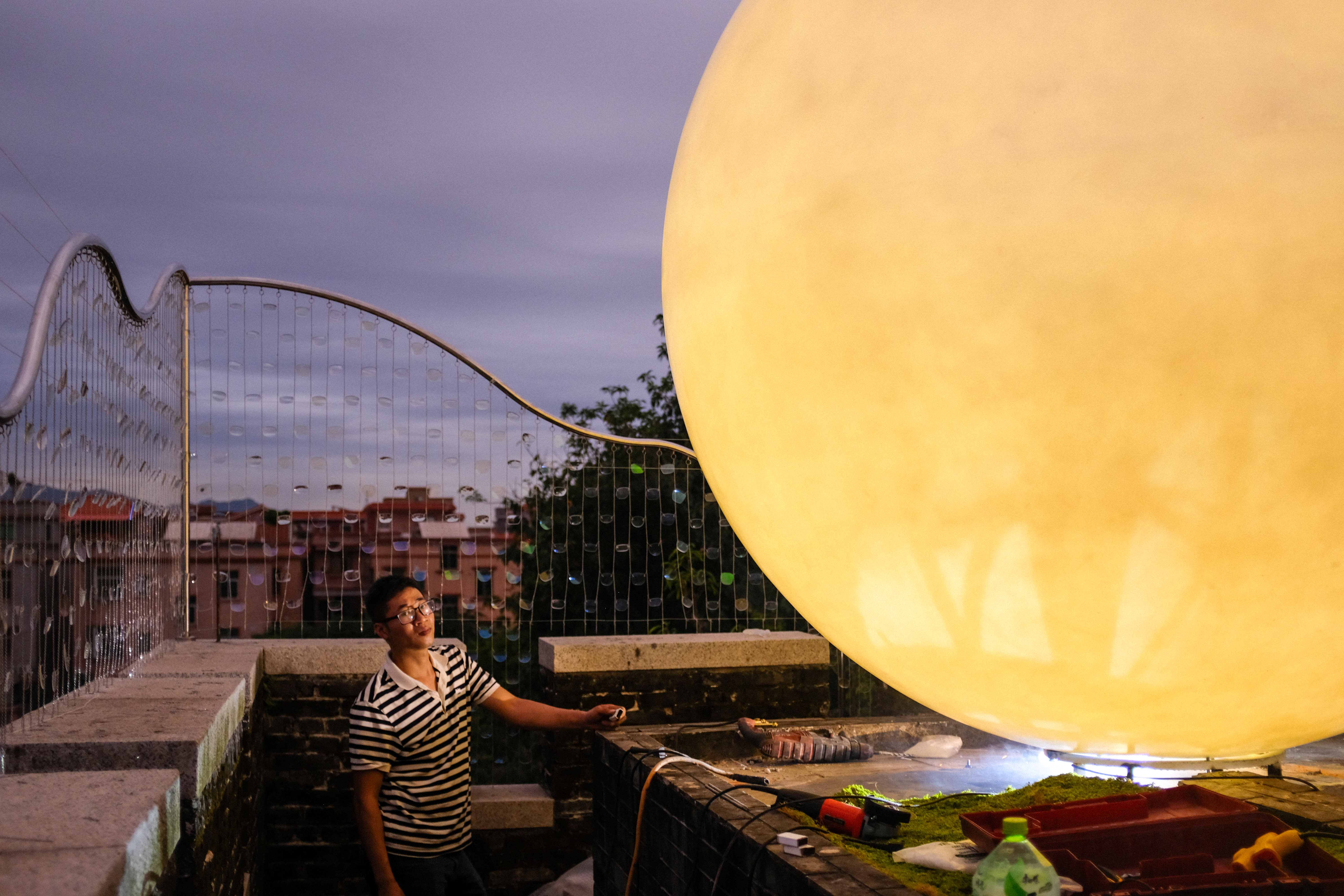
During the day, the Moon Pearl is shiny, smooth, and iridescent, referencing the surrounding Pearl River Delta. At night, it glows gently like the moon, reflecting light through the eyeglass lenses like moonlight off water.

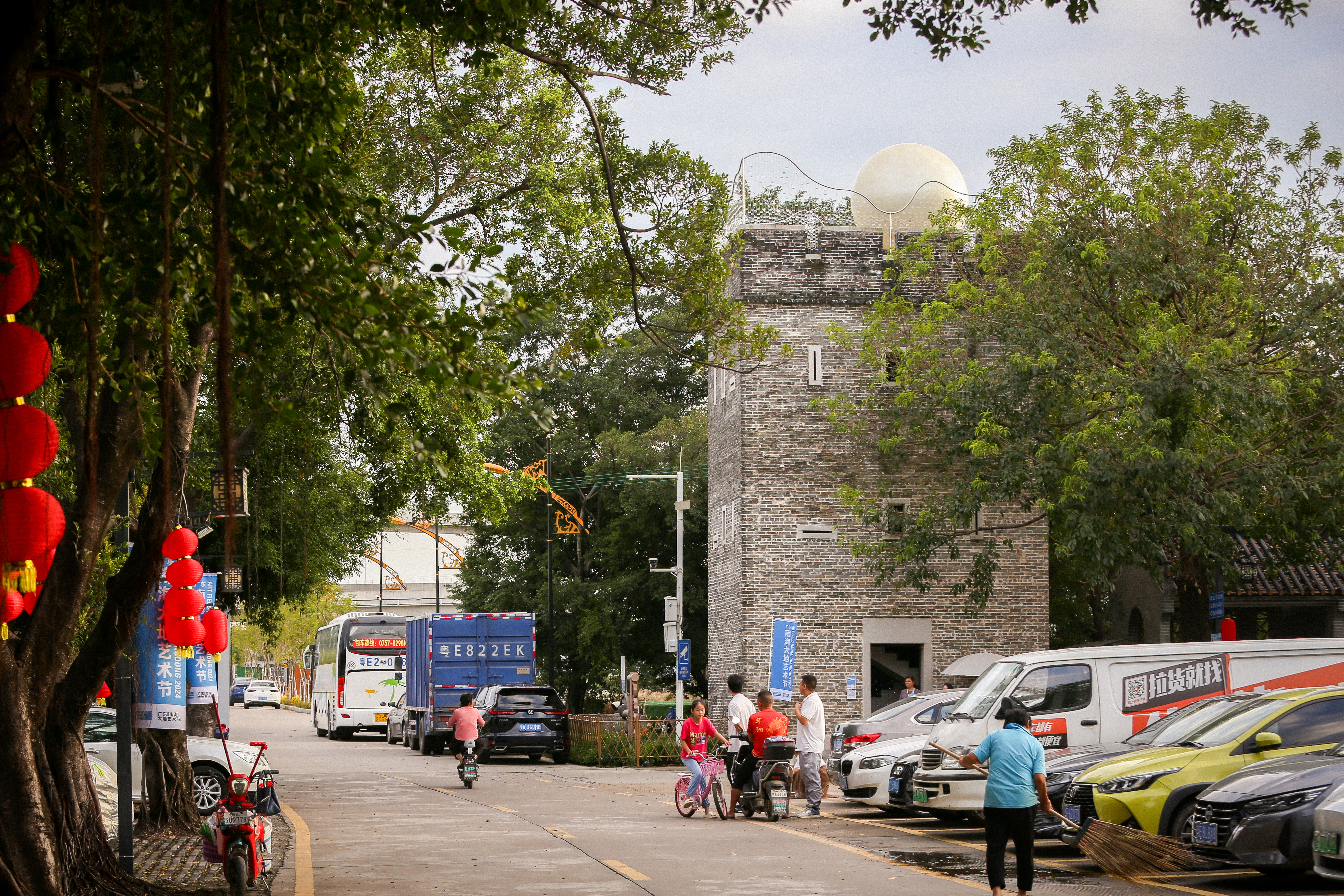
The Moon Pearl transforms Yan Nan Gun Tower into a lighthouse. Instead of a place of defence and violence, the Yan Nan Gun Tower becomes a glowing beacon to be seen from near and far – another relationship with the region’s seafaring history.
A famous regional Buddhist deity, Guanyin, is said to have received a Pearl of Light from the Dragon King after rescuing one of his sons. She is a central figure overlooking Nanhai from the Xiqiao Mountain, associated with water and good fortune for seafarers and their families. In a way, Tears of the Moon is like a “Pearl of Light” for Nanhai – especially at night.


Tears of the Moon was was commissioned in a collaboration between HUBART & Art Front Tokyo for Art Field Nanhai, a triennale in the Guangdong Province of China. The installation was constructed by the technical team and the artists in collaboration with the community from Yan Nan Village. Tears of the Moon is viewable at Art Field Nanhai for the foreseeable future.
Thank you to Art Field Nanhai, HUBART, Art Front Tokyo, the Technical Team, the Aunties, the volunteers, and our Coordinator, Wan Miao. Special thanks to the Canadian Lions Eyeglass Recycling Centre and PIKOU.





The eyeglass lenses for Tears of the Moon were recycled from And Between Us, An Ocean. The lenses were sourced secondhand in Canada through the Canadian Lions Eyeglass Recycling Centre, in a process you can see here.


 Caitlind r.c. Brown & Wayne Garrett